Sometimes in life, amazing things can be born out of severe setbacks. And when Glion Bachelor graduate Robin Chamalot was rear-ended while riding his bicycle in New York, he had little idea how that collision would affect his future career.
Fast forward nearly six years and Robin’s third business venture, RemedyPulse, is about to launch the Kinetic Intelligent Mat (KIM), a wellness recovery system that uses vibrations to actively regulate the nervous system.
Taking the mat to market is the culmination of years of product development and research that began because Robin was in serious pain as a result of the injuries caused by the accident. With all the conventional treatments he had explored proving ineffective, Robin found it was down to him to invent the solution.
Following the dream
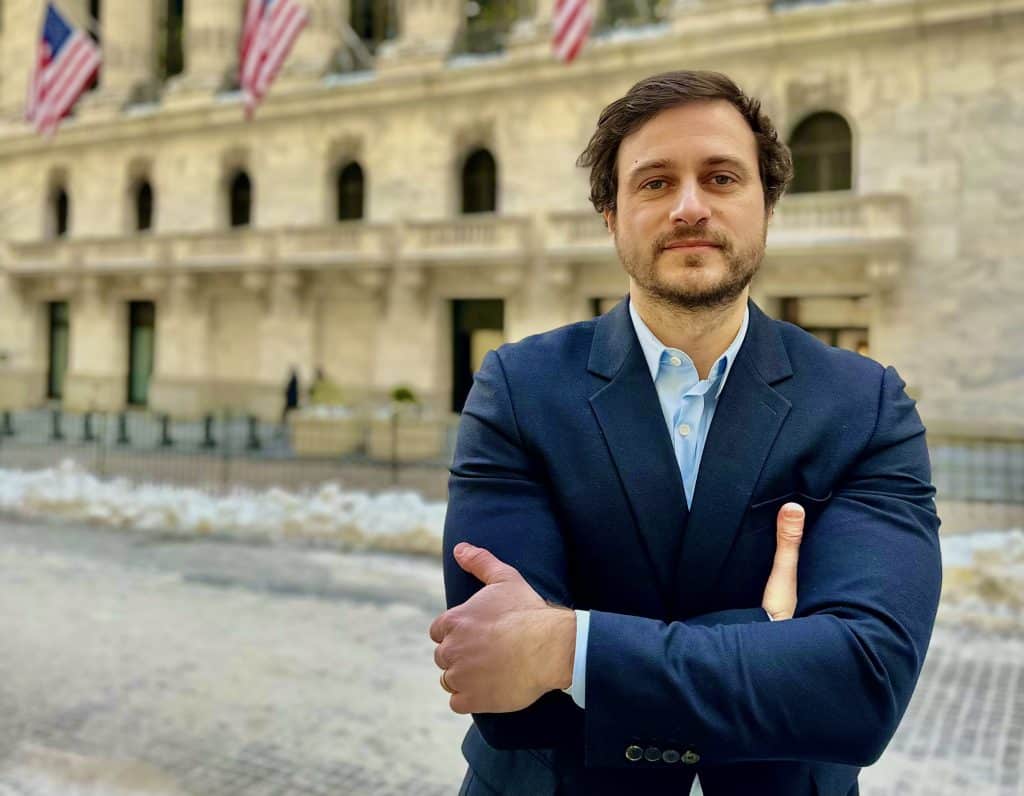
“I had two bulged discs in my neck, a herniated disc and a bulged disc on my lower back. I couldn't lift my left leg for a long time due to a pinched nerve,” he says. “I also had sutures on my elbow and on my lower back, couldn’t walk and pretty much limped for three years, so it was far from ideal.
“I’d been undergoing quite a few therapies and seen lots of specialists, but the results weren’t great. After years of treatment, out of frustration, I started investigating potential solutions myself.”
Leveraging the knowledge he’d gained from his Diploma in Body Mechanics, Anatomy and Nutrition from Premier International in Guildford, UK, Robin dived deep into scientific studies, spoke with doctors and consulted avant-garde healing research. That was when he found something interesting in terms of vibration at specific frequencies.
“It came in a dream,” he explains. “We all know how it feels when you’re a child in the back of your parents’ car and you calm down and fall asleep because of the vibrations of the motor. In my dream, I remembered this being relaxing, so I thought perhaps vibration may be a solution to my pain. That’s when I found research into non-invasive surgeries with ultrasound and low-frequency vibration, so I started digging into that.”
From there, Robin discovered a company already working on a recovery solution using low frequencies, so he began working with them on a design and prototype. After 10 months of development, Robin started using the fourth prototype for a period of three months. And to his surprise, he found his pain was gone.
Pain reaction
“I’d been in so much pain, I was sleeping with a pillow between my knees,” he adds. “And you get into a vicious circle: if you can't sleep, you can't recover. Then all of a sudden, my pain was gone, my sleep was better, my inflammation went down. I was sharper, had better memory, could focus longer. I was so impressed, I got my friend to try it and he said: ‘Robin, this is fantastic. You have to commercialize it.’”
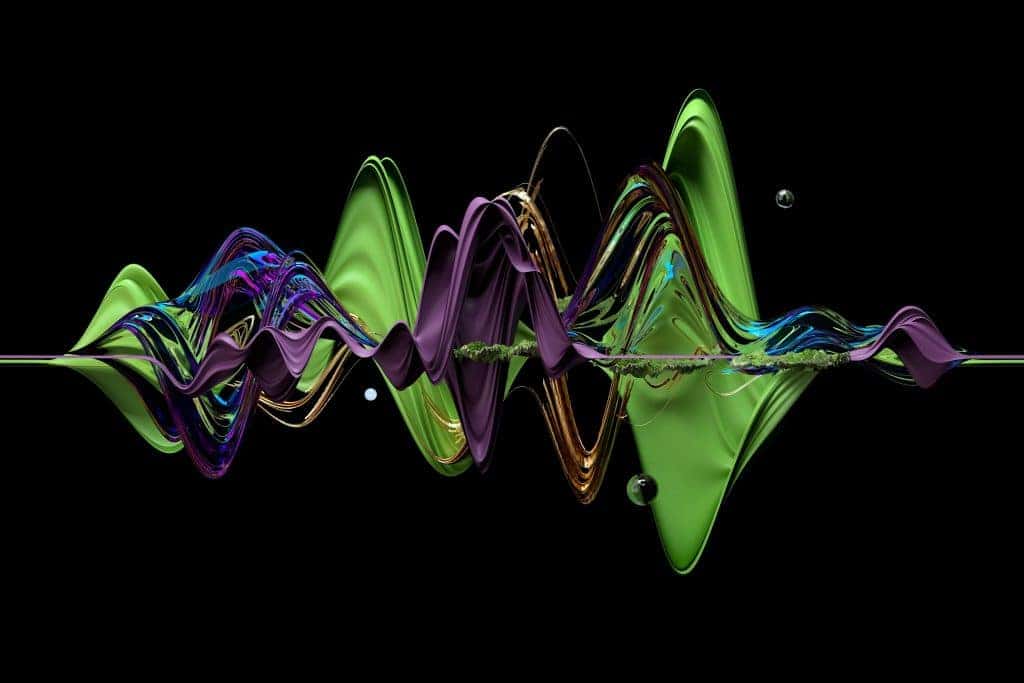
Robin established a wellness tech company that’s a hardware-software hybrid, with the hardware being a next-generation recovery surface that uses embedded technology and adaptive software to support performance and recovery in a completely new way. It produces vibration at specific acoustic frequencies and this vibration impacts the skin and mechanoreceptors that calm the body down.
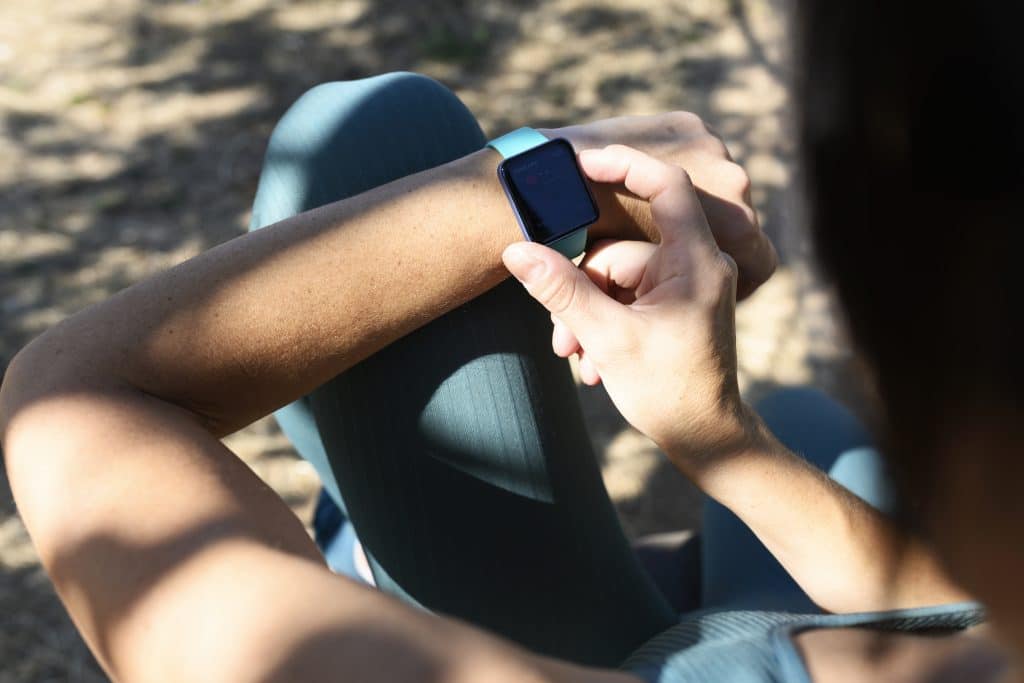
The software captures biometric information through existing sensors such as Whoop, Garmin or Apple Watch alongside user-inputted data on metrics such as temperature, environment and behavior to build a recommended vibration profile. There are currently 18 different mechanically induced vibration programs each with its own health benefits, for example, relaxation, activation, cognitive function or recovery.
“We've had more than 175 people trying the solution, which includes those taking part in the study we're doing currently with Florida International University,” says Robin. “Some people experience a floating sensation, others emotional release or euphoria while some believers said they felt like they were closer to God.”
Obstacles to overcome
While initial feedback is positive, there are still plenty of hurdles to jump before the product is finally released.
“My main challenge is that I developed this company alone because initially I didn't think I would commercialize anything,” says Robin. “This can be really challenging because you have a lot of roles to perform and all the weight is on your shoulders.
“You need to be constantly positive, focusing on yourself and avoiding thinking negatively when things don’t go your way. So it was important for me to build a team around me that I could trust, that would be proactive and take some of the strain off me.”
As with any startup, raising money was also a challenge, particularly at a time when venture capital companies were de-risking as much as possible.
“It's still going to be a tight call between the money we’ve secured arriving and the money we need to spend,” says Robin. “Then we’ll have other hurdles to overcome, such as marketing, scalability and logistics. But that’s where my Glion education has been so helpful. Designing and executing live events means anticipating a wide range of variables, so I think we’ll be OK.”
Valuable lessons
Robin’s time learning all about how to plan events is not the only aspect of his Glion education that has stood him in good stead since graduation.
“One of the things we had to do a lot at Glion – and I hated it at first – was public speaking,” he says. “You frequently had to present projects you’d been working on – and often with others – so the pressure was on not to make a fool of yourself and ruin it for your colleagues.
“I found being at Glion pushes you to feel comfortable in an environment where people are going to judge you based on your performance. So you had to think things through in terms of analysis as well as flow, you had to keep the audience in mind and you had to have confidence in what you were saying. We did presentations almost on a weekly basis and I hated it so much. But then when I started forming my own companies, this was just something I had to do. And now in a way, I actually enjoy it.”
Robin also points to the multicultural environment at the school, which he has found incredibly useful when dealing with potential clients, partners and investors from many different backgrounds. He has also been introduced to opportunities thanks to the extensive Glion alumni network and the connections he made while studying. But perhaps the most valuable benefit of his Glion education was a shift of mindset.
Fire in the belly
“Not everyone who arrives at Glion knows exactly what they want to do afterwards, me included,” he says. “I was a bit of a free spirit when I studied there and was still unsure of my career path on graduation.
“What sets Glion apart is that it changes your mindset and gives you a better understanding of who you are. It also gives you a set of tools that enables you to be fully functioning whichever path you choose. So, for example, my brother started out in hospitality and now works in finance, while I studied sports and entertainment but am now a wellness tech entrepreneur.”
Before he started at Glion, Robin says he had no real ambition or vision. But he adds that “being in an atmosphere where you’re constantly comparing yourself with your classmates and driving yourself forward” really gave him the fire in the belly he needed to succeed.
“My education in France was quite different,” he adds. “There, both curiosity and failure are treated as a negative, whereas at Glion, you’re taught to embrace them. If you fail, you’re encouraged to think about why and what you can learn from it. That’s given me the self-confidence I have needed as an entrepreneur to carry on and remain positive – even when I’m on my own.
“So, for those who want to find out what they’re made of – and what they’re capable of – I really think Glion is the best school.”
• Click here to connect with RemedyPulse on LinkedIn