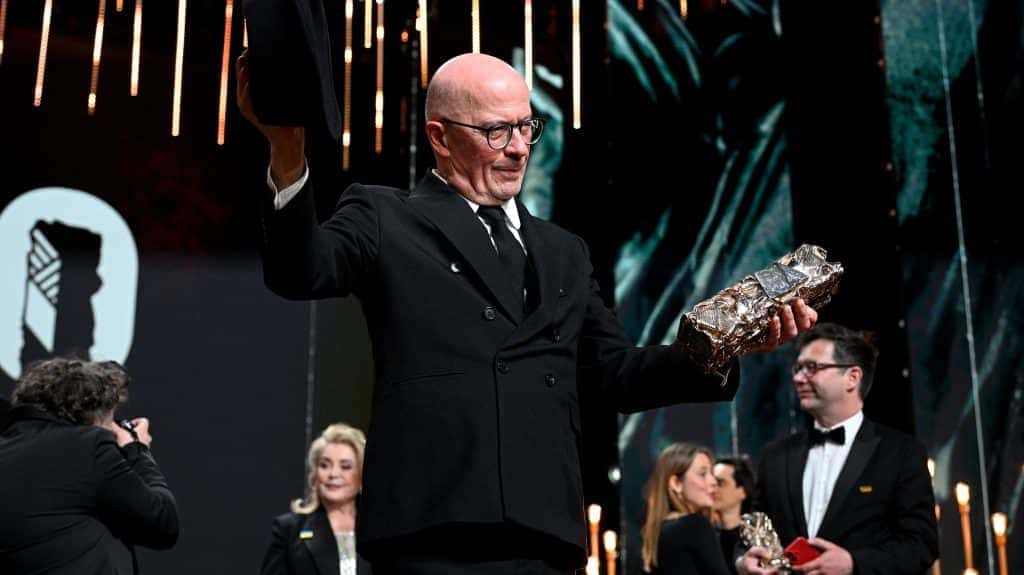
If you follow the world of cinema, you won’t have escaped the buzz last year around the movie ‘Emilia Pérez’. Audacious, iconoclastic, and not without its share of controversy, the film won the French César award for Best Film (see main image above) and was nominated for 13 Oscars, winning two.
What you may be less aware of is that one of the film’s key backers is Saint Laurent Productions. Yes, one of the most famous names in luxury fashion and accessories also makes movies!
It’s a classic example of an aspect of the luxury business which fascinates me: how luxury brands wield soft power throughout the cultural world.

The driving force behind Saint Laurent Productions is the maison’s Creative Director, Anthony Vaccarello. The concept unites two great French obsessions: fashion and film, and the production money the company distributes is earmarked for iconic auteur film-makers – think Pedro Almodóvar, David Cronenberg and ‘Emilia Pérez’ director Jacques Audiard.
Speaking to British Vogue, ahead of a Cannes Film Festival in which three of his productions were showing, Anthony Vaccarello explained, “For us at Saint Laurent, it gives us new ways to communicate. In doing those films, the name of Saint Laurent stays forever. When the name is on a billboard, it’s so fast – one month later, we forgot about it – but in 20 years the name Saint Laurent is still there.”
Cultural diplomats
For me, initiatives like this represent a form of cultural diplomacy for the luxury industry. It’s a topic that I explored in depth in a podcast I recorded last year with Cyrille Vigneron, then Chairman and CEO of Cartier, and who has since taken on a new role as Chairman of Cartier Culture and Philanthropy.
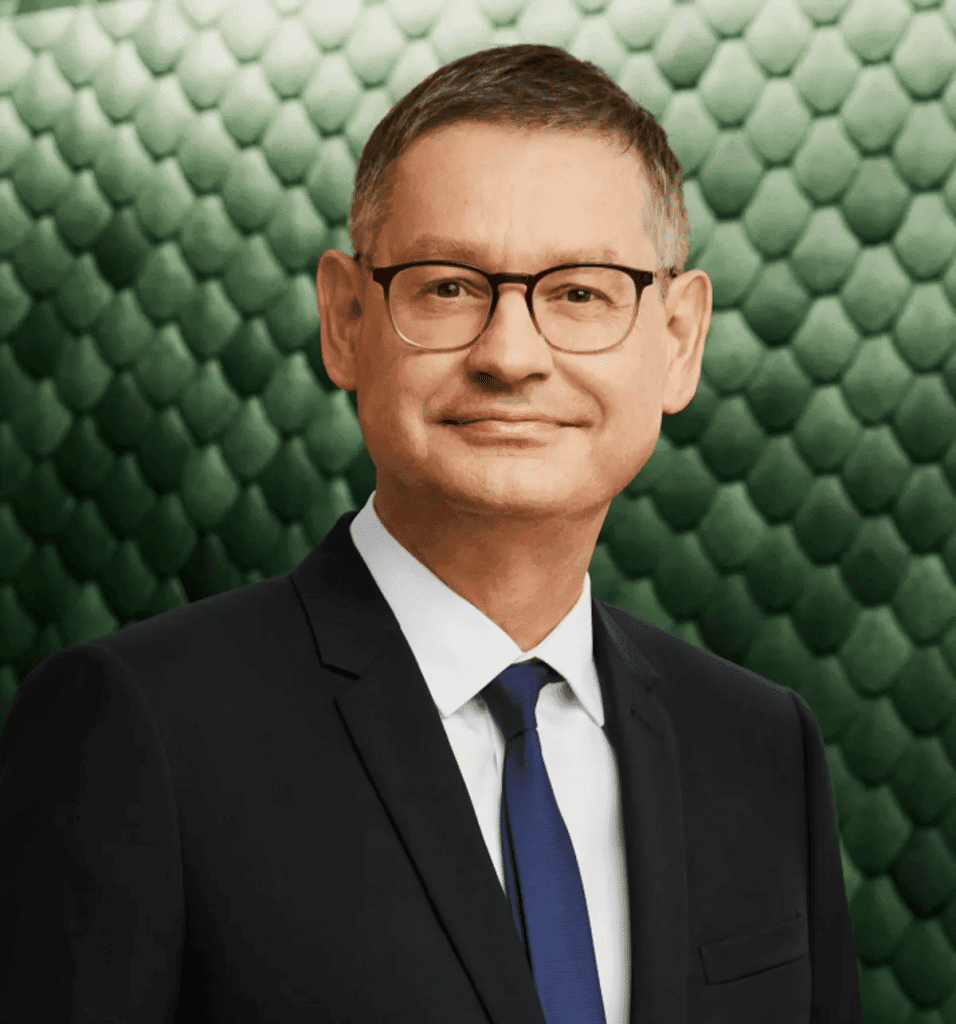
Cyrille told me that he doesn’t feel luxury brands should play the role of cultural diplomats, but that they should have a cultural point of view, and aim to define a ‘universalism’ of culture – in which luxury brands can provide a source of inspiration alongside the aspiration which is inherent in their brand DNA.
Cartier’s cultural influence can be seen most vividly in the connected spheres of art and architecture; and in particular through the activities of the Fondation Cartier pour l’Art Contemporain – known more commonly as Fondation Cartier.
This institution, dedicated to the contemporary arts, celebrated its 40th anniversary last year. And with its main gallery premises having previously been located away from the center of Paris, it is now moving to the cultural beating heart of the city, with a new site secured on the Place du Palais-Royal opposite the world-famous Louvre gallery.
This reborn building, a project of the Pritzker Prize-winning architect Jean Nouvel, is scheduled to open its doors on 25 October this year, with an inaugural exhibition showcasing key pieces from the foundation’s extensive contemporary art collection.
What’s interesting to me is the arm’s length relationship between this cultural soft power and the main business of Cartier – making and selling luxury goods. The name is shared, including the typography of the ‘Cartier’ wordmark, but you don’t find overt links and references to jewelry, watches and perfumes on the foundation’s website, nor in its program of exhibitions.
Indeed, when I’ve interviewed luxury executives about these cultural missions, they are generally coy in their responses, not wishing to express any symbiosis between business and cultural aspects.
Like Cartier, Fondation Louis Vuitton went straight to the top drawer when choosing an architect for its art and cultural space in Paris’ Bois de Boulogne. The extraordinary building (pictured below) is a signature design of the American Frank Gehry, creator of the famous Guggenheim Museum in Bilbao, among many other iconic works.
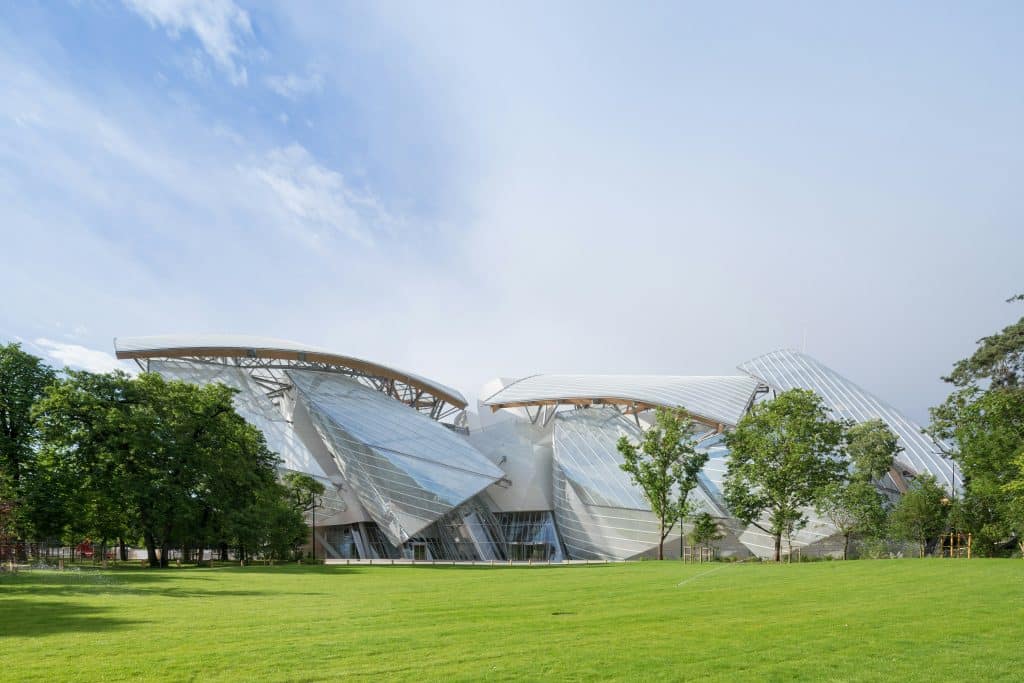
Opened in 2014, the space is a highly popular cultural destination; and while the maison is represented purely by its name, that alone is sufficient to wield the soft power I’ve been talking about. In cultural circles it’s common to hear people say “have you seen the latest exhibition at the Louis Vuitton?” and so on.
The power of music
After film and art/architecture, the third area of cultural soft power I want to highlight is music. Here we can see opportunities to speak to a different, younger demographic – something that is essential for the future health of a luxury brand.
One of the companies that I feel does this especially effectively is the watchmaker Audemars Piguet (AP). And in doing so, the brand has deliberately chosen the popular end of the musical spectrum, rather than opting for the highbrow.
Through its APxMusic program, Audemars Piguet teamed up with the producer (and AP Brand Ambassador) Mark Ronson and the hot new artist RAYE to create a song called ‘Suzanne’, dedicated to Suzanne Audemars, who was a direct ancestor of the Audemars and Piguet families.
AP has also partnered with the Montreux Jazz Festival. One of the highlights of this collaboration is the Audemars Piguet Parallel event, where top names from the dance/electronic music scene perform in a ‘secret’ location revealed to ticket-holders only at the last minute. This year’s staging on 16 July proved a memorable night that took place in an underground environment, in this case an abandoned factory according to my daughter, who managed to win one of the free but hard-to-get tickets!

Smaller beginnings
All the brands I’ve mentioned so far are highly established, almost legendary names within the sector. What about for smaller, newer luxury brands? Can they find ways to wield cultural soft power?
I believe they can, but naturally it will involve starting out on a smaller scale – becoming patron to an up-and-coming artist, for example. There’s also potential for collaborations – maybe creating a specific collection together? This idea of patrimony to the arts helps to place a brand within the wider cultural sphere as well as fostering emotional connections.
And emotions are what sit at the very heart of this story. Both luxury and culture convey this kind of intensity, this beauty and this eternity that all play on our emotions. Luxury brands have the desire to offer a specific point of view about beauty – it’s why they choose their cultural fields and individual collaborations so carefully.
I must not overlook another important player in this field, which is of course Hermès. Indeed, the maison is among the top investors in the wider cultural space. The Hermès Foundation was launched in 2008 and operates worldwide, with a commitment to – in its words – “public-interest initiatives across four themes: the transmission of skills, the creation of works of art, the protection of the environment, and the encouragement of gestures of solidarity”.
Payback time?
Of course, all of these cultural activities involve significant financial investment. How to measure the payback from these investments? The first thing to say is that I don’t believe any of these companies view their cultural soft power in purely monetary terms. It’s more subtle, and more enduring, than this.
I like to think of it as part of the universe of touch points between luxury brands and us as consumers. Luxury is everywhere – when we shop, when we eat, when we stay in a hotel, when we listen to music, when we go to the cinema, and so on.
Go to the beach in a select resort, and you’ll often find club spaces carrying brands like Dolce&Gabbana or Burberry; you can go to a restaurant by Armani; and you can buy gingerbread biscuits at a Dior Café pop-up. Cultural soft power is simply another facet of this interconnected approach.
Future perfect?

What of the future for this trend? In the immediate term, I don’t see huge potential for major risk-taking in terms of generating soft power through culture. It’s no secret that the luxury sector – from a global perspective – is having some tough times right now, so budgets are sure to be under scrutiny.
Longer-term, I have no doubt that luxury brands will continue down the path of wielding soft power across all aspects of the cultural space.
It’s a proven generator of influence and when allied to a uniquely brand-centric approach – witness Omega’s connection with space travel, and its support of efforts to clear space debris – it can offer genuine differentiation in the eyes of the consumer.
Maybe, too, the artisan craftsmanship and uniqueness offered at the highest levels of luxury may save us all from the ‘commoditization’ threatened by the inexorable rise of AI? Time will tell…
About the author
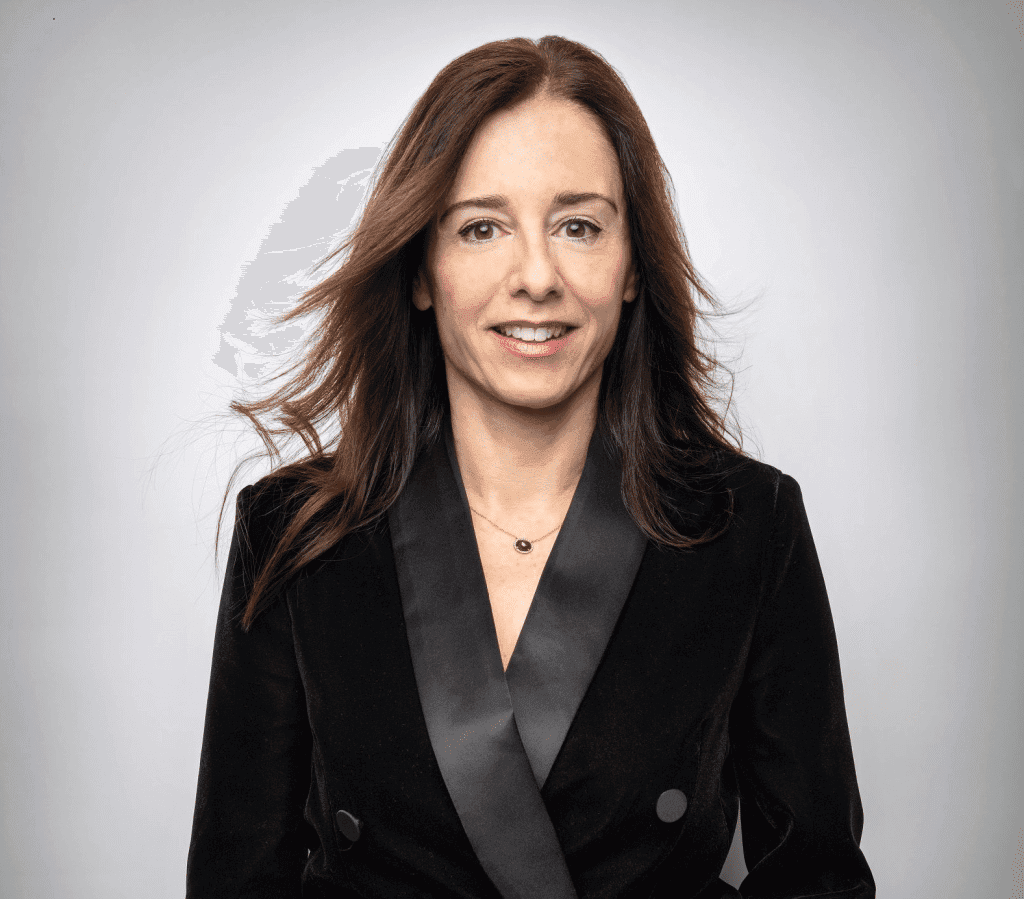
Cristina D'Agostino founded the leading digital media Luxury Tribune in 2020. As Editor-in-Chief, she is a journalist specialized in the luxury industry, who regularly moderates conferences and debates on major trends in the sector. Previously, Cristina was deputy editor-in-chief of the Swiss business magazine Bilan and for seven years headed the publication’s luxury special issues. From 1994 to 2008, she held various management positions in communications and marketing for watch brands.
- To discover more about Luxury Tribune, visit the website
- For more insights on luxury and culture in The Insider, check out this guest article by Dominika Kustosz-Lee
Photo credit
Main image: Kristy Sparow/Getty Images