Our Bachelor’s in International Hospitality Business is your first-class ticket to a global career.

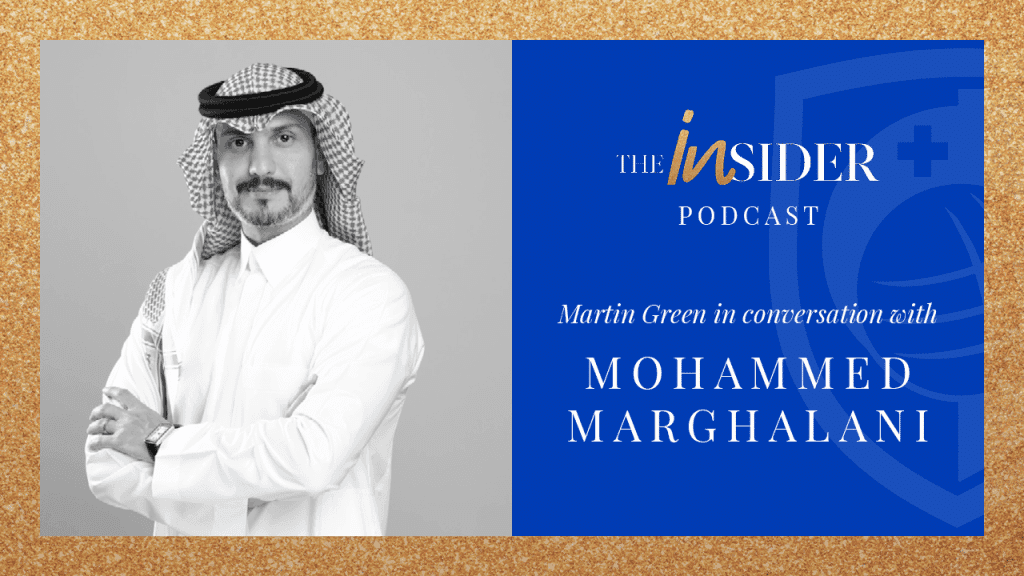
GLION – Mohammed Marghalani podcast
This is the final part of my Dubai series, but while it was recorded in Dubai, the conversation is very much about the kingdom over the border. Why? Because I had the privilege of welcoming to the podcast, Mohammed Marghalani, a successful Glion alumnus, who also happens to be a Saudi national. A trailblazer in the Kingdom’s hotel sector, and now an active participant in the Vision 2030 program through his work with the agritourism specialist Dan Company, I knew that Mohammed had the first-hand insights that would enable me, and you my listeners, to get to grips with what Vision 2030 means for the Saudi hospitality industry now and in the future.
So, I started by asking Mohammed why the world should be getting excited about what’s to come with this extraordinary national infrastructure program.
Vision 2030, it’s not just a Saudi initiative, it is a global opportunity. The country was depending on oil, as I’m sure you know already, and now with the Vision 2030, the country is aiming to diversify the economy of Saudi Arabia. And luckily, tourism comes as a main pillar in Vision 2030. So basically, the country is depending on different industries and one of it is the tourism industry; and I am certain that you heard about the ‘giga projects’ that are happening in the country which we are expecting will open a lot of opportunities for international investors, international tourists.
And also, when it comes to careers it opens career doors for everyone – not only for Saudis but for worldwide. And this is something exceptional, and I am certain that not only Saudis are excited about it, but the world is excited about it.
Just to put it in context, can you provide just a rough idea of the scale of this ambition in terms perhaps of the figures being quoted on investment and maybe the expected number of jobs that are going to be created?
So basically we are talking about hundreds of billions that would be invested in the tourism sector, just in that one element alone. So it’s around 800 billion plus that will be invested. So given this number, it shows you the huge opportunities for international companies, for investors in the tourism industry, and as well as for local companies. New local companies are coming into the market and are being supported, that are specialized in the tourism industry, which eventually will open also opportunities for a workforce, for development, and as well as increasing the number of Saudis. Currently, tourism industry is unlike 10 years back, it’s becoming very attractive, for Saudis.
I have joined this industry in 2000 and I was…
You were an absolute trailblazer.
Absolutely. I was the only one in my high school who joined hospitality as a major to study. The rest of my colleagues, they have joined different majors and I remember that when I joined it, I had many doubts. I had many doubts because all of my friends were telling me, what are you going to do? I mean, we didn’t have a tourist visa at that time. Even the Ministry of Tourism wasn’t a (full) ministry at that time. It used to be a Supreme Commission of Tourism. Look at it now.
So just thinking about that, what was it that drove you in that direction? Cause that’s a fairly interesting direction to take at that time. What was it? What was in your heart that made you want to do that?
Actually, my father. He’s a visionary man. I remember when I graduated from high school, I wanted to be an engineer, and specifically, an electronics engineer. And my father asked me to go and search about a hospitality major. And I asked him, I told him, is this something that people study, hospitality and tourism? And I didn’t hear about the major before. And he’s like, it’s something new in the country. And he told me, believe me, in 10 years’ time, you’ll see the shift in the country and how Saudi Arabia will become a major tourist destination.
And it’s very interesting if you allow me to just explain to you, how did he get this vision? So my father used to travel to Switzerland a lot, during the summer especially, for work and for pleasure. So during the summer, he used to see young people working in hotels and restaurants, very young people, like people actually in a university age. So my father asked, what are they doing? And they told him, those are students who are studying hospitality and tourism. And during summertime, they are working. So, my father told me, you will never be desperate to find a job if you study hospitality and tourism. You can work I mean, you will have plenty of choices. In addition to that, my father’s vision was about the country. He was telling me Saudi Arabia is a big country of North, South, Eastern province, Western province. And it is, demographically, it is different from each other. So you have mountains, you have sea, you have desert, you the farms. So you have different kind of attractions over there. So it’s like you find the country has the capability of providing you with all levels of tourism that you can imagine in one country, in one place.
Yeah, yeah.
So I believe that’s why my father recommended me this and I’m lucky that I followed him.
And you raised an interesting point, and it was going to be one of my later questions, but I’ll ask it now, actually, because I think that’s been one of the revelations to me over the last… and I’ve been as guilty as anyone of probably thinking, heh, Saudi Arabia, it’s just desert. I’m sorry, I did, I hold my hand up!
But I think with some of the nationwide sporting events, I’m thinking things like the Dakar Rally, the AlUla cycling tour. I think one of the amazing things that it’s shown to viewers like myself who watched it is the extraordinary natural beauty of Saudi Arabia. It really is not just desert. Has that been an important way of opening people’s eyes to just exactly what you’ve got there?
Martin, it’s also, even for us as a Saudis, we didn’t know we had that much diversification in the demographic of the country. So even local tourism wasn’t something famous. And right now, Saudis, whenever they have a long weekend, they spend it inside the country. Before, they used to travel abroad, even for a long weekend or a midterm vacation. But currently, people are traveling around the kingdom.
And me, myself, with my family, we have traveled a lot to the southern side of the country, Asir region, where you can see, where during the summer, it is actually a pleasant weather, if not cold, during the summer in Saudi, can you imagine that there is a city in Saudi Arabia during summer which is pleasantly cold, where you see mountains and you can do hiking and sightseeing, and you have a lot of farms and vegetables and fruits. It’s very authentic and we really like it. We’re planning to go also to try the Red Sea. We’ve traveled to the Maldives, but we heard a lot about the Red Sea and me and my wife we’re planning to come and visit it for our next vacation.
So you’ll be ‘staycationers’ as we call it. Oh, that’s brilliant. So it’s not just people overseas whose eyes have been opened then; it is Saudis as well. That’s really interesting. But just to jump back to Vision 2030, an initiative of this size, I mean, it’s almost mind blowing. And I guess it’s probably not without its challenges, but I mean from your perspective, what are some of the big challenges in landing projects of that size? I know you’ve had some involvement there.
So for me, I see not challenges, but opportunities. So speed: the country is moving very fast and we have a lot in our pipeline. And speed, you know, it has its own positive and negative, right? And I believe the country’s moving in the right direction and the initiatives are moving in the right direction. A lot of opportunities over there.
So I used to… speak to my fellow colleagues, Saudi colleagues, who are studying in universities outside the country. That was three years back or two years back. And I used to tell them, just finish fast and come quickly, because now it is the opportunity for the country to find a lot of growth and be participating in the Vision 2030. And I was telling them, you will never know after a couple of years, maybe this opportunity will be already gone. But actually I was mistaken because with a lot of projects that’s happening and time is of the essence and it’s moving fast, we’re still seeing a lot of new projects emerging and it is also moving very fast. So the opportunities are there.
Yeah, and they will still be coming through.
Absolutely. I don’t think it will stop even for the next 10, or 15 years. I’m talking about opportunity in the tourism sector. You will see more and more and more coming. Qiddiya project by itself. Currently, the number of Saudi manpower working in the tourist industry is around 245,000. Qiddiya itself, when it opens its doors fully, it will need much larger number than this.
Than the total at the moment? Wow!
Exactly, to be working over there. The second challenge, you see, is that the country is opening and developing a lot of projects, and innovating and creating, and bringing a lot international experience. So the authenticity. And so far the country is doing very well in terms of authenticity. The moment that you step into Saudi Arabia, you will feel that you are in Saudi Arabia, not in any other country in the region. So you can’t compare it at all and this is something great that the country has done, so they have improved and they have developed a lot of projects on the international scale, but they kept the authenticity. I’m not sure if you visited Saudi Arabia?
Not yet, no, I haven’t had the opportunity to go, I certainly hope so.
Well, the moment that you visit the country, you will understand exactly what I mean. And if you go to Diriyah Gate, you’ll see the heritage and you will see the history and the authenticity in the country and how they are keeping it.
Yeah, it’s interesting because although I’ve not had the fortune of going to Saudi, I used to do quite a bit of work in Oman back in the day, and I think that was a country that always kept its authenticity, kept its characteristics. So you’ve kind of followed that model, if you like, to keep the national spirit, basically.
I’m inspired by Oman, honestly, I visited a couple of times and the way they keep the authenticity in the country is amazing.
And that’s also a country where there is a remarkable natural splendor as well. And of course, you’ve got Salalah down south, which has that similar kind of verdant, more clement climate as well. So you’ve got some natural parallels there in terms of the two countries. Interesting.
So, it’s a bit like… It’s perhaps a bit like asking a grandparent to name their favorite grandchild, but do you have a kind of personal favorite of the projects that are either underway or planned for this, particularly thinking the tourism and hospitality projects, is there one that you think, wow, that’s really inspiring?
Honestly, all of it. It’s all inspiring. So we need to talk about the Red Sea. Yeah. I’m not sure if you got the chance to look at the project over there. I mean, it is phenomenon. We didn’t, as Saudis, we didn’t believe previously. If you ask us like five years back or 10 years back and you tell us, can you imagine in the Red Sea that you’re going to have a giga project like the current one, no one would have believed that. The efforts that they have put in this project, and especially when it comes to sustainability, building a sustainable project. It’s easy to build any project that you want without giving much more consideration into how sustainable is that project, but how they took care of that area and they kept all the natural resources. And at the same time, they have built something phenomenal. It’s really amazing.
Yeah, because that’s important, isn’t it? Because it’s the country’s economic future, but that can’t be secured at the expense of the country’s environment. It’s good to hear that equation is being managed and maintained. I mean, progress always comes with an amount of cost, but clearly there’s an effort to try and minimize the impact of these huge projects, basically?
And you look on the other hand to the AlUla project. I mean, AlUla project, the heritage side over there, when you go and see it, I visited it 15 years ago and literally we were a small group and we were the only ones. And it wasn’t even open to the public. And it was like, oh my God, I mean, what if the world gets the chance to see what we have? We used to travel to Jordan and see the historical site over there in Petra and we used to always say, you know, if you just, I mean, put some efforts and take care of our heritage in the country and showcase it to the world. It was a dream and now the dream is coming true.
And you can see a lot of tourists coming in, and even in social media, they are shooting and they are excited to come to the country and taking pictures of new destinations. Even for me, many of those destinations, myself or my family, we didn’t even go there. It’s still in our plans. And also on the other side, you got agritourism. Agritourism, this is something new in the country, and the country they are paying so much attention to it. It is very important. Al-Ahsa for example. It’s in the Eastern province and it’s considered to have the largest palm oases in the world. I knew this information only two years back. So those farms were not invested in the right way. And right now, many companies, local companies and also international companies are coming into the market in order to develop those farms, those authentic experiences, farm to table and giving experience to… showcase the biggest palm in the world, which is located in Al-Ahsa, and giving the chance for people to see how local people are living and how are they interacting, bringing people back to nature. So this is something very close to my heart.
And indeed, I believe that’s also an area where the company that you’re working for – Dan Company – is involved. Tell me a little bit about that work.
Absolutely. So I used to work in Ritz-Carlton for 12 years. And my total experience in hotel operations almost goes for 18 to 19 years. And all of it in luxury segment. Then now two years back, I decided that I need to learn something new and do a huge shift in my career. And therefore, I got the chance at that time to join different companies, that also specialize in hotels and luxury hotels. And then came Dan, which is agritourism. So literally going from luxury, ultra luxury hotels into agritourism.
That’s quite a leap!
Absolutely, and I’m really enjoying it. I’m learning so much over there. When I was working at hotels, many international guests, the moment when they opened, that was in 2019. I believe in October, if I’m not mistaken, when Saudi Arabia launched the tourist visa. So in December and January, I had a lot of, right before the Covid, a lot guests coming in with a tourist visa and coming to my hotel and asking the concierge that they want to go to villages, visit villages and mingle with the, with local people.
To get that authentic Saudi experience that you were talking about earlier.
Absolutely. And living with them. And at that time, we didn’t have any clue. We couldn’t guide them. And they felt really sad at that point because I know there are a lot of areas that they can go and see, but it wasn’t ready yet. Right now, focusing on agritourism and focusing on different agricultural cities in the country, I’m expecting a lot of international tourists, in addition, of course, to the local tourists. They will get the chance to discover the beauty of the Kingdom, to discover the natural resources of the Kingdom, to live like a local and to have farm to table experiences and see the natural resources that are coming.
So this is what Dan Company is offering. We are offering authentic local experiences by developing farms into a destination. Farm stays offering farm-to-table experiences, authentic experiences, bringing people closer together.
And I think there’s a sustainability element to all of this as well in terms of obviously maintaining those farms, maintaining those environments. I think that’s pretty central to the projects as well, isn’t it?
Absolutely. The sustainability is a core thing in Dan. Everything that we do must be sustainable.
So what have you brought… you mentioned it’s quite a different area to work in. What have you managed to bring from all your time in luxury hospitality that have been pretty useful in terms of working this new market, if you like, for want of a better description?
So basically working in international brands such as Four Seasons, Fairmont, Ritz-Carlton, which I spent 12 years over there, and it’s close to my heart. So all these international bands, they are always welcoming international guests from different nationalities, right? So we have our international standard. And so I believe this is something that I hope that I’m bringing to my company. If I want to develop or convert a farm to host international guests and to provide experiences, we should understand our audience. We should make sure that the level of service is authentic, yet complemented by international standards. And I believe this is the added value that I am bringing to this business and this company.
Yeah, interesting. And also, I know one doesn’t see oneself as a role model, it’s something perhaps other people might say; but do you look upon… with your career in hospitality as a trailblazer, that you are something of a role model for young Saudis who want to get into tourism, hospitality, into these new opportunities? Do you like to take a bit of a kind of role model, a mentoring role in that?
I really hope so. You see, since I started hospitality in 2000, so I believe I was one of the few Saudis who worked for so long in this industry and who tried to motivate the younger generation to join this industry, and to work in it. So I really hope that I’m being a good role model for those people. Actually I always tell them, the new generation they are very smart, and I am certain that they will take the tourism and hospitality in the country to a different level, higher level than what me and my other colleagues who started early delivered. You see, being one of the few Saudis, maybe that’s why some of the people, they might look at me as a role model, but the new generations are very smart and they can kind of look after it for themselves, basically.
And is hospitality management… I mean, you mentioned that everyone sort of raised their eyebrows when you said you were gonna do it, but I mean is it now seen as a legitimate career path for a young Saudi?
Oh yeah, oh yeah, big time. Like I couldn’t imagine in my life that one day, and it happened I believe four years back, someone coming to my office, a Saudi coming to my office and telling me that I would like to work in the kitchen, to work as a chef, and explained freely their passion in cooking. But previously, maybe it was something related to uh, the culture or the community at that moment, the gentleman coming and saying I’m an expert in cooking. I used to cook for my family. We didn’t have that much; but right now people are coming and the number of Saudi chefs that we are having right now in the country, I mean, it’s amazing.
And some of them, we discovered that some of them, they worked abroad in Michelin star restaurants and some of the (top) international restaurants. And now they are back to the country to help realize Vision 2030. And this is something amazing. I couldn’t even imagine a lot of people they used to tell me, no, you will not find a concierge or a doorman or a bellboy that are Saudis. And that’s not correct at all. Right now, if you go to some of the hotels in Saudi Arabia, you will see proudly Saudis working there as a doorman. They like to welcome all international guests and local guests as well to the hotel and show them and be proud of their culture and show them about their authenticity.
Yeah, yeah, but it’s a natural thing. I mean, you know, I’ve spent some time in Oman, especially, and I know a few other people from the Arabian region. And it’s fair to say, you know you don’t know hospitality unless you’ve had Arabian hospitality. It’s almost kind of the very hub of a warm welcome, you now, here’s my home. It’s renowned. So if there’s a national crossover into a kind of tourism business in this region, it’s like in the blood, isn’t it, basically.
Allow me to give you a short story about it. When I was a hotel manager, five years back, I remember we had a new orientation for new young Saudis who are coming to work at the Ritz. So my former general manager told me, you know, I want you to stand with me and I will talk. And then I want you to translate into Arabic. So he kept talking for almost 25 minutes. And then he told me now it’s your turn, please translate it to them. And it took me one minute. One minute and then everyone were smiling and I stopped. And then my GM looked at me and he was like, I was talking for 25 minutes and you just talk for a minute, what’s happening? Continue. I told him, no, I delivered your message to them.
So basically he was trying to tell them that you’re working in a hotel and you have to be hospitable, smile at the guests, try to exceed the expectations of the guest. And the way I said it, I told them, just imagine this hotel is your home, your house, and this is literally, you’re working in it, so this is your house. And everyone stepping into the hotel, they are stepping into your house, your home. And then I looked at them and I told him, do you know what are you going to do? Everyone smiled and they told they told me yes, we understand it exactly and I know for sure that they understand it.
Someone raised his hand and said of course, this place is my home so anyone who is coming I have to take care of them and have to exceed their expectations. I have to make sure that they are comfortable. And so, hospitality is in our DNA, yeah, we’re living it every day, every moment with our families, with our friends, with our colleagues. And so it’s not something new, but what was missing probably since we opened the door for international tourists is to complement it and integrate it with international standards. And this is what’s happening now with the programs that Ministry of Tourism is offering for young Saudis.
Yeah, yeah, it’s to sort of build in some of the skills that support the warm welcome basically. So where do you think it comes from, that Arab tradition of hospitality? Is it just something that’s been handed down through the generations? Because it’s quite renowned.
As I mentioned before, it is in the DNA, so it goes far, far, far back. I mean, more than what, what I can imagine. And all our poems and stories, it’s all about hospitality. It is something that built in, of course, Arabs, but we were talking specifically about Saudis in each, in all Saudis. So there is no… I can’t even imagine that one Saudi that I go and I knock his door or her door asking for assistance and they don’t help me. It’s just not there.
I went to Hail three weeks back and we’re visiting it to look at certain areas and exploring the city. You should visit it. I swear to God. While you drive by in your car. You see people sitting in farms, in parks. So every time that we pass by people sitting over there, they will insist, they will stop you and insist that you come and sit with them for a couple of minutes and they offer you a coffee. And by the way, that’s not all of it. So they will tell you only cup of coffee. If you accept and you go to have a cup coffee with them, trust me, I mean, you will stay with them for three days and they will not leave you. They will invite you for dinner and they invite you to their house and they offer you all kinds of hospitality and they insist that you stay with them. And by the way, those people are not rich. They are literally normal people, but it is in their DNA and that’s how they become happy. That’s how they find happiness.
Through giving that of themselves, yeah. So if people always talk about oil as the natural resource of Saudi Arabia, but actually that kind of, that personality, that welcoming spirit is an equally important natural resource, isn’t it, basically? And I suppose one of the times when a lot of people are gonna be welcomed – we’ve touched on sport a little bit already, but in 2034, you’ve the World Cup, the FIFA World cup. And it seems to me that sports, not just with the World Cup, but the events that are already going on. I mentioned things like the Dakar Rally, cycling, et cetera. It seems to be that sport is becoming quite a big part of ‘brand Saudi’. So there’s the boxing as well, which I’m a big fan of. Tell us a little bit about that embrace of sports. I mean, for starters, are Saudis naturally as sports mad as the rest of us? And then secondly, perhaps tell us where sport plays its part within this bigger picture.
As I mentioned to you before, tourism is a big sector and it’s like an umbrella and you have a lot of different industries under tourism, which also sport comes under tourism. It attracts people from all over the world. The World Cup is one of the biggest events that happens and gets all people globally in one place. And the country, they have done a lot of great efforts when it comes to this. And the World Cup is going to be hosted by the country and everyone is looking forward to it and a lot preparation is happening as well as, uh, right now, I’m not sure if you heard about Formula One – that’s happening in the country in Saudi Arabia every year.
I think it was a couple of weekends ago?
That’s correct, it was held in Jeddah. So it has two aspects. This is to support tourism for the country and at the same time also to promote wellness and sport. So right now there is, I believe it’s an initiative called the Saudi Sports For All, which promotes all kinds of sports for individuals to participate, and for families. So we have the marathons coming every year. And also the marathon is happening not only in one city, but it’s happening in a couple of cities in Saudi Arabia. You have a lot of community now. The, they have built in Riyadh, um, it’s called the Masar Riyadhi. It’s a sports boulevard – literally, it’s around 134 kilometers. So you can literally jog for 134 kilometers!
I’m not sure I can manage that!
I think it is bigger. I think even bigger. So you can go and run, you can jog, you walk, you can do cycling. There is a special place for a professional cyclist. So all, all these kinds of events, I believe to promote sports and wellness, and it is, it is working very well actually. This is in addition to the international, events that are happening and the country are promoting it and the boxing hopefully we’ll see you there.
Yeah, I must admit, it always looks very good whenever I’ve seen the fights – I’ve seen a few of the world title fights that have been hosted there; as you say, it really puts the country on the map. And I think the World Cup bid, the World cup win, I think that kind of sealed the deal that people realized how serious Saudi was about this. This is not just playing around the edges, because if you’re going to host a World Cup, obviously with the infrastructure, the stadia, that’s a serious commitment. I think people became very rapidly aware that this is, you’re in it for keeps basically.
So now I want to just turn back to your good self and change tack slightly, because I know that you’re a member of a body that’s called the Saudi Leadership Society. And it interested me when I saw that. So maybe first and foremost, can you tell me a little bit about this body, what its aims are and what its goals are?
So basically it’s a collective of change makers across sectors, fostering leadership that’s ethical, visionary and impactful. And it’s about mentorship, collaboration, and also it’s about giving back to the new generations by mentoring them. So we have distinguished leaders coming from different industries, all together are coming into one leadership society, and all of them are mentoring and giving advice for the new generations, startup companies, all of that, for the benefit of realizing Vision 2030. Most of them, if not all of them, are graduated from MISC 2030 Leaders Program.
And MISC, for those who don’t necessarily know what it is, could you perhaps give us a quick intro?
So it’s the Mohammed bin Salman Foundation. And basically the program, MISC 2030 Leaders Program, it’s a collective of distinguished leaders coming together for nine months from different industries and preparing them with all sorts of information to understand fully the Vision 2030 and be ambassadors for Vision 2030 in different sectors, private, sub-government. So basically all those leaders, when they graduate, they will join the Saudi Leadership Society to give back to the society.
So what do you personally think you bring to the table of that, of the Leadership Society? How do you personally get involved with it?
So basically, I’m involved currently with a couple of mentorships with individuals and also working with young individuals and startup companies. So I’ll give you an example: someone who was having a startup company for a tour operator, a young Saudi, and they are looking for mentorship. They are looking for people who they can take advice from. So they will look at the Saudi Leadership Society and they will see who from the leaders have a strong profile in this specific topic, and then they will engage them together.
And currently I’m mentoring two startups that specialize in the agritourism and also in the tourism industry, as well as a couple of young individuals who are currently studying in universities, and they are looking for some mentorship to understand how they can participate and add more to the Vision 2030.
Interesting. So, you talk about startups, is there a kind of growing, developing startup culture in Saudi Arabia? And are there are any particular hotspots, you know, kind of hubs where that’s particularly creative?
I mean, startup companies in Saudi Arabia now… you have a lot of startups and at the same time you have a lot of initiatives that support startup companies to become successful. And there are many governmental initiatives towards that. So talking about hospitality and tourism, for example, today during the ATM (Arabian Travel Market), I have met a lot of investors who are investing in startup companies in hospitality and tourism. And many of them, they are seeking a certain insight about the industry; who are seeking for some support from individuals and also from sub-government of which a lot has been offered in this area to develop such a startup and to make sure that it is not only a successful business model, but it is also aligned with Vision 2030.
So so everyone’s pulling in that direction, basically. And I suppose as ever with startups, it’s about kind of having that ecosystem as well. The bigger it grows, the more people can cross-fertilize, and they’ve got some other people that can help them, people with experience. I suppose, as soon as you reach a critical mass, it then becomes… not easier, but it becomes like, right, it is established now and we’ve got this, you know…
And a lot of startup companies, you know, they start with one idea, you know, this is their vision and the more they progress and the more they meet with expert people and go into the market and do more market research, some of them, many of them actually, they have a change in direction slightly, which is good, which is great and which we’re going in the same direction with the vision.
Yeah, yeah, interesting. And I just want to turn back to yourself, for my final question. A little bit of crystal ball gazing. I was just wondering what you think the future holds for Mohammed Marghalani, and what more you’re looking to achieve, whether it’s through the life of Vision 2030, maybe even beyond that. What are your longer term goals?
So I want to keep pushing boundaries. When I moved from hotel operations, from working inside hotels to a startup company, this was a big challenge for me. And I knew that before I make this step, I knew it wouldn’t be easy for me, but it’s out of my comfort zone. I have learned a lot from hotel operations. And I was eager to learn many different aspects of the tourism business, developing tourism destinations, be working closely with the Vision and realizing one of the areas in the Vision.
And agritourism, this is the future that I’m seeing and this is the new luxury that I am seeing and I’m very happy to be part of an organization that supports this vision. What’s next after that? I’m not sure but I am definite, inshallah, there will be a next step. After I feel that I have fulfilled my duty in that area, I’ll be very eager to look for a new challenge.
Because you’re clearly a man that likes a new challenge by taking on the role you’re in at the moment. You’re obviously not a man who is scared of getting out of his comfort zone.
Thank you for that.
So, Mohammed Marghalani, thank you very much indeed for your time.
Thank you very much, Martin. Thank you for hosting me, and it is my pleasure to be here tonight with you.
Our Bachelor’s in International Hospitality Business is your first-class ticket to a global career.