Our Bachelor’s in International Hospitality Business is your first-class ticket to a global career.

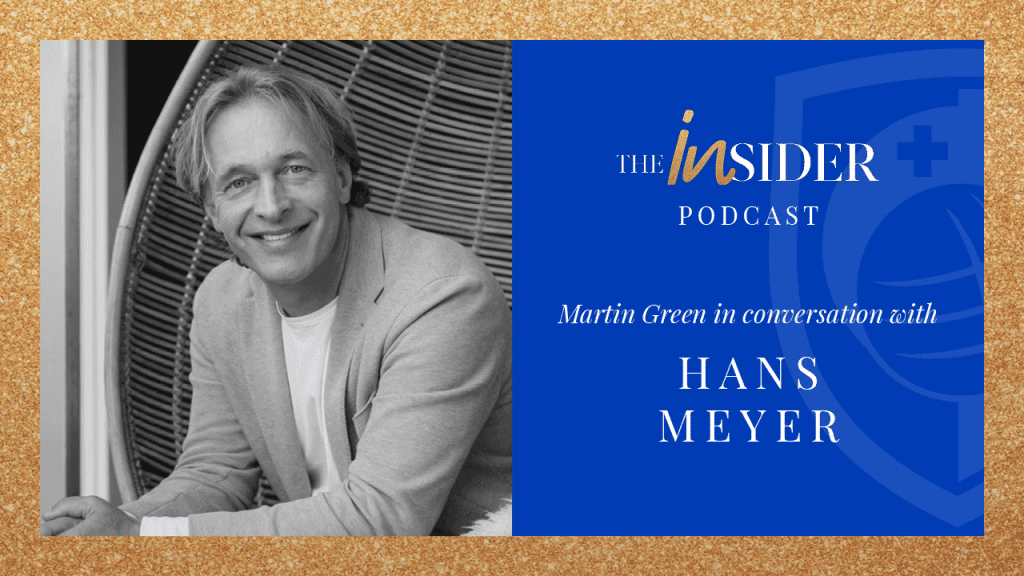
To conclude our first season of The Insider Podcast, host Martin Green took a day trip to Amsterdam to meet one of our industry's most innovative and industrious minds: Hans Meyer. The driving force behind citizenM, Hans is now applying his magic to the aparthotel sector, with the brand Zoku.
GLION – Hans Meyer podcast
Hans Meyer, welcome to The Insider Podcast.
Thank you for having me.
No problem. Now, I just arrived here this morning in Amsterdam and I’m sitting in this wonderful Zoku property; but we won’t talk about that straight away because I think perhaps the news hook for me sitting here talking to you today was the announcement recently of Marriott acquiring, or announcing that they were going to acquire, citizenM for a cool a third of a billion dollars and potentially more after that as well.
Now, people will know you as co-founder and one of the driving forces of citizenM. So from that perspective when you saw that news, and you maybe knew about it beforehand, what was your feeling when that news was announced?
I think it was a kind of a moment of reflection, definitely I think you can be very proud if something which started that small is basically acquired by one of the biggest hotel chains in the world. So I think it was an interesting moment where I basically looked back to the early stages and then realized how many people actually contributed also to the success, which I think I’m also very grateful for. But I think it’s kind of a proof point that bold ideas can scale.
And they can be successful. And thinking back to those early days, tell me a little bit about how the idea for the concept, how it came about; how you kind of turned that dream into reality.
Yeah, it was interesting. I think just before, I think it was 2001-2002, I read a piece of research from a Singaporean university where they put a lot of pictures in front of a lot of general managers. And the general managers, they should be able to point out their own brands, and actually they were not able to do so. So what I then realized is that the hotel industry really became commoditized. And the only difference was basically location and price – while I felt that there’s not, I think, a commoditized consumer. I mean, certain people want different things.
So there was a kind of a moment to basically reinvent the model and to think about what is for people really important and what can you leave out? And at that point in time, I mean a great night’s sleep, a great shower, and at that time, which was exceptional, free Wi-Fi, it was very much important, on a great location in a cool design. So then there were two segments that normally excluded each other, affordable and luxury, and the idea of citizenM was basically something what is kind of a paradox and bring these together in one new idea.
Yeah, and you said it very quickly, but cool design, I think, was pretty central. And that wasn’t something we were all that familiar with in the wider hospitality sector at that time either?
No, only maybe in the boutique hotel segment; but the boutique hotel segment if you think about Ian Schrager and Philip Stark, those hotels were pretty expensive. And I think it was interesting to also to look to other business models outside of the industry. So at that time, fashion became far more affordable with companies like H&M and Mexx and Zara. You had the low-cost carriers, they made the business model behind airlines far more efficient. And I just try to learn from those different business models, also for citizenM.
Interesting, interesting. And obviously we perhaps in hospitality have now become a bit more comfortable, familiar, call it what you will, with the idea of innovation, with new brands. We’ve seen a lot of new brands coming into the market. But I guess 20 years ago it was less of a fertile environment. I mean, was it a more challenging proposition to get something new and fresh off the ground back then?
I’m not sure whether it was more challenging. However, it wasn’t that common to innovate. I mean, if you look to 2000 and 50 years before, the only innovations were basically minibars and trouser presses, I would say. So not a lot has changed. But I think with the internet, also a lot of other opportunities came and also how we actually share information with other and I think that basically created a great foundation under innovation, but I think still people were not used to, well, be that bold, maybe. And also it was a little bit more difficult. I mean, if you’re bold, I mean you should, but that’s still the case today, you should be prepared to get some resistance.
Yeah, and in fact, actually, I noticed one of your quotes – we’ll sort of jump ahead – was, if no one’s pushing back, you’re not being bold enough. I thought that was quite an interesting quote. I mean, how difficult is it to get people to believe in your idea?
I think the most important thing is that you have to think about why you’re doing it. And I think if you doubt, I mean, if people are pushing back, you can enter into some sort of self-doubt, which is also common. And I treated it as a kind of a signal, but then I always go back, why am I actually doing this? And it’s a very simple thing that I think I’m doing. I’m doing this with and for people. So I work very closely together with the target audience.
We validate many things here, at that time at citizenM, but also at Zoku. And I think that’s one of the most important things to overcome that self-doubt. But of course, in the beginning, people think this is never going to work. And that’s also because they have a certain reference point. So if you think about at that time putting a hotel room in a container, because they’ve never seen the design of citizenM, everybody was thinking, oh, this is for prisoners, not for guests.
Or for shipping!
Or for shipping.
So, when you’re talking about, obviously you’re bringing other people on board is one thing, but when you talk about overcoming that self-doubt, that it is about having that validation about sort of checking it with the people who are actually going to be your end users, your guests basically.
And then again, people don’t always know what they want. People know what they don’t like, what frustrates them, for example, while they are traveling internationally. But like Steve Jobs said, he created a kind of a phone and an iPod and an internet browser. Nobody asked for that, but he basically created it and basically created a demand for that as well. So that’s also part of innovation.
Can you actually anticipate need in hospitality? Is it an industry where that technique works? And if you feel like you can jump ahead of the curve a little.
Yeah, I think what is, I mean, the beginning of Zoku. So there was, at that time, a kind of an idea that was a lot of innovation going on in the existing hotel industry, I would say, but the extended stay was still a double-size hotel room with a microwave, so very boring. While, when I was talking, I started with talking to 150 people from the target audience. I didn’t ask them what they want, but I asked them, okay, what is it that you don’t like about this living and working internationally?
And then people say, well, the internet’s often slow or it’s not functional, but most of the people said, I feel disconnected. So then you find a kind of a problem that you want to solve. And while collaborating very closely with your target audience, they basically give you the problem. And if nobody else is solving that, well, this is an option for you to solve it.
Yeah, yeah. But obviously, before you got to that point, the germ of the idea for Zoku must have come about, what was it that, within either the hospitality sector or just wider society, that kind of made the light bulb go off with regard to this concept?
I think when I did the interviews, 90% of people, they said, if you are in a city that you don’t know where you don’t speak the language and you stay there for longer periods, you start to feel disconnected. So disconnectedness was a kind of an important factor. If you look wider in society, loneliness has become a more important factor, if you look to business travel, a lot of people can relate to the fact that business travel can be pretty lonely. So this is a kind of a wider thing happening in society that you can tackle with a kind of a concept if you want to.
And in terms of, I mean, while we’re sitting here, we might as well talk a little bit about this concept. And if you’re gonna give me the elevator pitch for Zoku before we delve a bit more into its creation, just tell me what this place is for, what it’s about basically.
Zoku is a Japanese word for family, tribe, or clan. And Zoku was a subculture or phenomena in Japan in the 1970s when people with the same lifestyles started to live together. This was a kind of, it used to be a working title, but it became our name because tribe is very close to what the idea of Zoku, is. And Zoku is a hybrid between a home and an office, topped with hotel services, and what we call the social buzz of a thriving neighborhood. And we basically developed Zoku for digital nomads, international traveling professionals who are either self-employed or work for big corporates or scale-ups in tech, retail, creative industry and consultancy.
Yeah. And there are a lot of these people about, presumably? I mean, is this just kind of the… I suppose it’s the way our society, the way business has changed, with a lot more startups, a lot more digital, kind of what you saw happening in, in terms of sort of when, you know, when this was, when, this was being sort of initially created.
Yeah, it was already projected that the number of self-employed people would grow substantially. And like you say, startups are far more common than today. Many students leaving university, they become an entrepreneur instead of starting to work for a corporate.
Yeah, yeah. Plus, of course, we’ve got the whole, the ‘workcations’, the fact that people can be more connected, you know, fully remote working, I suppose some other sort of trends, I mean, without wishing to labor the Covid point too much. But I mean some of those other trends have sort of moved things in your favor as well, I guess?
Well, the thing is, to be quite honest I think Covid acted as a catalyst for this movement. So what happened is due to hybrid work and more and more people living and working internationally it’s very common now to work remotely, and that really tapped into this development.
Yeah. And just to jump back a little bit, because obviously you’re known now for your concepts, for your entrepreneurship, but I mean, looking back at your record, you did have a significant period working in the hospitality industry. So you’ve got, you know, a practical operational experience. How important do you think that was and how important do you think it is to anyone that wants to try the world of entrepreneurship and hospitality to at least get that kind of grounding by working in the business? Do you feel it was a benefit to you?
It’s a very interesting question. So for citizenM, when I started to work together with Concrete as the design agency that created citizenM, then they were not very experienced in the hotel industry, which I found, and I mean in the restaurant world, they were very experienced, but not in the hotel industry. I found that a big advantage. At that time, I was the only guy in that team that had hotel experience. And there’s two sides on the coin. First of all, I mean, you have to make sure that the ideas also fit into reality, but also the best ideas come from people with a kind of an outside perspective. So it’s really bringing those different ideas together.
Okay. So you almost had to unlearn some of your hospitality skills and knowledge in order to be more flexible?
Maybe not for me, because I’ve always been trying to work on the edges a little bit. But I think if you would only have a traditional hotel team together with a typical hotel designer, you would never be able to make these kinds of designs. I think also if you look to a lot of innovators in our industry, they basically came from outside of this industry.
Yeah, I mean if you take Philip Stark… and I think even Ian Schrager had a life before hotels. And you’ve brought me neatly back to CitizenM to cover a question I missed earlier on actually, because when you read the history of many successful projects, there’s usually at least one sliding doors – what we call sliding doors moment – where things could go either way and you look back and think actually wow, that was either the right decision or that fell in our favor. Was there such a moment with citizenM, or moments with citizenM, that kind of changed the course of it?
Well, there was definitely an interesting moment. So in the early stages, I had an advisor who helped me with checking the building regulations. And it seemed that everything would work out. And then we were already working for quite some time on the project. And the shipping container, the room of citizenM, the room size is 2m40 wide. And at some point, when investors were already on board, it appeared that the minimum width of a hotel room in the Netherlands should be 3m20. It’s a regulation.
So basically they missed that. And of course they apologized, but I had a huge problem because this shipping container is just 2m40. And then we start to have a conversation with the regulators. And we said, why is this 3m 20? And they explained a bed is around 2m. Then you have a desk of 80cm, and the rest of the space is walking space, and then you come with 3m20 because you should be able to go with a wheelchair through that narrow corridor. And then I said, okay, I cannot meet the regulations, but if we are able to meet the thinking and the reasoning for the regulations, can you then give me kind of an exception? And that’s what happened.
Wow, they actually they bought into the concept. And what was the… how did you get around it?
We were able to get a wheelchair, make a turning circle in two different areas in the room by changing the bathroom design a little bit.
That’s amazing. So yeah, that could have been… losing regulatory approval at that point would have been pretty spicy. And really after that, it was, I mean, nothing’s plain sailing, but basically things…
Yeah, I mean, like you said, nothing is plain sailing. At the end of the day, you always hear the pretty stories. And of course, every single company, a startup has its hurdles, like citizenM, like Zoku, but it worked out pretty well.
So tell me about, obviously you came up with this concept for Zoku with a significant success on your track record. So I’m sure there’s a kind of, there’s a little bit more buy-in around the business world. Like, you know, they’d seen what happened to citizenM. But this is a, and was at the time, a fresh concept tapping into what was a very, very nascent societal change with the sort of digital nomad, as you say, with the long stay aparthotels. It was not such the thing then. What was the initial reaction among your peers, financiers, the market? How did people react when you said, right, I’ve got this idea, this new idea?
It was kind of a mix. I can recall one particular conversation which I liked a lot. So, citizenM was an end product. It was developed throughout a period of around six years. When I showed Zoku, it was the beginning, and innovation and product development was kind of an iterative process. So what that particular person did, he compared phase one of Zoku with phase 12 from citizenM. And then he said, well, I think citizenM is better. It was a kind of a funny conversation.
It’s like, well hang on!
Wait for it, wait for it. We had many iterations of course after that, but I mean it really helps if you have some, if you did it before. But we also know a lot of artists who were famous because they were famous about one song; so it’s really kind of a risk what can happen. I mean you have to prove your point again, which I think is completely fair.
Yeah, yeah, particularly because it is a very different concept as well. As you say you’re not comparing like with like with the two, it’s just that the one guy might be there as the kind of red thread that’s running through it, but as you say, this is a different concept to citizenM.
Again the interesting thing also here was a lot of validation and research going into that; and we knew already before we would open that it would be a success because so many validations had gone into the project.
Yeah. You talked a little bit already about outside influences and the outside influences that went into citizenM. And this is, as you say, this is what you’ve referred to yourself as a blank page concept, but you’ve mentioned about taking influences. I mean, just take me through a little more about the way some of the influences from outside of the industry have kind of fed into your thinking.
Yeah, so Zoku is a Japanese word and what we wanted at that time where we started extended stay hotels, or aparthotels, they offered often rooms of 35-45 square meters. They were often located on the outskirts of the city because land prices were cheaper over there. While I felt that our target audience, they don’t want to sit in the outskirts, they also want to have a kind of a nice location. But then you have to be more efficient with space. And of course you cannot go as efficient with space as citizenM, because in citizenM you stay one or two or three nights, here you stay even sometimes months.
But at that time I went to Japan and in Japan they are pretty used to using space far more efficiently. I’ve even visited bigger ships and planes so also the space efficiency was at that time very much important. But also for Zoku, there was a kind of an inspiration from inside the industry, which were basically hostels. Because everybody who’s been in a hostel recognized the kind of a feeling. I jumped out of my bunk bed, grabbing a coffee, and then I’m going into the city. But no, I’m not going into city. I stay there for two hours chatting with a lot of people that I didn’t see before. Now capturing this feeling of being together didn’t happen in three, four or five star hotels. But at some point in your life, you don’t want to sleep in a bunk bed anymore, you don’t want to shower in the corridor. So that’s, that’s why we said, okay, try to combine all those different things and bringing actually people together into a place became the leading principle of Zoku.
Yeah. Yeah. Is there, is there sort of a target age range? You mentioned some of the kind of the character types that you think will find this kind of scenario appealing. Is there an upper or lower age limit in terms of, or is there a target age limit where you think people are most receptive to this kind of lifestyle?
What do you think the average age is?
My guess would be 29.
It’s 35. So, I feel that it’s not a typical age thing. I always share with the team that I still fit into the Zoku target audience. I’m 56. No, I think it’s more kind of about a mentality. I know people who are in their 30s and they are very old and also in their thinking. And I know people in their 70s who are who would fit perfectly here.
So it’s more a kind of mindset than any sort of particular thing. And what’s the longest anyone’s stayed at Zoku?
Nine months, but he could go only for six months and then due to regulations, he had to leave and then come back. But still we have people who lived here in the beginning and then after half a year found a flat here in Amsterdam. They’re still passing by. So this is interesting, but I mean, people stay between a few nights and also really until nine months. He had his own art collection.
In his room?
In his room We have an art swap in the corridor, so if you want to personalize your space a little bit and you don’t like that particular painting, you can change it for something else. Really give people a kind of control of the space they’re living in.
And the rooms themselves, obviously, I’ve just literally walked into the building, so I’ve not seen one. Are all the rooms sort of basically the same or do you have ones that are more kitted out for people who are going to be staying a month, maybe six weeks, whatever?
We have two sizes. So we’ve got the Loft is 24 square meters and the XL Loft is 30 square meters. I think if you stay for nine months the 30 might be a little bit more comfortable. However we even had people staying for six months and they preferred the smaller one, because it’s still very cozy, very efficient so it’s up to what people really want.
And in terms of how the rooms are kitted out, what do people have to use in terms of home comforts?
Well, I think the interesting thing, but I definitely would invite you to visit the room, is that in 99.9% of the hotel rooms, the bed is the most dominant piece of furniture. And that’s why you don’t invite somebody into your own space, because it feels a little bit awkward. But because people stay for long periods, you might want to invite somebody over for a meeting or for lunch or dinner or what have you. So the bed is hidden and with us the kitchen table is paramount and everything that you find in a normal house is stacked onto each other, and then the rest of the space is living space. So it’s a kind of a, we call it a kind of a spacious micro apartment where you find everything to live comfortably and to work every day.
And how long did it take to refine that that room space? And how do you go about, if you like, creating the perfect Zoku room?
I think there was a two-year process, and we obviously took our time. I think the first prototypes that we had, they would fit on my hand, because developing one prototype could cost around 100k. So as a starter we should find easier ways of doing that and more efficient ways. I went to bigger companies and I said, Okay, what do you think? Would your people stay in this space? For how long, how much would they be prepared to pay?
And when all that validation was done we built some whiteboard rooms in the harbor in Amsterdam and for every single whiteboard room we invited 100 to 150 people to validate it. So we built four and then the last room we fitted out completely with also the interior, we built it in this building. And that building was also tested by people staying here, sleeping here, two housekeeping companies. And we even used mobile EEG scanning where people got brain scanners and cameras where we could measure emotions. So again, here a lot of validation has been gone into it to make a product that people really like.
Do you think other hospitality, hotel, call it what you will, other companies within this industry go to that extent?
No, and the reason is, I think it’s also very simple, I mean, I also used to work in corporate hotel life. If I would go to our CEO and I said, okay, I would love to have a budget, I need a few years and give me total freedom and then I will tell you whether it will be successful. Yes or no? I think that will not happen in the corporate environment.
People want to have faster results and they are prepared to, with a cheese slicer to take the cool edges off, because it should be scalable. It’s also interesting if Marriott… is Marriott going to scale the culture and the vibe, or is Marriott going to dilute? That’s always the big question when a huge company takes over a very cool concept. I really hope the latter, because I think that’s in the interest of both citizenM and Marriott.
And also in a way, if you’re buying a brand that’s been successful by being a little different, almost in a way the worst thing you could then do is just sort of corporatize it. It wouldn’t appear to be the best way forward in terms of maximizing that asset.
Yeah, and from my experience it happens more than you think.
Yeah, but it’s interesting because that has become this idea, this buying into the brand. And this is something I had a conversation with the CFO of Accor, Martine Gerow, and obviously, as you know, Accor’s been very acquisitive over the last few years. And she was saying that in terms of, you know, broadening the brands, adding to the stable, the policy is to look outside the business, not to create from within. I mean, she went on record saying that, and I think we’ve seen that with Accor’s strategy on acquisitions. And I guess that comes back to what you were saying about within that corporate environment, it’s more difficult to be entrepreneurial, I guess, and to really get something quite groundbreaking done internally?
I think it’s almost impossible. And I can only acknowledge what she says. The thing is, you have to, if you start with innovation in a big corporate environment, how people judge you is whether you would fit in the system. And that basically kills everything. And I also tell people, just start with a white sheet of paper. And even if you have an existing hotel, start with a white sheet paper and how would you do it again if you would have all the opportunities? Because that really widens up your thinking. And after you’ve done that, you can still look, okay, what can I adapt in my own environment already today? If you start with the current system. That’s very difficult to innovate that.
Yeah, it comes back to what you’re saying about that blank page. You obviously see that as a really, really important element of coming up with something that’s sort of new and clever basically.
Yeah, the thing is, I also realized that it’s easier to start with a white sheet of paper. I mean, if you work for a big corporate and you need to innovate and you have all those different stakeholders with all opinions and judgments and what have you, it’s pretty difficult.
Yeah. And obviously, you may not want to answer this, but I’m sure as you started with many white sheets of paper, there’s probably maybe one concept out there which you look back on now and think, oh, whatever was I thinking? Probably never ever saw the light of day. Was there any sort of thing you want to confess to, where you started out on a track and thought, ah, actually, no, this is really not going to work?
We have a kind of a running gag here, because at some point there was a location on Munich airport that we’ve been approached with; and then I had a conversation internally ‘I would like to do a Zoku resort on an airport’. Airport resort on an airport, which of course sounds very strange. Veerle, who’s our Concept and Brand Director, still needs to laugh about it. But I still say, well, maybe it could work. I mean, of course it never came to fruition because we didn’t get the location or we choose not to pursue it. But even the designer I was working with, we made some fun about it and maybe it would be an idea that never would have worked, who knows?
But you know, when Zoku is this massive empire. Maybe you can just dip your toe back into it?
I mean, it’s very innovative though!
Yeah, and as you said, the whole purpose is to be innovative. Everything starts somewhere. But it’s interesting. I want to just jump back also to something because you mentioned about the importance of putting people first. I’ve seen you a couple of times on LinkedIn posts and whatever, and you’ve spoken about this before I know elsewhere, but for the benefit of my listeners, tell us more about this notion of how one puts people first and particularly about, I guess, one’s own people as well as obviously the people who are staying in a property. And how, maybe what advice perhaps from your experience, how brands, how operators, should really try and go about actually doing that rather than just saying they put people first as everyone does.
That’s a very popular wording, I think. At the end of the day, we are making things for people. I mean, you are in the hospitality business to do something for somebody else. And to, well, to put it very simple for me, is to make somebody happy. You can even create the opportunity to create a memorable moment that somebody will never forget. I think that’s also one of the coolest things about the hotel industry. Now, if you want to do that, you have to understand them. And I think that a lot of people talk, but they don’t listen. I’m a very big believer in that by listening to people and spending time, you can learn a lot about what’s in their mind and about their current and future behaviors. Now, what many brands don’t want to do, or even many CEOs, they don’t want to spend the time. I did interviews with 150 people myself. It took me almost a year to do that, and even now I’m still talking to our guests. What happens if the company becomes bigger, the distance between you and the guest, the distance between you and frontline employees, becomes bigger. You have to tackle that. So you have to continue the conversation with people.
We recently renovated here in Amsterdam and there are quite a lot of things that actually integrated and those ideas were brought up by the people who actually live and work here, which we take very seriously. And I feel that often we are focused on a solution, but not on the problem. And I’m pretty curious and obsessed about the problem and how it could solve it. But then in order to do that, you need to have the conversations with people, not one single time, but ideally you’re not only making it for people, but you’re making it with people.
Yeah. Yeah. And talking about people is there a sort of character type that you look for in terms of people to work with and for you in Zoku? Is there kind of a typical Zoku employee?
I mean, the typical Zoku employee, we always said, you want to introduce that person immediately to your friends and family, because that person is so nice. That’s on the top of the list. It’s not about resume, it’s more about character and mentality. And if we feel that somebody truly wants to work in this business, then making sure that we create the right environment for that.
Yeah, interesting. And on that people subject, obviously this podcast represents one of the leading hospitality schools. You’re a leading player in the hospitality industry. But it’s an industry which perhaps in the past has – I wouldn’t say struggled – but which has always had issues around attracting talent. So let’s put a little commercial together now. Why should young, ambitious, innovative individuals choose hospitality as a career path?
I think going back to what we said previously, I think the people part is so much important. And even now when tech is becoming more important, when AI is on the forefront, everything around people skills is very fundamental. So I feel that hospitality is the best industry to work in and to experience that. And maybe not everybody wants to stay forever in the hospitality industry. You can even think about that many people are at some point going into other industries because other industries also want them. So I think it’s a great way of building your future to work in the hospitality industry And I must say I mean I’ve been in industry already for decades, but I feel it’s still very very much rewarding. To truly talk to people to understand how you make them feel. And actually you can make people happy. I mean, that’s how cool is that?
Well, they do call it the happiness industry after all. Was it always your intention to go into that world.
I wanted to become a pilot for a jet. But my eyes were not good. And I was 12, 13 at that time and then I did a kind of a test, a career test, and then hospitality came out. I never thought about it before but that was the moment that it hooked me – and I never left.
Yeah, to this day forward! I want also to touch on another big issue, which is sustainability. And we’ll perhaps go on to talk a little bit about sustainable operations. But I know a big area of your interest is in terms of using buildings, reusing buildings, making the most of existing space and how the hospitality industry can obviously play a part in that. Perhaps there’s less office demand, whatever. But how can we do more to bring disused space back to life and how do brands like Zoku and other players within hospitality, how can they go about supporting that?
Love the question! I think sustainability, there’s a big blind spot in sustainability. I think we talk and we invest, we talk a lot and we invest millions in solar panels, energy-saving systems, what have you, but we hardly ever talk about how little we actually use what we got. So, last year the average office utilization was 38%. But that’s measured during a work week, so 40 hours per week. A week has 168 hours, so an office building is used, less than 10%. So that means 90% waste.
Now, if from tomorrow on, every single airplane in the world would only carry 10% of the capacity, everybody would say, this is stupid. The total CO2 emissions of offices worldwide is between Six and eight percent. So that means a big proportion of this is completely, I would call it, insane. And you can create a very sustainable building, but if it’s hardly ever occupied, it’s still not sustainable. So what we want to promote is that instead of single-use spaces like offices and hospitals and schools we try to combine different spaces.
And I think Zoku is a great example of that because we stack different business models on the same square meter during different moments of the week. I mean, if you would come in here on a Friday morning, for example, then between seven and nine, people are having breakfast here, the guests who stay with us. Then at nine o’clock, the co-working members come in. Then at five o’clock, the international guests come back from their work assignments, come back to Zoku, they mingle with the coworkers and the local community. At seven o’clock, we start with open podium and live music here in Zoku Amsterdam. In the weekends, the neighbors are having brunch.
So we want to intensify the way we are using space and therefore we can reduce the CO2 emission per person per hour.
Wow, so people use Zoku Amsterdam just as a workspace. There are people who…
Absolutely, absolutely. We even had companies, for example, one and a half years ago in Vienna, there was a Swedish software company. They rented the full hotel for a full month as a work from anywhere office. So we now see more and more people, they used to rent an office between brackets seven days a week. They only used it for one or two days a weekend. They said, let’s stop with that because I need to close a contract for five years. I need do my fit out and I can just go to Zoku, get great service and great F&B.
Interesting. What was this building before? Because it’s a really quite a striking building from the outside, actually. I mean, I’m quite a fan of this type of architecture, so it appeals to me particularly. But what was it before it was Zoku?
It used to be an office building. And this street won a prize for the ugliest street in Amsterdam in 2013. So that’s exactly the reason why we created a kind of an upside down hotel that we put the social space on the roof, because as you can see, the views are stunning. We have a greenhouse here. We’ve got roof gardens, roof terraces. So that really worked out here.
But as a fan of the more brutalist style of architecture, I think it’s great. It’s probably not everyone’s cup of tea though, to be fair.
Yeah, and also going forward, I think existing office buildings are very interesting for Zoku to convert them from, well, almost zombie buildings in a lot of cities in the US, to vivid buildings again. Really contribute to the community.
And your other properties in the other European cities that are open now, have they followed that similar model of taking on an existing…
No, those were new because at that time when we started to develop those, the economic situation in Europe was pretty good also for offices. So there were no redundant offices at that time, but they will come to the market now.
Interesting. And that brings me on to how far you think this brand, how far you think Zoku can go. What’s your ultimate ambition for it?
I think the first phase to have our initial growth phase, we’ve passed that. We’ve proven the model in four European cities. I think we are pretty successful and now we feel that we are ready for the second growth phase and also scaling up at a faster pace, initially focusing on Europe. But after that, we feel that Zoku has the potential to become a kind of a global brand. We’ve had quite a lot of interest over the past few years from the US, also from Asia, but initially focused on Europe, but we will scale up our growth.
Yeah, and in terms of the model, I mean, without sort of getting into the weeds too much, but in terms of the model, are you an owner operator with your properties and is that likely to be the case going forward?
No, we currently have three leases and one management agreement. But in order to scale – and we are also currently in the process of defining our growth strategy – we consider also real estate investments as well as more HMAs.
Interesting, yes. So you’re pretty flexible in terms of how you go about scaling up the business. And in terms of that scaling up process, are you calling back on some of the learnings from the early days of citizenM to guide your thinking in that?
I think also here already we learned quite a lot with the initial four hotels because they’re all in four different European capitals. That already was a kind of a… I think the biggest learning is in this stage. You have also saw that with citizenM, for example, there is few hotels, they took quite some time and after that you can grow faster. I think that Zoku also has that potential.
Interesting. And so for my final questions, I’d like to know what the future holds for Hans Meyer, and whether you think there’s another – yet another – groundbreaking idea swimming around in that brain of yours, or what you’re planning to do. How do you see the future for yourself?
Yeah, well, currently I’m also curious about that! But to be quite open about it, I’m still very much committed to Zoku. And I think these kinds of ideas only can spring up when your head is a little bit more empty. And currently I don’t have another one on my radar, but you never know what happens. But still, I think this is an important aspect. I also… given my age and my experience, I really love to mentor people more. I will also have close connections with hotel schools to be a little bit more in front of the class, which I like a lot. So this is also a part of my work going forward, really to work with younger people and at the same time also learning a lot from them as well.
Yeah, but I know as your brain food, if you like, that you take a very keen interest in the future of work. I mean, as you say, we’ve talked about how some of those changes have fed into your thinking for a concept like Zoku, but I think there’s more, well, I personally think there is more to come in terms of how we employ people, how we work, our processes. Tell me a little bit about what you’ve learned about that and where you think things are going in terms of the future of work?
I think with regards to the future of work, I mean, work used to be a place and it’s now becoming kind of more of an activity. I think people will work in different places. I think the integration of technology and AI will be a very big part of what’s coming next. But I also feel that collaborating, socializing, working together, remains a fundamental part of work, and also to work fun between people. I also have a kind of conversation… you can create a lot of fun stuff in your company, but I think if you work in a nice team with great people and you make a lot of fun and you feel that you work on something which gives you purpose, I think that becomes more important for people.
I’m curious what’s going to happen, I don’t know, actually, with the development of AI, because it is going to continue. Some people think that we will have a lot of free time in the next 20 years, but then, of course, maybe you become a carpenter next to your computer work, because I think all those kinds of craftsmanships also become more important. So I think the future of work is very exciting. But I think nobody knows exactly which direction it goes and how fast the changes will be.
Yeah, but I think for me that that human-to-human contact is the one thing that we need to be very careful about as things move away from what you’ve said, a sort of traditional place-based office environment. I know even in my own company where there’s been more remote working, you occasionally hear grumbles about like, well, you know, I never see anyone. And yeah, someone that all my working career has been spent basically in very much collegiate environments, I think it’s something we need to be wary of, isn’t it? And about keeping people together, giving people that that time together. Is that your take too?
Well, the thing is, if you look to what makes people happy, and I think one of the longest researches is from Harvard on that subject, and their conclusion is if you’re 50 and you have a number of friends and good social ties, then you’re most happy when you’re 80. And I think we are social animals, craving for social connections, and it’s very easy to hide yourself in the digital world, but also what you see already with quite a lot of young people. They suffer from mental problems and I feel we really have to support and promote that people come together and just have the great conversations just like we have here on this table while maybe later on we share bread, cheese and wine at the same time.
Yeah, and it’s just about having that human contact. But just to finish though, I mean, you touched on AI, so let’s do a little bit of crystal ball gazing just to finish off. I mean in terms of where you think AI can influence the hospitality sector, the hotel sector, let’s just finish with a little thought on perhaps where it may, and where it may not, have an impact on hotels.
I think it will definitely have an impact in the back office. It will have an impact on customer service like, for example, reservations. These are typical, I think, areas where AI will have a big impact. I think with regards to personalization, however, I have, for example, a love-hate relationship with personalization because if you would personalize everything for me based on what I wanted before, then you take the surprise out of my life. So there are some things, but I think still the human, I mean, I don’t see very soon happening that a robot will serve my coffee. I mean we’ve seen some experiments, it’s more fun, but I truly like the real human connection.
Yeah, yeah. And I must admit, just even just walking in here this morning, your staff are so friendly and just one of the warmest welcomes I’ve had walking into a hospitality property. So it’s clearly got into the mindset here.
So, Hans Meyer, that’s been fantastic. Thank you so much for your insights and thank you for joining The Insider Podcast.
I very much appreciate the conversation. Thank you so much.
Our Bachelor’s in International Hospitality Business is your first-class ticket to a global career.