Our Bachelor’s in International Hospitality Business is your first-class ticket to a global career.

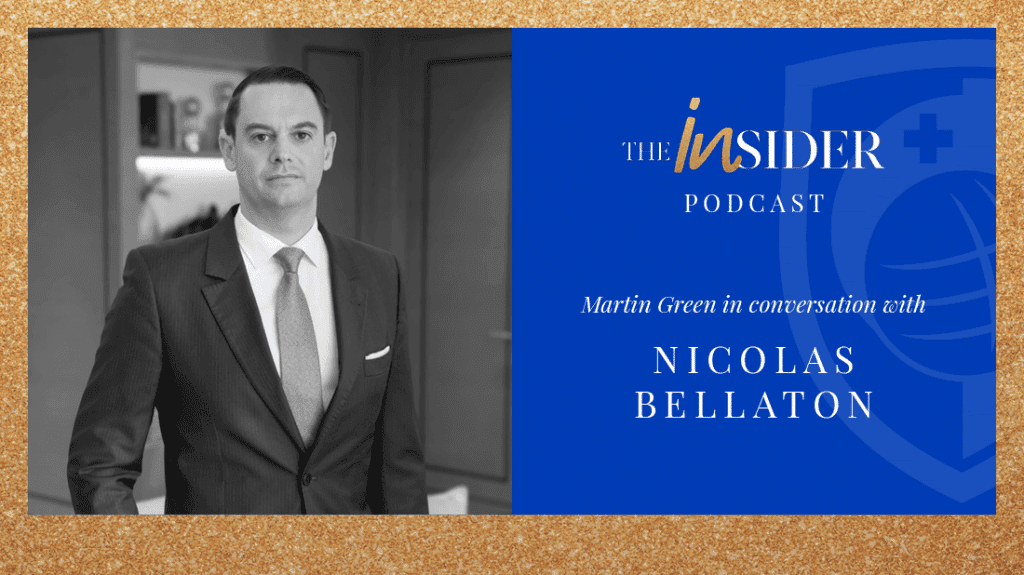
GLION – Nicolas Bellaton podcast
For this episode, my Dubai adventure took me to the signature royal suite at the stunning Address Downtown hotel, complete with its unbeatable balcony views of the Burj Khalifa skyscraper. This fabulous hotel is a development of Dubai’s Emaar Group and it’s just one of the properties overseen by Emaar’s head of hospitality, Nicolas Bellaton. Nicolas is a serious player in luxury hospitality with more than two decades in the business, including as GM of the Armani Hotel Dubai, the first in the world to carry the Armani name. With all that in mind, I began our conversation by asking Nicolas how the demands of the luxury guest have evolved during his time at the sharp end of the business.
It did evolve quite a lot since, yeah, it’s now 25 years I’m in the field. So yeah we moved on from I would say a little bit of an old school way of operating hotels and experience to definitely crafting experiences, adjusting to the needs as well of different type of travelers. But I think basics are still there. When I say basics, for example, the basic common sense of attention to how many seconds do I have eye contact or in how many minutes do you bring me the bill. But much more than this, I think we all up to the game, all the luxury brands get that.
And now it’s all about definitely what’s a different experience? What special moment you can bring me? You can organize… It goes beyond much more than our ecosystem as well. So with whom am I partnering? For example, in Dubai, it’s all about desert safaris, aquariums, whatever entertainment you can have. So it’s very, very interesting. Obviously, technology plays a big part.
I think one of the other huge game changers is that especially in the high luxury industry, you don’t compare any more with the best hotel in Dubai, but you have in your mind the experience you had in Paris and you are expecting the same. Or Singapore, or whatever big city, or New York. So it’s good. It pushed us really far to continue to evolve and invent and create those experiences.
With more luxury brands now playing in that space, has it increased the need for differentiation… for sort of uniqueness within a certain kind of hotel, so your brand has a certain unique personality? Is that part of it as well?
Yes, definitely. I think we all as well focus on gaining and obtaining much more and more loyalty. So it definitely focused us on what, in my first age, was listening and name usage. Now we go far beyond name usage, but what water, what sugar-free desserts you like and which side of the bed you like to sleep on, et cetera, et cetera.
Really, right down to the fine details?
For sure. And for us, for example, in Address as well, we have a strong focus on scent. So people come as well and recognize… kind of indirectly recognize… it is us through the scent in our lobbies, which is a really individually developed scent…
It even comes down to kind of sensory perceptions and having a sort of sensory brand as well?
Correct, correct. We shift as well the mood of our lobbies in the evening through all our brands with a special dimmed level with indirect lights, dimmed candles, etc. in all our properties. You see, that’s where we’ve fully evolved. It’s not only about design of the property, it’s as well those indirect touches. We don’t talk about, but we hopefully recognize, that each of our regular guests, they come for that indirectly.
And of course, in luxury, service plays a big part. Do you think service excellence is the number one differentiator, the number one target for a luxury brand?
Yes, yes, yes. I often share with the team, that’s why we are so focused on our colleagues. And that service excellence to me is back to genuine kindness. I often say as well, we can always do mistakes on timing or, I don’t know, undercook whatever fish, but the way we deal with it and this sense of welcoming will make the full difference. And yeah, one of the overall objectives of that… definitely this kindness and name recognition of our employees will pop up in any TripAdvisor review. So for us, it’s a really, really big focus. And we may touch the topic after, but much more than skill set as well. So it’s all about empathy.
So those soft skills, basically. And can they be taught? Or is that something you just look for in recruitment? And you know, when you’re actually trying to find those people?
Good question! I’ve personally tried to teach it. I would say you need to have, back to the employee charisma and interest, you need to have that passion. And then you can definitely put systems in place for, let’s say, four or five tricks like this. The rest, it’s every guest is different. They come for, I don’t know, 40 year wedding anniversary and then you make it special, or it’s a special amenity. You just won an award or your 17th birthday.
But just, I suppose, even just in those kinds of those personal interactions, just a sort of chance meeting in the lobby or a request that’s dealt with, I suppose, it’s all about just going that extra mile, if you like.
Correct. And I think one of the keys as well, we are focused on is to have what I call free time from the employee. So we have a strong policy of less meetings and a strong focus on technology to make everything fast. To have a free receptionist to hang in our lobbies. And that moment of a very informal talk will definitely help him to grasp, say, oh, okay, during that conversation, he told me he’s going, whatever, we will arrange a car or we will arrange, I don’t know, some fresh welcome amenities because they come back from the desert and stuff like that. So that is as well, I think, a key focus for us.
And I suppose all of that wraps up into what we nowadays call customer experience, CX, to give it its acronym. That’s presumably a big focus. Several people I’ve spoken to already in Dubai on this trip, we’ve talked about customer experience, just how important it is in terms of building loyalty. Is that your take as well?
Yes, more than ever. What I call metrics. It’s, but again, it’s the only the phase one. So we can have a metric, we can track it. But how do we influence all that? So yes, there is, I would say the efficiency calculation from a number of, I don’t know, waiters we can serve whatever ‘X’ covers or credit in housekeeping or how many conversions in sales. But we want to go really far away from this. It’s a base to work on what would be, again, beneficial to the guest and increase those metrics. And I think one of the core focuses for us is to have people with time to exchange with the guest, whether it’s for a wedding organization or nothing related to us.
Just a personal interaction…
Correct. You know, we are quite… we do have some business hotels, but most of our clientele are tourists wherever we are in the world. So that’s really key as well for this master concierge, I would say, and service excellence to help through all the team. Again, technology is the backbone.
I was going to say how that influences the technology. Obviously, there’s presumably two sides. One is this kind of knowing the customer, but I guess there’s also smoothing processes to free that time up that you were talking about. It’s a kind of double-edged weapon, I guess.
Yes, yes, yes. And it can be very inefficient as well. So we really want to fast track, as well, the communication between the concierge and the housekeeper and make it really straight to the point. Obviously, you know, having a leader of the Emaar Group who as well has an overlook at [technology company] Noon, really helps us and is keeping us very alert on what technology can do.
And frankly, at least as far as I’m concerned, yes, we’re still again old-style hotelier a bit. We can evolve so much in that front. Obviously, I’m much more exposed as well on the retail side now with the Dubai Mall and all the malls that Emaar has. So we are really fast tracking as well as consolidating all the different software we can use from an operational perspective. And kind of put it in one core base and that will be beneficial as well from the CRM perspective. And just that screen that the receptionist can see on your preferences shouldn’t be the same as the spa, ladies and gentlemen and the restaurant. So yeah it goes again. Technology is I think it is but it will… we’re just starting the journey. It will become massive on that guest journey, guest experience and service excellence.
And it’s interesting, you mentioned about retail, because I think one of the other big changes we’ve seen is the need for amazing service, amazing customer experience, not just in hospitality, but really in every customer-facing business, whether it’s a leisure business, whether it’s retail, whether it’s a hotel, a restaurant. Is that what you’re also seeing, that there’s a very high level of expectation now in the service wherever the customer’s going?
Definitely for sure, and that’s why as well. We see what I think very beneficial cross-industry new hires, whether it’s someone from retail joining on sales and marketing or on F&B leadership from a retail perspective and vice versa. I think it’s really good and refreshing for all of us from the industry. And it pays off, right? Just if I take only the marketing efforts, you know, especially again in old capital, but in Dubai, you have so many hotels, so many restaurants. So how do you perform? How do you make sure you exist? It’s not only about spending ‘X’ amount of money, it’s how strategically with which partners on the trends.
So that’s very, very challenging for our leaders and GM and hotel managers to grasp that and understand and influence as well on what we can do. Again, you know, I think this is back to, I think the solidification of the service excellence. First, deliver the best experience, the best hotel. This is very robust. But then how do you make sure that people know about it?
And tell others about it. In the modern world we live in, that’s important…
That’s where the guest surveys and all the platforms became crucial and the influencers and etc. It’s a complete and constant shift on all this. We have to be dynamic and agile. Which we definitely are here in Emaar.
So, we’re sitting here today in Dubai with, I must say, an amazing view of the Burj Khalifa behind me in this suite. I’ve unfortunately only had a couple of days here, just to get a really basic taste of Dubai, but I know that it’s been your home for some years now, so you’ve got a much wider perspective than me. So let me take this opportunity to ask you to give a bit of an insider’s view of Dubai and why you think it’s been so successful as a destination.
It’s actually always hard to believe. So I’m seven years now in Dubai, but I did spend in 2001 about a year and a half for another brand opening a hotel. It’s just crazy what happened. What is even further amazing is that they’re not stopping, never stopping. And what you see on there, I remember what I saw on a small mock-up room on a new community in a new area for Dubai, five years after is delivered and alive, full of building, residents, hotels, amazing outlets. And yeah, that’s, that is an amazing city that become, I think, the further activation and success of Dubai really transpired after Covid. So they really, we really bounced back on the travel.
Because obviously you were here throughout that time, yeah?
Correct, correct. Again, I have to pay a lot of appreciation and respect to the country itself and Dubai Tourism as well. You see that in most, at least in Europe, most of the operators, you are your hotel and you do your own marketing. But here we are really all together, obviously the Tourism Ministry first and you sell all together destination. And that’s a huge game changer for sure in terms of everything, in terms of impact, in terms of funding as well, of course. But that is great. And obviously, still the concentration of hotels, despite a small footprint at the end of the day in Dubai, makes it amazing. But we do have as well a lot to sell, whether it’s beach experience, shopping experience and much more as well on the because of the event in the other industries developing on the finance side, on the business, AI. So the country is really, really going forward.
I think that’s an important point that Dubai is not just about tourism and hospitality. You know, there is there’s technology, there’s startups. It’s the big financial center for the region. So I mean, it’s not a one-trick pony as a city. There’s lots going on here.
Yes, yes, movie recording, the big home place for Google and all those big companies. So no, that is the trend. At the end of the day, I believe we have less credits. We have the AAA location. So we really have to deliver this excellent service we talked about. And the journey will continue on the expansion. And I believe a lot of new… fantastic new projects are coming in Dubai.
You mentioned you were here in the very early 2000s. Did it really sort of shock you in a good way when you then came back seven years ago and saw how it had changed? Was it quite eye-opening?
It’s indeed shocking and quite impressive. It looks like a dream… the Arabian dream! But yeah, when I was here in 2000, maybe most probably five or six hotels, 100 cafés I remember. And coming back after, a full new city shifted with Downtown, the DFC, completely new face…
So none of that was basically there when you were in the first time? That’s extraordinary.
Yeah, mostly down to one man with a team, His Highness Sheikh Mohammed. So that’s amazing. And again, what’s amazing is that they continue on that journey. They never stop. They are where they are, but there are really big, big, big objectives. And it is robust and happening.
Yeah, and of course, one element of it, which you didn’t mention, which I’m sure we can talk about a little bit, is the food. I mean, I’ve spoken to a couple of people here, and I mean, Dubai is not just a taker of food innovation. Dubai is becoming a leader in food innovation. You’ve got the best chefs, the best restaurants. I mean, I was amazed flicking through the directory. It’s just like there’s an unlimited amount of amazing places to eat here. That’s obviously a big pull factor as well.
Yes, yes, yes. And again, credit to the government leadership. I think the other game changer was two, three years ago now or four, when the books Gault&Millau, Michelin and all the best critics came to the city and drastically elevated the entire city and culinary-wise, service-wise, obviously as you mentioned, placed Dubai on the map as a culinary destination as well. So, us as a hotel operator, obviously made a big change as well because as you know it’s one of the USP or first motivation of the travelers, good food. Good food, good restaurant, good ambience. So that helped us as well on the success. It’s interesting as well, more and more to see home-grown restaurants going over now London or Paris or stuff like that, so it’s great.
I guess that is because you’ve reached critical mass and now it can really thrive.
Correct. And then, you know, the big mix city of residents and the full international permanent residents really created a specific hub in Dubai where you can find the best of almost each culinary experience, whether it’s Italian, French, Indian, Pakistani, American hamburgers and stuff like that. So that’s quite unique.
Interesting. And do you think actually in terms of the true secret of success, and you just touched on it when we were just talking, that joined-up thinking, as a couple of people I’ve spoken to when I’ve been here, they’ve tried to put their finger on what it is, is that this connection between like infrastructure, tourism, connectivity, transportation and obviously, you know, the hoteliers, the businesses. Do you think that, in your experience, it’s almost like fairly unique that it’s so joined up and pushing so hard towards one goal?
Yes, for sure. And yeah, it’s like any project, when there is a full alignment, it always goes faster. But I would say, as well, the communication was key as well. It’s a fantastic communication, very regular with the highest-ranking ministries. So when communication is so clear and transparent, and they ask for help, we ask their help. That can only be beneficial and fast tracking every project we embrace.
So yeah, if you look at the, now it’s been two years or three years, but the ‘kids for free’ campaign for the summer, for example, where obviously it’s less of a high season for us, worked magically. But every operator, every government, Dubai Tourism, everybody was talking about it and it’s a successful story. Where the families can come, obviously, and shopping. And again, less of a tourism now, but from an infrastructure and building constructions perspective, everything was very smartly thought. Each of our hotels in Downtown, they have a link, an air-conditioned tunnel to go to Dubai Mall. So yeah, versus other cities, they don’t have that. So it’s really a plus in USPs.
Interesting, interesting. Now, traveling around Dubai as I’ve done, I have to say, you know, the Emaar name is everywhere. You can’t escape the name. It’s on a lot of buildings here. So obviously Emaar, I know Emaar is clearly very, very active across the board. But maybe just tell us, from your role as head of hospitality, tell us a little bit about Emaar’s place in the UAE in the hospitality ecosystem.
Yeah, so it’s an amazing home-grown multi-hotel brand that originally was, you know, same thing when they were building the Dubai we see now, they had two, three home-grown operators and Emaar Hospitality was one of those. And with the success they made of the Address brand, for example, they attracted all the different international operators. But having said that, yes, it’s crucial for us. Obviously, we are part of a wider group. That’s where all the signs you see in Downtown, which is a real estate, so a lot of building, a lot of residences.
People forget as well that as Emaar Hospitality, yes, we have hotels, but we have as well, we are managing 24 residences in Dubai, for example, and much more in the world. So, it is a great ecosystem. Most of the time, it’s part of master plans. Obviously Downtown is one, but a master plan that came to life two years ago now, Creek Harbour. I’m not sure you had the experience to go there, but a full new neighborhood in Dubai. We are now multi-residencies. We have four hotels there. Address, Vida… two Vidas and one Palace. So yeah, it’s really part of the, again, DNA, part of the master plan community offering. And that’s one part of our development for sure. And we do have very, very successful projects to come there in the same sense.
Now, I’m sure you love them all, but if you want to maybe pick out two or three of what you think are the most notable, perhaps the best known or just notable properties within your portfolio. What are some of the names that you’ve got there?
Let me try not to be sentimental or emotional about it. But listen, I started with my hospitality with Armani. So Burj Khalifa Armani Hotel is definitely, by the building itself, the landmark, the highest luxury brand and special lifestyle project we have. Other than that, Address Downtown remains really the flagship and landmark of Address. A very special everything: building, location, service. It’s quite a small size number of keys attached to quite a nice residential area as well from residences.
So this is one of the many, but one of the flagships. We are very proud as well of the latest addition in Creek Harbour, especially the Address as well, which is very much the new look and feel of Address, much more open… open lobbies, more lifestyle as well. In the world, for example, on the Egyptian coast, Marassi, I invite you to go there. It’s unbelievable. You have the beautiful, normal Egypt and then you enter in a new world in Marassi, obviously fully developed by Emaar. And there we have the very boutique Al Alamein Hotel, which is old, full of history, a landmark with a cinema from an Egyptian actress. And obviously two Addresses and one Vida. So it’s another big flagship as a destination.
And yeah, Milan, the hometown of Mr. Armani, so Armani Hotel. That’s another one. I can go on and on… in Mecca as well in Saudi, we are very proud to be operating this hotel in this very special destination for us.
Of course, that’s important to note that you’re an international operator. This is not just a UAE story. This is a global story.
Yes, of course.
Interesting. Now, Emaar, as you mentioned, it’s got its name on a lot of properties because it’s a property company, it’s a property developer, that’s a big part of its business. In terms of the relationship between hospitality, real estate, optimizing real estate value, I know that’s an area that’s close to your heart. Tell us a little bit about how that works, how there’s the interaction between the two.
Yes, yes. And let me re-emphasize as well, I think it’s for the new generation and the new students that is, I think that is the future. And very, very, very close relationship in every way. So, yes, we are often part of, as I mentioned, of a big master plan of a new community. But it’s very interesting, the close relationship on whatever the project is. If there is a mall, okay, where are we placed? Where are we located next to this mall? How many percentile of number of residences do we need as hotel bedrooms? And what… what brand actually you need? Do you need a five-star top luxury or maybe it doesn’t match that area?
So that is super interesting. I would say obviously from me as I’ve always been very interested by development, it really takes you to another level as a hotel brand. On the optimization, the real estate of the square meter, obviously the back offices, which is always a concern from an ownership perspective. How much we put everything in front of the house and limit the back of the house, efficiencies, accesses, loading bay is always very costly. So yeah, that is an amazing close relationship and together with celebrity designers as well. In many projects, we have now. It’s really enriching your experience.
I try to take always the GMs, hotel managers, a little bit to basically train them further. And again, it goes again on that mindset. You need to be performing in the world. So, working with architects that did the best in, again, Singapore, China or whatever it is or in Europe, they bring real added value. And always stay humble. I have a strong belief: we operators always kill design. And I, you know, I understood that. Yeah, I understood that basically when I was Director of Food and Beverage, you know. I was admitting one of those, oh no, I need a service station there, there, there. And then project delivered, and you can see that the service station is definitely killing your… the red carpet or the entrance or the ambience.
So, and then became massive, all the paperwork and the computers. So yes, early ages already, from an early age, I already understood that we should let them do and then we’ll figure it out and put all those back office computers, etc. behind. But yeah, very enriching.
And back to real estate, it’s a real different adventure. And what makes the difference as well for us is that because we are as well owning most of the hotels we build, it’s a very much entrepreneurship mindset. And that’s very specific to the few brands that have the same model. And it really makes a difference, right? I go back to basics, but I owned my own restaurant and hotel when I was very young, but it taught me one thing. I know how much is a spoon. And how much is, I don’t know, an apron in the kitchen, not to wipe your shoes with it. But it’s, that is nice to see at the huge scale we have as Emaar Hospitality, how everybody is thinking that way.
Yeah, because also with these multi-use, these big multi-use developments, it’s nice to have a part right at the outset and to get the hospitality voice heard, you know, when this, in the very, very early stages, because as you say, you’re involved in the master planning. So that must be, I mean, obviously, it adds some complexity, but must be a lot more fun?
Yes, yes, indeed, indeed. And then, yeah, you learn as well because you’re on a common meeting. You learn about the entertainment, what they’re going to plan. I mean, it just really opens your eyes to the entire business destination.
Sure, sure. Now, if we’re talking about big projects, and we’re talking about this region, we can’t not talk about Saudi Arabia. It’s obviously a big story across the industry. Vision 2030, some of the giga-projects which are going on. From your view, from your Dubai perspective, do you see Saudi as a sort of competitive threat or is it just a case of, like, it’s good for all because it’s bringing more interest to the region? What’s your take on Saudi?
No, for sure, it’s wonderful for the entire GCC region. You know, when you start to have like two, three, four, five destinations, you’re definitely stronger in the world. And we do have as well a beautiful project coming up in Saudi, actually. So that’s very beneficial. And I would add, as well, it’s great to push us further. As Dubai or as Emaar Hospitality, they know they’re going to do a great job. We will be proud in the region, but how we can do even better and continue to do better?
And that’s, I think, what Dubai is doing. Keep going. Never say, yes, we are super happy. We’re going to stop. No, no, no, no. Just go forward, push, push, push. I think those crystallizations of the publications, they do always a lot of more travelers coming to destination on the airport or in Dubai Mall. It just shows how everything is possible. You know, one thing that I as well, I’ve been really trained on is capacity never stops. So you can always gain more and more and more if you’re agile and well-programmed. And especially, you know, of course, for such attendance on a scale in Dubai Mall or at the top of Burj Khalifa, they have so many visitors. But they always manage to find a way to get more and provide the service to more people. So yeah, it’s beneficial for Saudi to push. And definitely, I’m sure you look at Abu Dhabi as well.
I was going to say, actually, there’s been huge growth in the luxury hotel sector there, hasn’t there?
Correct, correct. And a bit like similar to Dubai, you know, the Downtown is still there, but the Saadiyat part, which are beautiful, pristine beach, is as well booming now. So, yeah, I don’t know, it’s good.
And of course, one of the other things, if we’re taking a slightly more regional perspective, one of the things I’ve learned since I’ve been out here is that gaming is coming to the Emirates with the Wynn opening. I think it’s a couple of years’ time? Yes. So that’s another different angle that’s being brought into the Emirati story.
Correct, correct, correct. No doubt that it will really help and transform Ras al-Khaimah as well. So again, it’s all about offering differentiation. What else can we bring? More and more products, basically. And it’s amazing how it’s enriching the overall destination.
Exactly. Now, I wanted to touch back on something, because you’ve had a front row seat in this trend with the work that you’ve done, things like Armani, Bulgari, etc. It’s been quite an interesting trend of brands from the pure luxury space that have moved into the hospitality space. From your perspective, why do you think it makes sense for them to do that? Why do you think, what’s prompted these brands to diversify in this way?
Yeah, I think it was a need as well from both sides to break this, again, hotel industry – retail. And that was the first intention as well, to diversify a little bit. Not the business, because it’s a business running, entrepreneurship, but it’s more about as well image. Obviously, they are quite rightfully demanding on the location and what building, but you see, for example, Mr. Armani having this landmark in Milan or in Burj Khalifa. Such a high contribution to the brand from an image perspective and premium location.
And then many of those are going that way, especially for stand-alone residences. I believe it’s a great approach as well for each side, definitely. And what I like anyway as a destination is that it brings, because of the strong partnership and a strong bond, it enhances the quality of the product itself. For sure. So some brands are purely only on the FF&E (furniture, fixtures & equipment) or clocks or stuff like that, or the lobby. And some others like us with Mr. Armani really want to be on the full lifestyle as well as service and the culinary as well from Armani Ristorante. So it depends on which scale, but I think it’s great and definitely helped us as a hotel industry to step up and offer something different.
But I think it also demonstrates how the industry is becoming a little bit more creative and lateral thinking, because it’s not just about brands like Armani and Bulgari coming in, but we see luxury operators getting involved in private yacht hire, private aviation, a number of other areas of what we would call the kind of broader luxury sector. Does that intrigue you that there is this opening up? It’s almost like the borders are coming down between what’s luxury and what’s hospitality and what’s aviation. It seems a lot more of a melting pot now. Is that how you see it?
Yes, yes. And you know, more and more hospitality groups. I didn’t talk about it. We do have as well three golf [courses] and one polo club, another one to come soon. We are running two marinas for boat marinas. So yeah, I think the diversification is always key as well. Same thing on the product offering. We all want, I don’t like this word, but we all want to have a ‘hyper-luxury lifestyle’. And that is part of the journey on this. And again, more than a real business, it’s all about the image of the brand and diversification.
You know, Vida, for example, for us was really key in announcing the Emaar Hospitality Group into a completely different market. We were hyper-luxury – Armani, Address – and Vida is a secret sauce of basically the products itself, the room and the lobbies are five star. And the service is much more relaxed for connected travelers. That is really amazing. How many people knocking the door and I want Vida brand for hotel or for… so that’s crystallized what I’m talking about. Hey, your high luxury brand, which in the past I worked for, Four Seasons being one for long, they never diversified, right? It’s Four Seasons and we stick there.
As a group, and I think it’s really beneficial to have two or three brands as we do. And as long as it’s very well crystallized and in differentiation, that is great. And back to the brands, I think it’s as well a great, you know, if I give you a small anecdote, but now about 20 years ago, director of food and beverage in Hotel de Bergues in Geneva, I was the first one with the team to approach Hermès and have outdoor Hermès furniture, cushions. But I remember how much I struggled with Hermès to get it done, because it was the first outdoor residence.
It came out of the blue as a request, I’m sure.
Yes, but the impact of it… was just really unbelievable. And everybody was coming. I mean, you know, we operators, we’re very proud, good food, good service. People were coming to see those pillows. And like yeah 15 years after or 10 years we see, and now it’s all over, it’s beautiful all those beach clubs partnering with brands.
I was gonna say those pop-ups are everywhere now. So you were one of the pioneers for that basically?
No I don’t pretend to, but at least for Geneva, small city, yes. But that’s again one evolution. We talked about the old beginning but what is very nice to see and you know that is great because again refining the service, the tissue that the Prada or Hermès will select for your furniture will be definitely much better than whatever we hoteliers can do because it’s their skill set.
Yes, of course. So it’s cherry-pickinging the right elements. It’s not just necessarily collaborations for their own sake. It’s something which is going to add some value somewhere down the line.
Indeed. Indeed. Partnership, I think, is really key for all of us to evolve. You want to do Champagne room, we have Dom Pérignon or Cristal Roderer working with you. It’s another dimension of what you could do. And on and on. I mean, with Mr Armani, for example, is highly contributive obviously in the uniform for example. That’s magic. All of this, and it’s great again for our team members. Me being one, you discover so much. You know how much silk you need in your lip napkin? 40% because the ladies’ lip is a bit more sensitive. You need to be less abrasive not to remove lipstick. I mean, that’s small tricks I’m talking about, but that is the attention to details that we were mentioning.
And so when you travel, you’re still keeping your eyes open. You’re still looking for inspiration and ideas wherever you go, basically?
Yes. So wherever we go and from all over the brands. As I say, I always admire obviously this big scale, but McDonald’s, for example, for their toy and partnership with Disney, etc. And they made it magic for the kids, right? So how can we try to compete a little bit or get inspired from that?
Just get that thing that’s going to engage.
Correct. And the systematic quality of the hamburgers, I think it’s great as well. You know, in F&B, it’s always a struggle on consistency of food. Or, I mean, if I look for stewarding, don’t think twice. Just go to McDonald’s, for example. I’m talking about McDonald’s because it’s always extreme. You say, well, McDonald’s, It’s not your field. I said, yeah, it is. It is.
That shows how you can learn from other assets, not just about luxury, not only from luxury. You can cross-fertilize this.
And again, a big smile from the cashier in McDonald’s or in a beautiful retailer in Cartier in Dubai Mall. That’s what matters. The rest, we will teach them how to do.
It’s basically how you feel when you walk back out of the door, have you had a great time regardless of what you’ve been trying to do. I just want to finish with a little bit of a look to the future and to give you a chance to give us a sneak preview or tell us a little bit about what’s in the pipeline for Emaar Hospitality. So what’s coming up that’s getting you excited?
So, we do have a great pipeline of openings, very well-planned. So, whether it’s an additional stand-alone hotel, we just opened Vida Dubai Mall mid-February, for example, in Downtown. We will open another hotel, Palace Hotel, in Marassi in Egypt, and many residencies as well, by the end of the year, three.
Obviously, 2026 is as exciting. We’ve as well much more fitness clubs. We have fitness clubs called Veo which as well are taking a milestone on expansion next year. Yeah, excited. I’m always excited by new openings, but as well as excited on this journey from, again, a service-excellence perspective and the technology we’re embracing and continue having with Emaar and Address specifically.
So all those kinds of projects really will engrave furthermore the strength of a brand and enable us to further expand in only the key locations. So, yes, and development is always two areas for us. Obviously, as we mentioned, the master plan community development within Emaar and as well with other partners in the world.
Excellent. All sounds very exciting. So, Nicolas Bellaton, thank you so much for your time this morning.
Thank you so much for having me. I appreciate it. Thank you.
Our Bachelor’s in International Hospitality Business is your first-class ticket to a global career.