
Can an academic institution help companies and markets operate more effectively, solve industry challenges and bring new innovations to important commercial sectors – all while instilling the curiosity and critical thinking that enables graduates to stand out in the job market?
This ambition has, in recent years, served to re-energize the applied research activities undertaken by faculty at Glion. In parallel with earning accreditation as a University of Applied Sciences Institute, having a more robust and far-reaching research agenda is all about fostering a culture of innovation and sustainability throughout the school, enabling us to make a positive and lasting impact on industries, communities and wider society.
Since last December, the responsibility for spearheading our research effort has belonged to Finnish-Swiss academic Dr. Tiia Mäkinen, in her role as Dean of Research, Partnerships & Innovation. Tiia joined Glion some three years ago, initially as a visiting lecturer, before becoming Program Director of the Master’s in Hospitality, Entrepreneurship & Innovation.
The luxury-hospitality crossroads
Under its recently adopted name Glion Research, Partnerships & Innovation (GRPI), this initiative sits at the intersection of luxury and hospitality, fully in keeping with our academic portfolio and industry positioning. It’s a rich seam to mine for applied research, one that Tiia agrees is relatively undeveloped compared with other topic areas. Why is this?
“I think it’s probably driven by the fact that luxury has often been seen as a subset of marketing and management and thus hasn’t been given its own distinctive research profile. In the case of hospitality, much of the research that has been done has tended to focus on the vocational and practice-oriented side of the business, rather than the more interesting areas around management, finance and strategy,” Tiia explains.
“But this is an incredibly interesting space where ultra-high-net-worth guest psychology meets service system design; where regenerative business models meet the economics of heritage brand management; and where AI adoption meets the human craft of five-star service delivery,” she adds.
"The boundaries between luxury and hospitality are increasingly blurred. Private aviation, wellness, ultra-luxury retail… all these sectors are now looking to luxury hospitality for insights in how to design, govern and transform high-end experience. Research that speaks to all of this, at a genuine academic level, barely exists yet. That is an amazing opportunity for us."
Glion's credentials to lead in this field are ironclad. As a Swiss institution with a globally networked alumni community, deep industry relationships encompassing luxury hospitality, finance and wellness, plus a faculty whose expertise spans consumer psychology, strategic management, finance, organizational design and innovation, we are structurally better placed to own this space than either a general business school or a traditional hospitality institution.
Adding weight to our arguments
To further enhance these credentials, an already impressive faculty has in recent years been strengthened by attracting a cadre of high-powered academics, several of whom will be familiar to Insider readers, including Dr. Eleonora Cattaneo, Stefano Battaglia, Dr. Alessio Delpero, Mikèle Landry and Dr. Evrim De Groot.
This has delivered genuine multi-dimensional research capability, while also adding robust intellectual credibility to our research agenda.

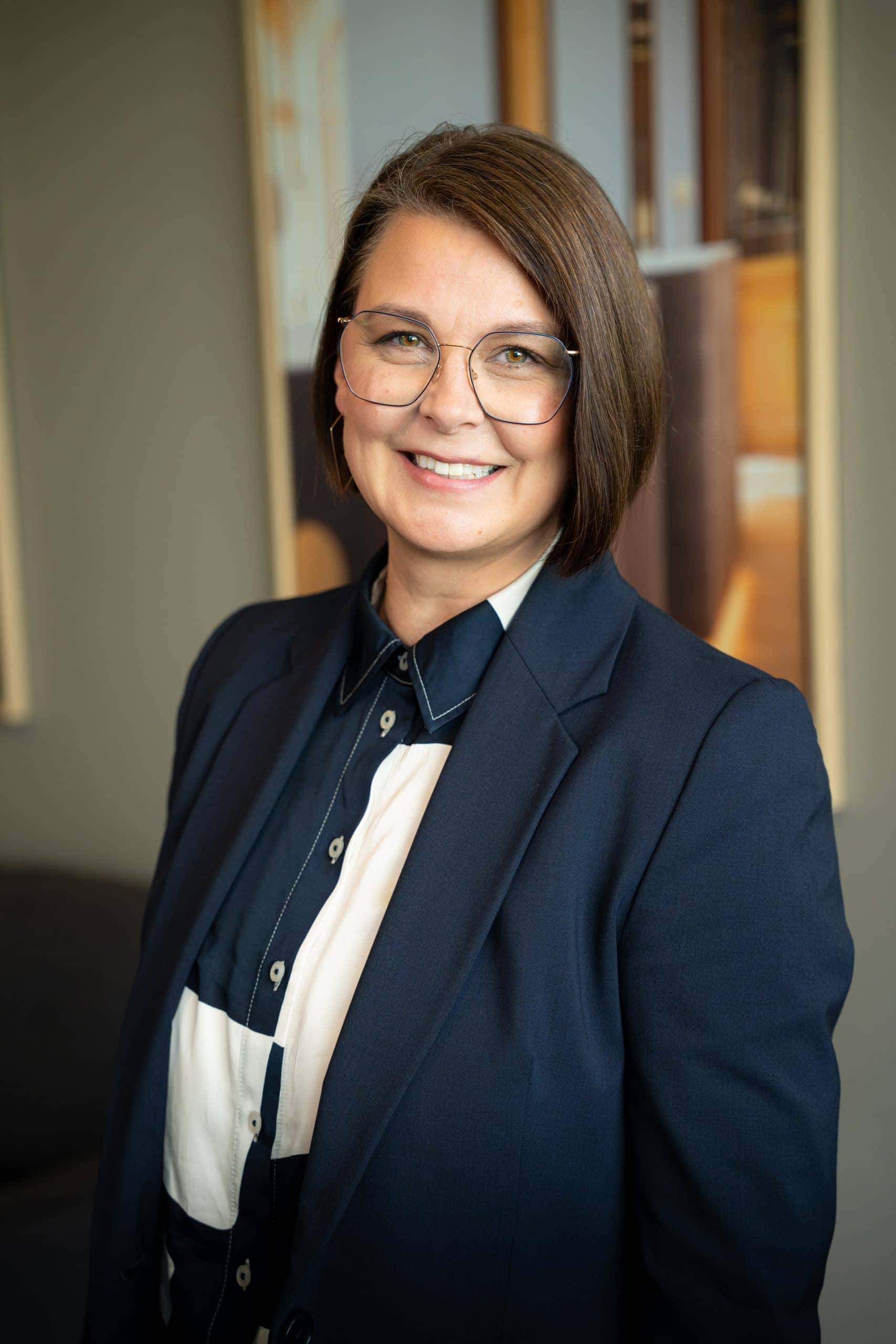
For example, Dr. Evrim de Groot (pictured) brings experimental and behavioral methods to luxury consumer psychology and status signaling research. Dr. Eleonora Cattaneo contributes expertise in luxury branding, GenZ consumer behavior, and sustainable materials across both qualitative and mixed-methods traditions. Dr. Alessio Delpero applies quantitative and quasi-experimental methods to questions of innovation, AI, and platform ecosystems in hospitality.
In addition, Dr. Stefano Battaglia brings organizational design and enterprise agility research, with a focus on leadership and change in hospitality contexts. Mikèle Landry, completing her doctorate at the University of Fribourg, contributes to service ecosystems and value co-creation research. Dr. Nikolay Pugachyov, a Glion alumnus returning with a doctorate in finance, adds quantitative expertise spanning revenue management, real estate, and investment, areas of growing strategic relevance to hospitality firms.
“When you look at this constellation, you can see how we’re able to approach any significant question in luxury hospitality from multiple dimensions simultaneously – psychological, strategic, financial, organizational, educational,” Tiia says. “That 360-degree capability is what makes our research offer genuinely distinctive.”
Why research? And why now?
The establishment of GRPI is a response to three converging imperatives, each one significant on its own, as well as being mutually reinforcing in combination.
The first of these is student experience. Research-driven education produces graduates who think differently; who can interrogate assumptions, construct arguments from evidence, and generate original insight. In an age of AI, these are precisely the capabilities that cannot be replicated or automated.
The second is industry relevance. As Tiia puts it, “We don't want research that simply falls into the big box of peer-reviewed articles. We want our work out in the real world, helping organizations solve real problems.”
The appetite from industry partners for evidence-based strategic insight, as distinct from consultancy opinion or market research, is growing. Glion is well-positioned to supply it, provided the research infrastructure is in place to do so at scale.
The third is accreditation. Glion's recognition as a University of Applied Sciences Institute requires demonstrable research output, structured research governance, and a faculty culture in which research is embedded, not peripheral. GRPI is the institutional mechanism through which we can meet these requirements sustainably. The research committee, ethics board, faculty development framework, and publication pipeline being built now are not bureaucratic additions. They are the architecture of long-term institutional credibility.

“AI can do many things,” Tiia observes, “but it cannot create new knowledge. For that you need critical and conceptual thinking, the human skills we are building in our students, so they are smarter than AI when they graduate.”
The three goals: advancing luxury hospitality research, building a research culture at Glion, and improving the student experience through research, are not parallel objectives, they are systematic, forming a virtuous circle: research that connects to teaching enriches the student journey; teaching that connects to industry enriches the research; industry engagement that produces real-world data enriches both.
Four themes, one positioning
To provide focus and inspiration to the academic team, four signature research themes have been identified to pursue in the coming years. They are:
- Luxury Experience & Service Systems – how experience-driven luxury systems are designed, governed and transformed. This theme is the core research pillar, closest to Glion's academic heart, and the area where the faculty's collective expertise is deepest.
- Responsible & Regenerative Luxury Transformation – how luxury organizations respond to societal, environmental and moral transitions. This is identified as GRPI's future flagship: the theme most likely to attract external funding, industry partnership, and broad academic visibility.
- Strategy, Capital & Organizational Dynamics in Hospitality – how organizations create, capture and sustain value in complex capital and technological environments, including the implications of AI and platform ecosystems.
- Hospitality Education & Talent Systems – this is Glion's institutional signature theme: a subject on which no institution is better positioned to conduct original research, as it concerns how hospitality professionals are developed and future-proofed through education and applied learning.
“If you look at this list, what immediately stands out is how practicable the topics are,” Tiia says. “That’s quite deliberate, because for us as an institution, research must be about providing new knowledge and new insights that can be leveraged by the industries we serve.”
The signature themes map directly onto the program curricula – translating into MSc courses, Executive programs, and industry research labs in which students work on real problems for real partners.
For instance, a student enrolled in the MSc in Luxury Management & Guest Experience is not simply studying these themes; they may be contributing research to them. Or even better, connecting with industry to produce relevant research and thereby potentially securing a workplace position.
Partnerships as the engine
A key aspect of GRPI’s approach is represented by the word in its name which is most often overlooked: Partnerships. Research conducted in isolation produces academic publications. Research conducted in genuine partnership with industry produces the kind of applied insight that shapes how businesses operate.

The formats being developed reflect this. They include:
- Applied Research Partnerships that tie directly to the four signature themes, offering industry partners access to empirical studies, field immersion and co-publication.
- Co-branded benchmarking reports, for example the ‘Luxury Guest Experience Benchmark’, or ‘AI Adoption in Hospitality Barometer’, offering partners market visibility and thought leadership.
- Executive Roundtables to generate publishable thought pieces while giving senior practitioners direct access to academic insight.
- Student-integrated research projects allow Master's theses and Applied Research Reports to feed directly into the publication pipeline, giving students a stake in real research and giving faculty richer empirical material.
The longer-term ambition is the establishment of multi-partner Research Consortiums: groups of luxury hotels, wellness operators, and travel brands that collectively fund and benefit from a shared research agenda, with regular symposia, trend reports, and two to three publications per year as outputs.
Top industry players are fast waking up to this new resource on their doorstep, with Glion’s outreach and relationship-building efforts being supported by the Business Solutions team of our parent company, Sommet Education.
“With the academic strength we have at our disposal, we can really wow our prospective industry partners,” Tiia continues. “When we sit around the table and listen to their briefs, we can respond with up-to-the-minute research that gives real weight to our insights. It’s not hunches, it’s not assumptions, it’s facts.”
Engaging industry partners is one thing; but Tiia is acutely aware of those who represent the primary recipients of the faculty’s knowledge and insights: the students.
“Through our new research strategy we can bring industry partners on board to develop highly applied projects which can be used by our faculty in their courses. All this ultimately trickles down into the quality of the Glion student experience, helping our students to develop research and analytical skills which they can then take into the workplace,” she adds.
Exciting times ahead
While this is still early days for the new research strategy, the entire academic team were given a significant boost with the news that Glion has reclaimed the No.3 ranking in the QS World University Rankings by Subject, powered by a strong score for Academic Reputation alongside an exceptional return for Employer Reputation.
“As a school we already have a reputation for our global outlook and for our multinational community of students and faculty,” Tiia concludes.
“Now I want us to establish ourselves as the go-to institutional partner for the luxury and hospitality industries; to be the people companies turn to whenever they are facing a strategic or business challenge, because they trust us to provide the research input that will help them to solve it.
“Our target is to produce applied, industry-relevant research in the coming years which is cross-industrial, roots in luxury and hospitality. The application opportunities are enormous. By 2027 we have hefty targets to produce dozens of peer-reviewed articles, conference papers and funded industry projects.
“There are so many exciting and truly valuable research opportunities in these industries; we are all buzzing with this challenge and looking forward to making a positive impact through our work. We have a plan and we are executing it.”
- Click here to discover more about applied research at Glion
- To explore research collaboration or partnership opportunities, contact the GRPI team at research@glion.edu
Photo credits
Main image: Dilok Klaisataporn/Getty
Evrim De Groot: Stephane Kurdyban/Time Prod
Study group: Jacob Ammentorp Lund/Getty
Theory into practice: cagkansayin/Getty
Recruitment Day: Celine Michel/celinemichel.com
Experience Excellence in higher education
Our undergraduate, graduate and Executive degrees offer a proven pathway to leadership careers in hospitality, luxury, and other exciting industries.