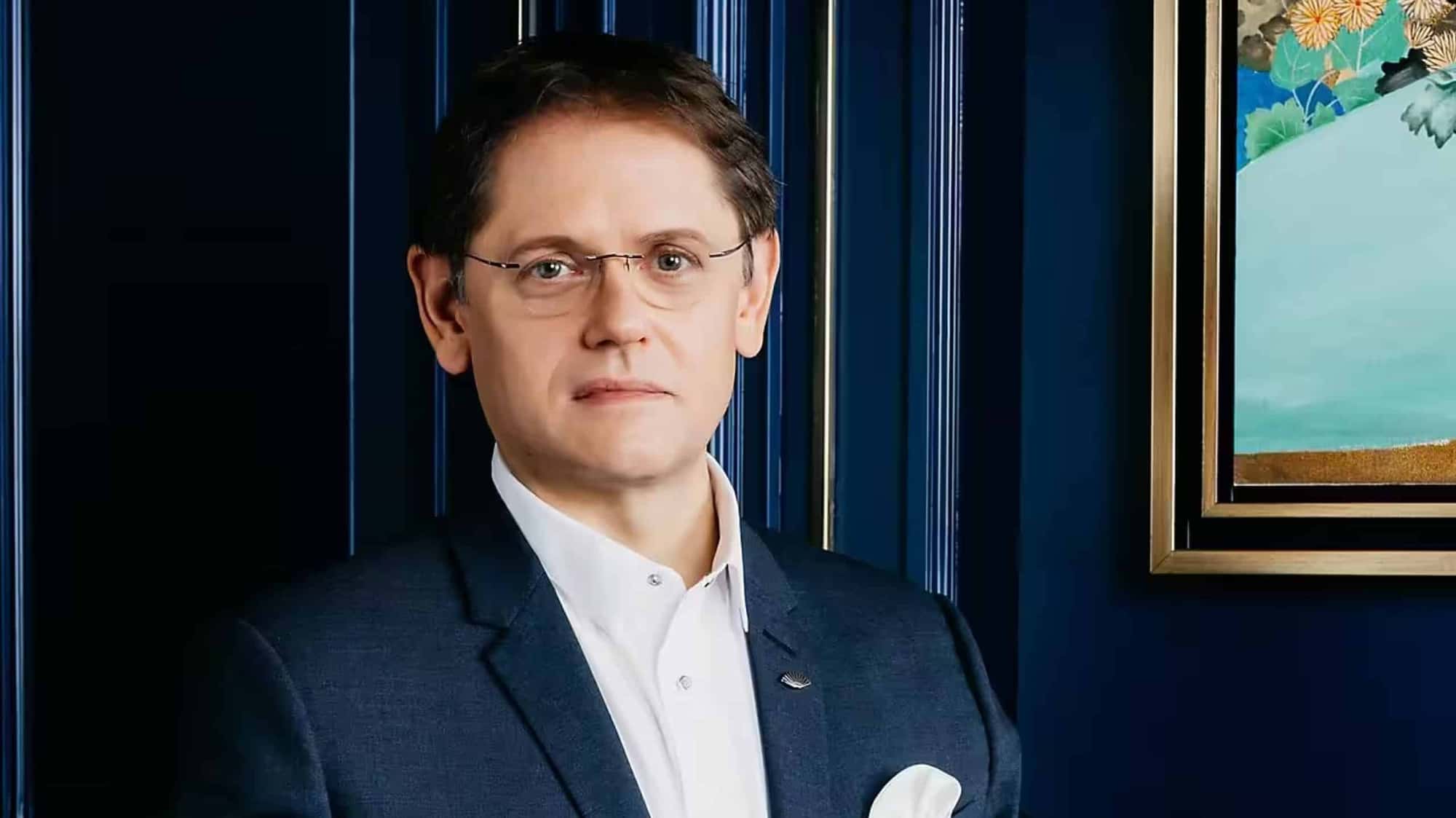
It was while working in New York that Gaëlle Devins started to think differently about how a leader can enhance team performance through a more balanced approach, and not merely via target led, top-down management.
That model, and the thinking behind it, is set out in a book entitled ‘Flow Leadership’, which was published last year by Wiley complete with endorsements from bestselling business authors including John Gerzema, Zach Merciurio PhD and Hubert Joly.
Now back in Europe, and with her own leadership career blossoming, Gaëlle has crystallized years of hands-on experience, proprietary research and workshops into a new model which she hopes will enable leaders to strike a better balance between the three essential elements of high-performing teams: People, Purpose and Performance.
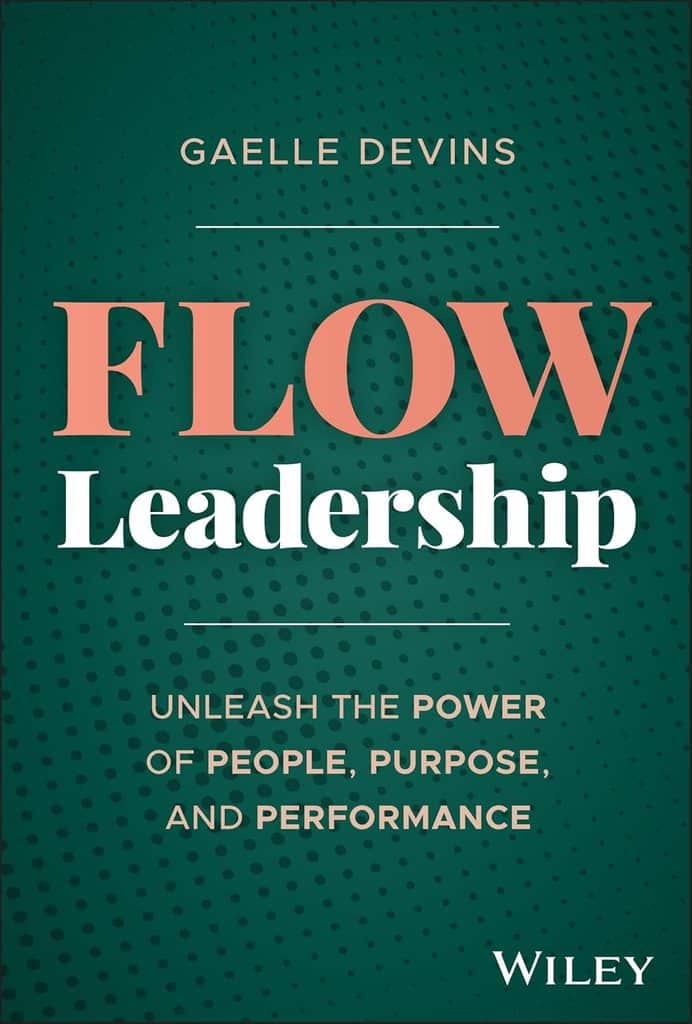
The book showcases Gaëlle’s writing, which is rich with insights into the art of leadership, interwoven with personal reflection and warm anecdotes that set it apart from the more run-of-the-mill business tomes.
With Gaëlle having recently joined Glion’s Hospitality and Luxury Insight Council (HLIC), it was a perfect moment for The Insider to discover more about her book, some of the thinking behind it and what Gaëlle hopes readers will take from it.
The Insider (TI): Gaëlle, before we dive more deeply into the content of the book, tell us about your inspiration for writing it.
Gaëlle Devins (GD): It really comes from a realization that we need to approach performance from a different angle, instead of simply putting people under pressure with targets and KPIs all the time – important though these are. I have grown to realize that in order to drive genuine, sustainable performance leaders should take more time to understand their people and what motivates them; helping to create a common sense of purpose throughout the team as well as the wider organization.
Then when I was expecting my twins I ended up being bedridden for a while; and that gave me time to think more about my search for meaning in life, if you will. One thing led to another and I decided to create something that would help others. And so I started writing what became the book Flow Leadership.
TI: Flow Leadership, and its core principle FLOW@WORK are both terms which are at the heart of the book. Can you tell us in your own words what they mean?
GD: Sure. When I was at a previous employer I began to try and understand why some teams were performing and others in that same space were not. And I realized it was a matter of alignment with these principles I refer to as the ‘3Ps’ – People, Purpose and Performance. When you have these elements in alignment people feel that they are being recognized and valued for what they do; that gives them the momentum to carry on regardless of the challenges they meet along the way, or if their job is not exactly what they want it to be today.
By reaching this mindset, they enter that state of ‘Flow’, where they have the right challenge for the right set of skills. By the way, this terminology of Flow is not my creation; it was first coined by the psychologist Mihaily Csikszentmihalyi as a way of describing a highly focused mental state which nowadays we often see described as ‘in the zone’. I found this highly interesting and so I started doing some academic research to validate my thinking around the 3Ps and how to put them into balance in order to reach the state of FLOW@WORK.

TI: And this sense of balance – or otherwise – is at the core of the book. Interestingly, though, you make it quite clear that balancing the 3Ps is not a fixed equation. It varies greatly according to individual circumstances, does it not?
GD: Absolutely, because people are not one-size-fits-all and thus neither are the teams or organizations they work for. For example, if you work for an NGO in the charitable sector you are very likely to have a naturally high sense of purpose; but at the same time if you are not maintaining a balance of performance you are not going to get what you need from your teams. The same thinking applies to a highly commercial, sales led organization – if the performance element is set too high in the equation people may deliver the results in the short term but then they leave due to dissatisfaction or burnout.
That may all sound fairly obvious on the surface, but I suspect everyone reading this article will have experienced a workplace where the 3Ps are out of balance. So I firmly believe this is a valid conversation we should be having and I hope that my book has a useful role to play in this conversation.
TI: I agree, and I think our rapidly changing workplace, and the new demographic groups entering or about to enter it, make these conversations even more valid. It’s something of a $64,000 question, and one we could devote the entire interview to, but as a leader what’s the first thing you should do if the 3Ps fall out of balance?
GD: It’s tough, because much as we want to have a perfect balance all the time, the realities of business mean that very often as a team you’ll be out of balance. It’s easier to sustain this disparity if you have built a strong foundation between the individuals in your team and also if you’ve fostered a sense of community and purpose.
Sometimes, though, the team will be out of balance because you have the wrong individuals in the wrong jobs; or you have the wrong metrics in place for performance management; or you don’t have a clearly defined purpose that people can buy into. These are all things you can identify relatively easily; what is harder, of course, is putting them right, especially in a fast-paced business environment where it seems impossible to take even a few hours out of a busy schedule. And that’s where it takes a bit of belief and bravery, because it’s only by manufacturing some time out with your team to work through things that you can start to rectify the imbalance. You can expect push back for sure, at least initially, but as long as you let people see the outcomes and how they might benefit then they are more likely to come with you on the journey.

TI: Thinking about the ‘P’ for Purpose in particular, it feels like this has become much more significant in the eyes of many, especially the younger generations.
GD: Yes, I think there is a generational shift in this area. I don’t want to generalize too much but with many younger people if you don’t show them the purpose they can’t relate; whereas our generation or the ones before had the mindset of ‘we have to work and so we have to make it work’. It’s also true that work/life balance has become a more important element to many, even though the reality is that most of us don’t have the luxury of being too choosy in this regard! There are still bills and mortgages to pay, and so on.
Purpose has different layers, of course. You have individual purpose which is intrinsic to who you are; then there’s the purpose and direction of the organization, which the employees need to understand and believe in. You can enjoy FLOW@WORK if you find meaning in what you do, regardless of what your job is. That’s why I included in the book that story about the hospital cleaner I met who was happy and smiling because – even though it’s not the most glamorous of jobs – they understood that were making their own contribution to helping families who are in a difficult environment, simply by delivering clean and sanitary facilities.
TI: It’s one of many excellent anecdotes that feature throughout the book and this, for me, is one of the markers that set Flow Leadership apart from other business books. Was that a conscious decision you made when writing it?
GD: I’ll be honest with you; in my first draft I didn’t include any personal stories. Then I let some trusted friends read it and they said it’s good but it’s like all the other books on management theory. They suggested that I use some personal stories about my life and work to help humanize the theories and create a closer relationship with my readers.
At first, I was worried whether they’d be too personal or revealing, but then I just started writing them down as they were and embedding them throughout the book.

TI: Let’s change the subject and talk about employee training and development, because this is a key element of creating successful teams but all too often training becomes ‘death by PowerPoint’. In the book you talk about deploying ‘edutainment’ to bring personal development to life. Tell us more about this.
GD: It’s simply the notion of bringing the worlds of education and entertainment together. And it means putting people in real-life situations, whether through role play, site visits or similar techniques, so that they are taken out of their day-to-day working lives and into a more experiential environment. For me, what your employees experience really is one of the core principles of the customer experience you offer. What you make your people experience and feel, if they understand it and feel it for themselves, they are most likely to recreate for your clients.
Experience brings emotions and the moment you have emotions about something you remember a story and then you can relate to that story and replicate it for your clients. All that said, of course I’m aware that budgets are not limitless, so there will always be a digital element to training as well. It’s about making the most of the face-to-face time we can set aside.
TI: Another topic you talk about in the book is the need for leaders to establish boundaries – and you are quite hard on yourself in terms of your own shortcomings in this area! Tell us a little more about the challenge for leaders to ensure their boundaries are right for themselves, their team and their business.
GD: It’s a daily challenge and no matter what boundaries you have set, as the business environment changes you’ll often end up compromising. The one boundary I have never compromised on, and I mention this in the book, is my time in the evening with my children. But in a professional sense I can be guilty of breaking my boundaries by, for example, contacting team members outside of regular working hours. You may have the best intentions but if you are in a new job, or you have a new project or challenge, it can defeat those intentions.
What’s important is for people to understand that you are not breaking these boundaries for the sake of it and that it will be temporary while, for example, you need to get an important new project or venture off the ground. As always, it comes back to openness and good communication, which really is at the heart of great leadership.
TI: There’s so much more for people to discover in the book, but as a final question, what would you say is the number one thing you’d like a leader or an aspiring leader to take away from it?
GD: Simply that as leaders we have the power to make a difference for someone else in our life. Throughout my career the leaders who have carried me forward are the people I looked up to and wanted to recreate what they did to make their people progress. These leaders have the capacity to tell you the good, the bad and the ugly in a way that brings you forward, that doesn’t make you self-doubt.
Every job I’ve performed has been a collection of these moments and that’s given me a lot of stories to tell in this book. The reality is that we are all a work in progress; we’re all growing. We humans are flawed characters, to say the least. And this translates directly to the workplace, where sometimes we find a disconnect with reality. It’s almost like you come to the office and have to be a certain type of person, doing things a certain way. A lot of people don’t want to show vulnerability, or to show who they are. And that’s OK. But for me, I choose to be the real me even if that’s not always perfect.
TI: Gaëlle Devins, thank you so much for giving us such honest and inspirational insights!
- To order a copy of Gaëlle’s book Flow Leadership – Unleash the Power of People, Purpose and Performance, visit Amazon or your preferred bookseller.
Photo credits
Wooden figures: Witthaya Prasongsin/Getty
Reaching for the stars: Derikjohn/Getty
Develop the skills to succeed
Our undergraduate, graduate and Executive degrees are tailored to the modern workplace, providing a perfect balance of hard and soft skills accompanied by real-world professional exposure.