They call it La Dolce Vita and this spirit of living life to the full is why Italy is regarded by many as the beating heart of the luxury sector. Milan has its fashion, Modena its cars, and Lake Como its 5* hospitality and waterfront villas.
For Florence, the magical luxury ingredient is perfume. The city has a long tradition in this field, having come to prominence during the Renaissance – indeed it is often considered the birthplace of the ‘modern’ fragrance.
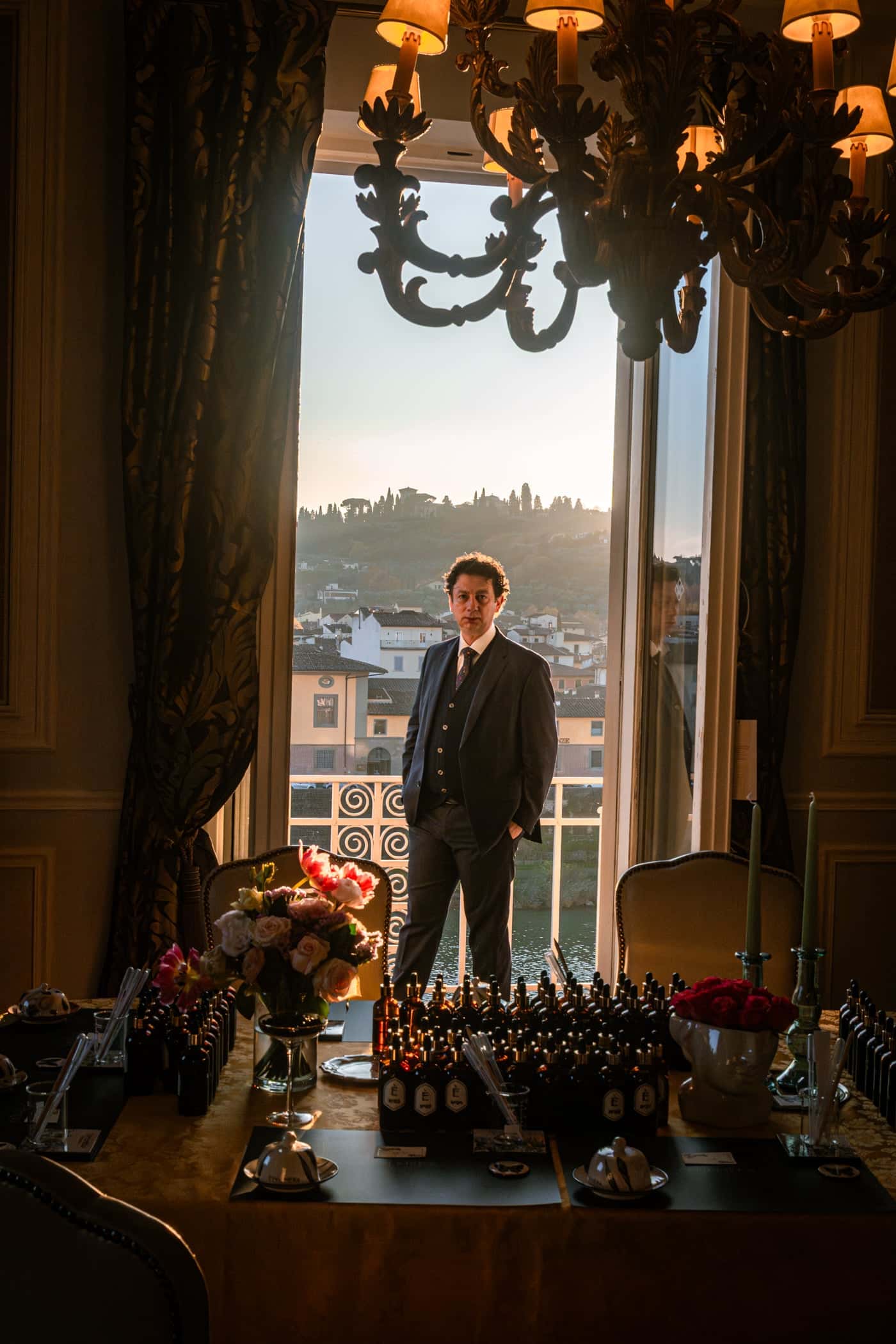
Among Florence’s distinctive voices in the world of fragrance is Ephèmera Firenze. The firm is the brainchild of Maurizio Predieri, a man who brings an extraordinary level of science to the art of creating wonderful fragrances.
“My background is in chemical engineering, so you can say I’ve always been in love with chemistry. And perfume is all about chemistry; when you mix the ingredients it’s just like doing an experiment for the first time – you almost never know what’s going to happen. I get bored very easily and so I love the constant surprises you get from this process!” he says.
Endless aroma possibilities
With a perfumer typically being able to choose from thousands of different raw materials, the possibilities to create distinctive aromas are virtually endless.
And it’s this process that Maurizio and his team are bringing to Glion, having been commissioned to create a fragrance that can become identified with our school. It’s a project that excites him tremendously, and one that also whipped up significant anticipation when Maurizio presented it recently to our global student enrolment community.
“For me, the scent identity of a brand must be felt throughout your journey with it. So, when designing a scent for a museum or art gallery, for example, we advise that the olfactory journey begins at the ticket office, not just the exhibition space. It’s the same for Glion; the olfactory connection should be forged before a student arrives on campus, taking in the recruitment process, campus tours, promotional gifts, everything.”
How the magic happens
To put the Glion perfume project in context, we wanted to learn more about the theory behind scent identity for brands, and how it plays out in the customer/guest experience. As a pioneer in this field, and a published author on the topic, Maurizio was happy to explain…
“When analyzing human behavior, the way we communicate visually and aurally tends to be the primary focus. But if you delve deeper, you find that our sense of smell is very important to the way we feel. Every one of us will have experienced a smell that immediately takes us to another place, a memory, or a triggered emotion. And it happens very quickly and cleanly, because the receptor in our nose goes directly to the part of the brain where emotions and memories are stored, bypassing the cortex. It’s raw and unfiltered.”
Right from his first assignment to create a perfume for a fashion retailer, Maurizio has never stopped developing his understanding of this phenomenon and how it could be applied to brand identity. Through this process was born the concept of Scent Identity Design, a subject encapsulated in Maurizio’s book, which was published last year.
“When we launch a scent identity project the first thing we do is listen. People might think that creating the perfume itself would be the biggest part, but in a project like this the laboratory work is probably around 10% of the process. Much more important is to understand how to communicate a brand or a physical location – and that means we have to go there personally. These are not projects you can do online.”
The smell that tells
Once the identity of the brand or location has been established in their minds, the next important step for Maurizio and his team is to interpret this in the form of a fragrance.
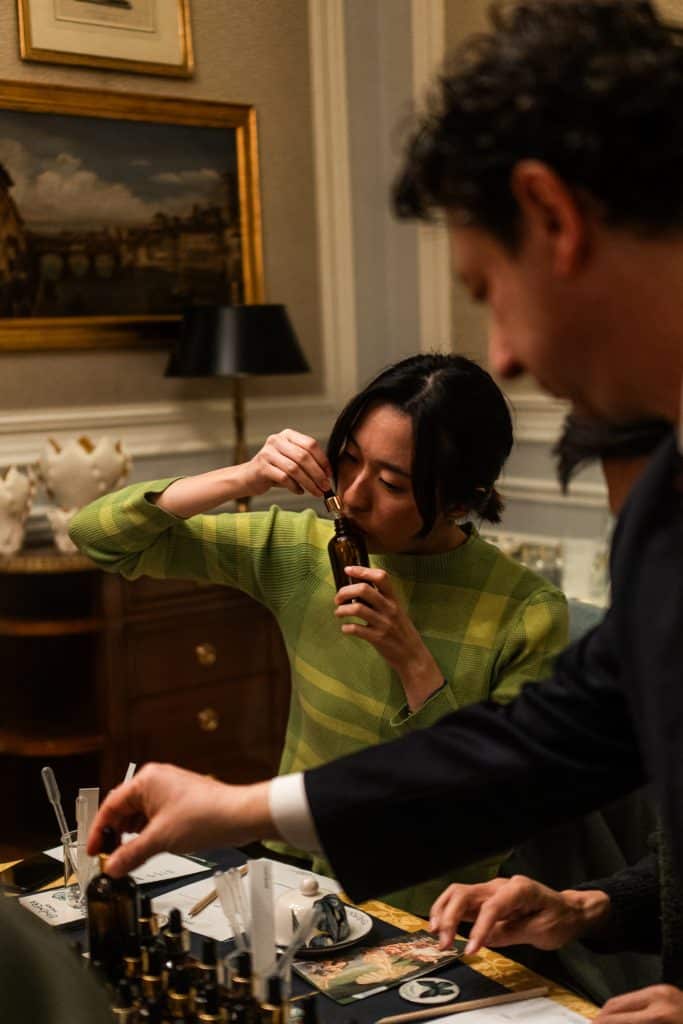
“Often there’s an international dimension to the client, which must be considered. With Glion, for example, there are campuses in two countries with plans to open more. We also have to think about the individuals who will be experiencing the aroma. Glion students come from all over the world, representing many different cultures, and these cultural differences can be important when it comes to perfume. Olfactory preferences and codes can vary significantly across cultures and markets, so cultural sensitivity is essential in this kind of work.”
With hospitality related projects especially, the stakes are high. Calling on research data, Maurizio explains that a good aromatic environment can enhance a guest’s experience by around 20-30%, but an unpleasant smell in the premises can damage the guest’s experience by up to 80%.
“It’s why we place a high priority on the science behind the scent,” he adds. “We are one of the few companies in this field to work with a scientific committee that includes psychologists and neuroscientists. For me, this scientific grounding is essential, because it allows us to work with greater depth, responsibility and coherence.”
Where the magic happens
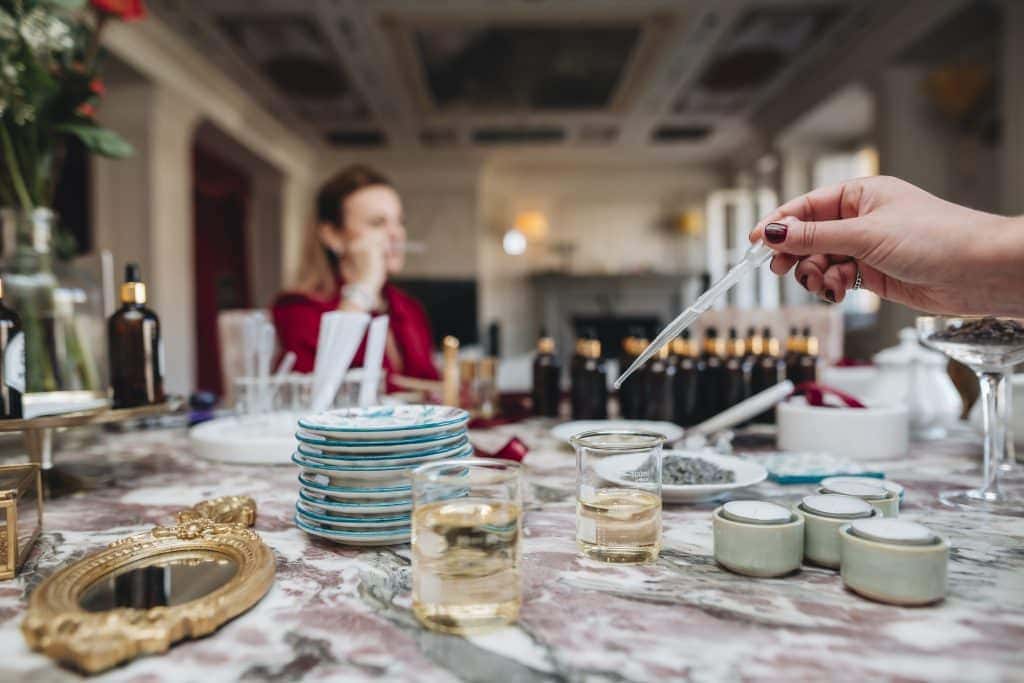
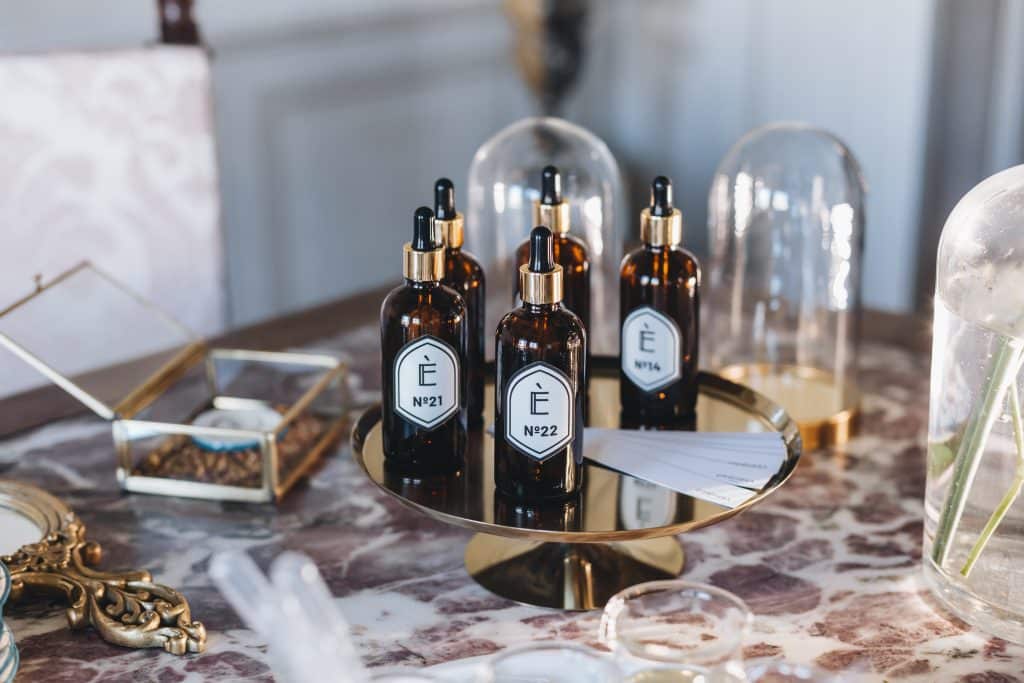
Once in the perfume laboratory, the science is turned up to 11. Blending a perfume is not just a case of choosing from the thousands of potential ingredients we mentioned earlier; the aroma can also be influenced by the order of mixing, as well as by mixing blend with blend. And there’s also the time factor, with the perfume’s characteristics evolving as the mixture matures in the vial, just like a fine wine or whisky.
To the uninitiated or non-chemistry minded (your correspondent included), this feels almost in the realms of magic; but for Maurizio the secret to success is in the process, and making sure every step is recorded precisely and consistently.
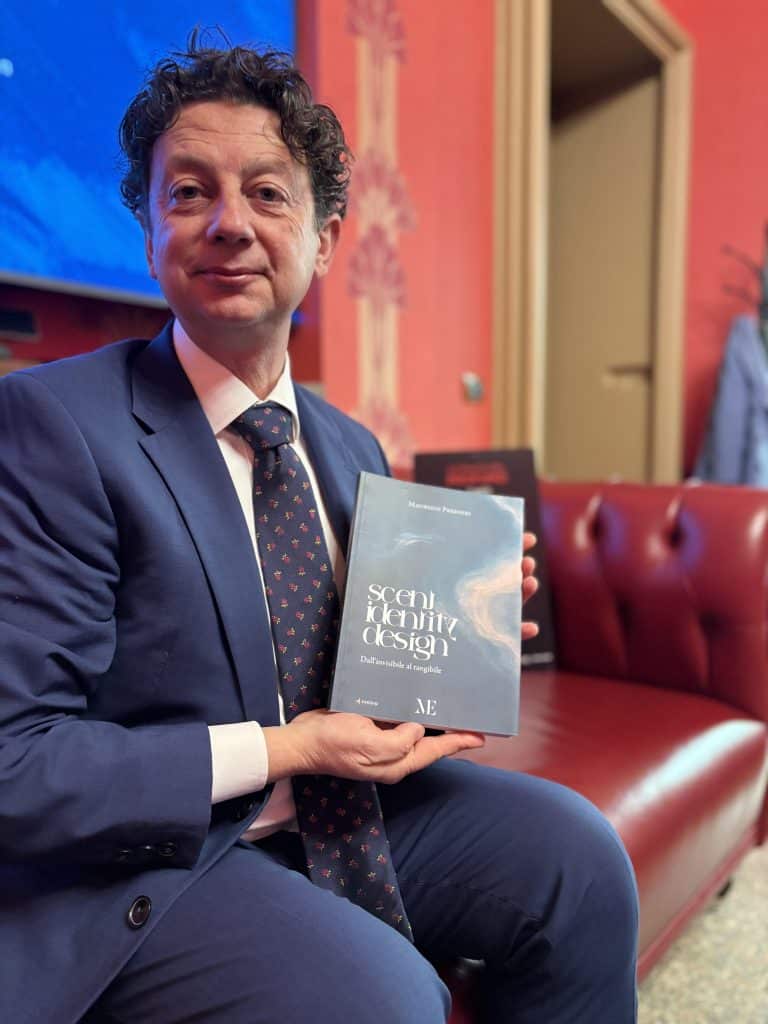
“If you can be precise in your methods, it gives you the scope to be creative. That’s one of the core messages in my book (see photo opposite),” he continues. “For me, perfumers are incredible people. They have this very romantic, alchemic side but they also have the discipline to record everything properly. If you want to draw a parallel, look at people like Isaac Newton and Leonardo Da Vinci – they were genius minds and we know this today because they left us with thousands of pages of notes detailing their scientific methods.”
Maurizio’s project with Glion is currently in the research/listening phase, but soon the creation phase will begin, and with it what he sees as a vital aspect of the job: storytelling.
“It’s not just about creating a perfume; it’s also about telling the story of why you created that particular perfume for this brand. And that’s super important, because an operator needs to train its people to tell the story of that perfume, as that helps build the identity and the guest’s connectedness to it.”
Working with Glion has been a novel experience for Maurizio, given that Ephèmera Firenze’s client base is typically drawn from hospitality, luxury fashion, plus art galleries and cultural institutions.
The company also works with non-profit organizations, with one particularly memorable assignment being to create a calming/stress reducing perfume for the rest area used by employees of a specialist in managing major disasters.
For Maurizio, every project is another opportunity to unlock the power of the aroma. “It’s been incredible to me to understand the power of olfaction and how underestimated is its effect on wellness and wellbeing. This gives me the drive to continue to study and build my understanding around the connection between our sense of smell, our identity and the way we communicate.”
Click this link to read more on the role played by our sense of smell, and how scents are used in luxury environments, courtesy of Executive Master’s graduate Alexandra Alves Gaspar
• To discover more about Ephèmera Firenze and Scent Identity Design, visit the website
Realize your leadership potential
All great leaders start with a solid foundation of knowledge and skills. Our Bachelor’s and Master’s degrees will provide that foundation, setting you on the path to realizing your potential.