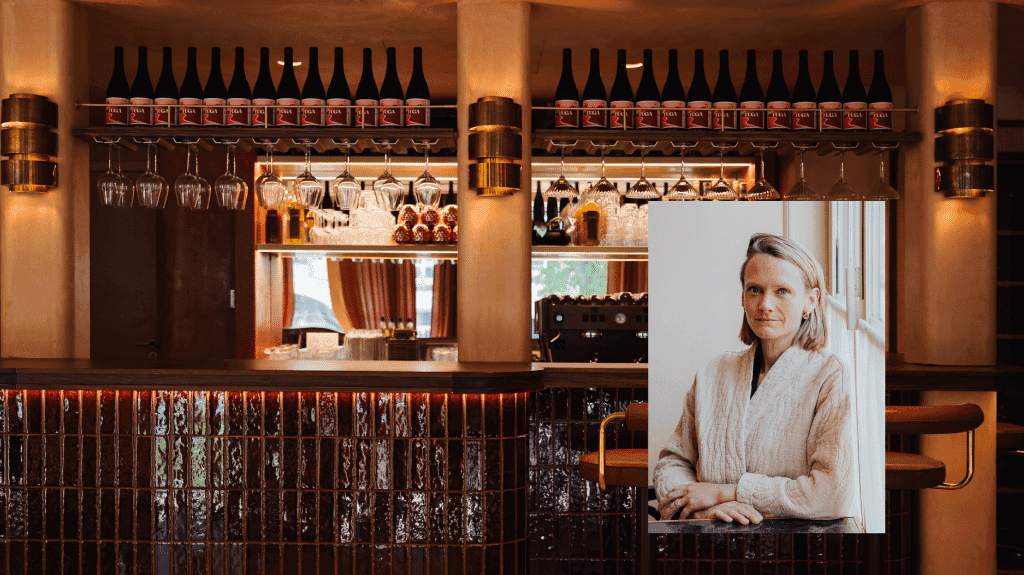
It was hospitality legend Ian Schrager who said “good design is good business” – and that pearl of wisdom certainly applies to Alice Calemard, a Glion graduate making waves in the world of interior design.
Together with co-founder and business partner Talissa Bachelot, Alice launched the design consultancy Studio Adjamée in 2020. The pair bring complementary skills to the table, allowing the studio to offer a complete project management service that encompasses layout, decor, plus selection of furniture, lighting and textiles for hospitality interiors.
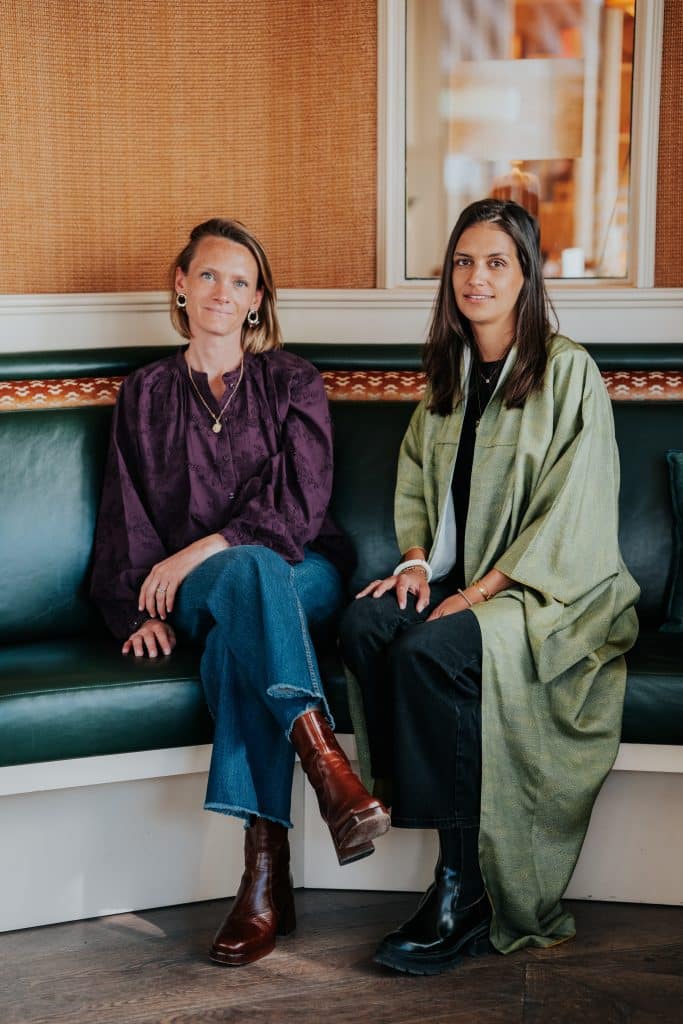
At its core, the studio blends beauty with practicality, designing spaces that feel memorable, yet work brilliantly day to day.
The Adjamée approach follows a clear framework, combining a structured method – from diagnosis and budget definition to space planning, creative direction and FF&E specification – with three levels of involvement depending on the project: optimize, transform or create. Across every assignment, their work is guided by four pillars, namely identity, use (guest & staff flows), comfort and consumption – so that spaces feel distinctive, work intuitively, and perform commercially.
“We’re both passionate about good design, but in addition to that Talissa brings an entrepreneurial and business background, while I have direct experience of hospitality operations through my Bachelor studies at Glion and my career immediately after graduation,” says Alice.
That career began with an internship at the prestigious Le Meurice hotel in Paris. But even in those days the lure of interior design was a powerful one, having been inspired by the specialized classes she’d studied while at Glion.
“It was really the availability of courses and workshops on hospitality design that made up my mind to choose Glion. I’ve always been interested in art and creative things, and so I loved the fact that my degree course took me beyond pure hospitality operations.”
Hitting a wall
It seemed everything was falling into place. But then came a shock; one that with hindsight can be viewed as a crucial turning point in Alice’s life and career.
“I was diagnosed with cancer,” she explains. “It was just like hitting a wall, and all the plans I’d made were immediately put on hold while I underwent my treatment.”
Having earned acceptance to study architecture and interior design at the prestigious École Camondo, Alice was relieved when the school agreed to hold her place while she recovered. And despite a full chemotherapy regime, she still found the energy to take an assistant’s role with the French wedding dress designer and stylist Géraldine Lemonnier-Leblanc.
“This was my first step into an independent professional life,” she remembers. “Dealing face-to-face with clients, learning about fabrics, the process of designing dresses, and accounting for the cost of materials… it was very intense and a great experience.”
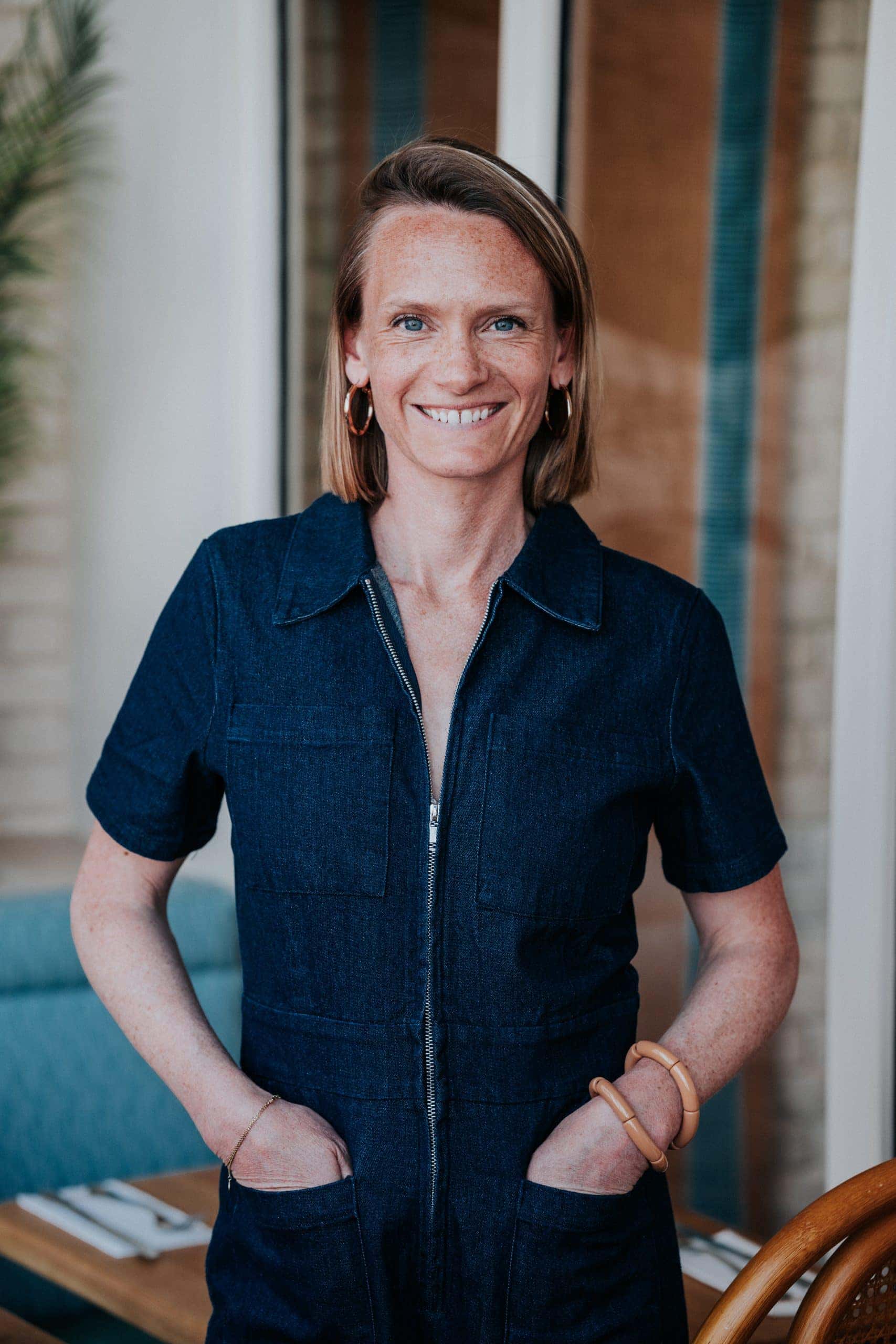
Once fit and well to resume her studies, Alice invested her full energy into École Camondo, while also taking on a study semester abroad at the Glasgow School of Art. That experience gave Alice the opportunity to follow in the footsteps of celebrated architect and designer Charles Rennie Mackintosh.
Picking up experience
With her postgraduate degree secured, Alice accumulated vital interior design and project management experience across a variety of roles, including with the residential developer Paris Group and at Costes Études & Projets (the former creative studio for Costes hotels), where she worked as a junior project manager.
Another formative step was her time at Paris-based Agence Terres, known for its confident use of color—an experience that helped Alice develop a more expressive, yet controlled, approach to palettes and materials.
Today, though, Alice’s focus is 100% on building Studio Adjamée into a serious force in hospitality design across France and elsewhere in Europe.
Already the headline projects are accumulating fast. The company’s website showcases a wide variety of work, but Alice selects two assignments which underline the distinctive Adjamée approach particularly well.
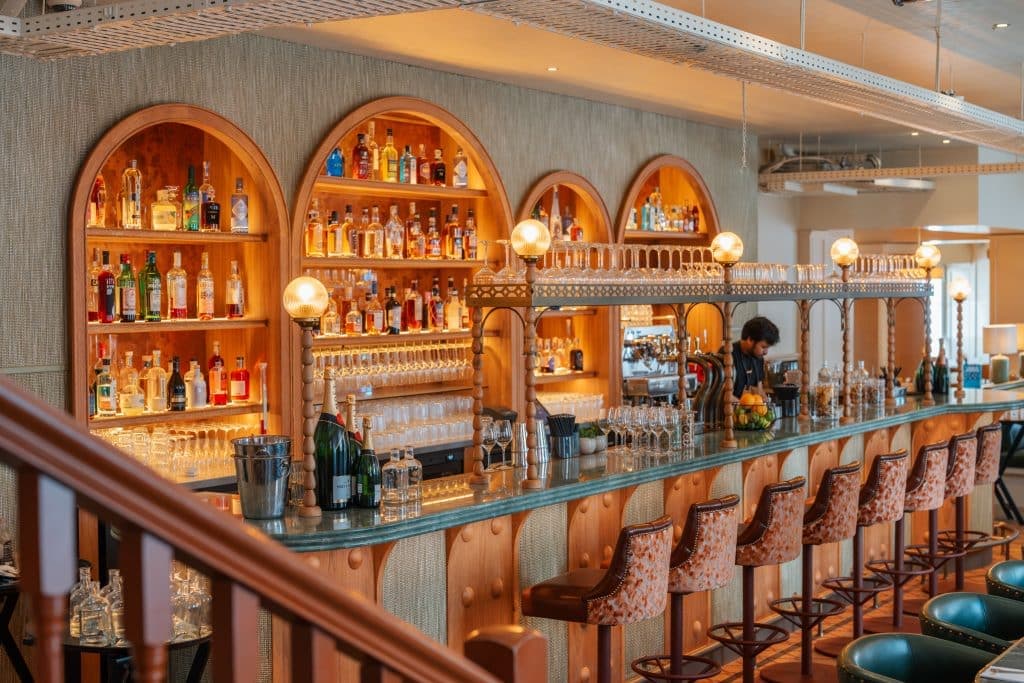
The first is the Amanie restaurant and bar (pictured above), which is located in the 15th arrondissement of Paris.
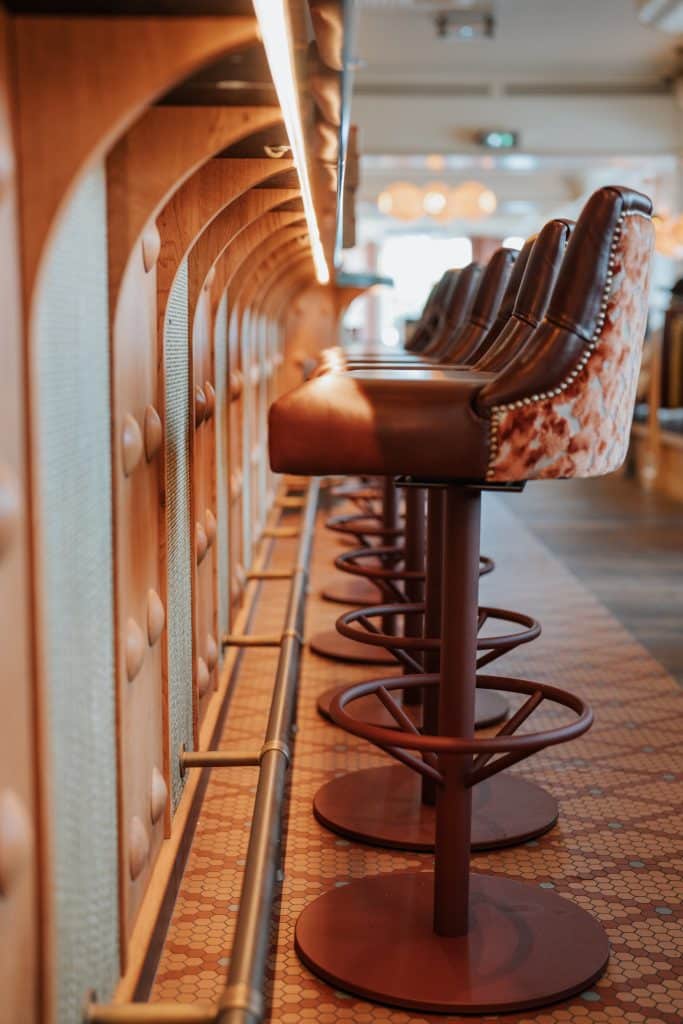
“This property is part of the Bertrand Group, which is one of the country’s top players in the hotel and restaurant sector," Alice explains. "It was previously operated under the ‘Au Bureau’ brand (editor’s note: for international readers this is equivalent to a traditional pub/sports bar concept) but the client wanted something much more distinctive and brasserie-like, with an interior to match.”
The response from Alice and Talissa was to create an interior inspired by travel, complete with Indian textiles, custom furniture and lighting and a stunning bar (pictured left) as its centerpiece.
With the premises operating on two floors, the pair also proposed a different layout for each, with an 80:20 per cent split of brasserie and travel themes on the ground floor, and the opposite ratio on the first floor.
“We had no scope to reshape the interior by knocking down any walls, so we worked with what was already there. As an example, the solid walls we repainted in a silky beige color to create more light, with braided leather inlays to add a touch of sophistication and exoticism.”
Softness and secrets
The second project Alice selects is also in Paris but represents a very different side to the hospitality business. Located in the city’s 8th arrondissement, FUGA W is a multipurpose event space operated by the FUGA group.
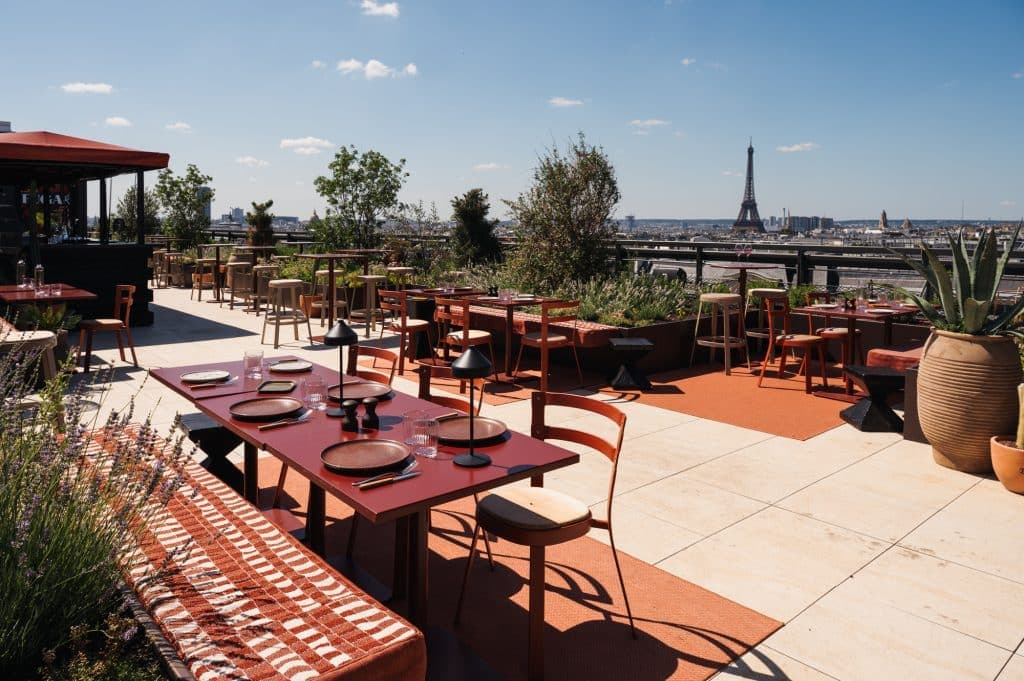
“We actually designed three different spaces in this building – the restaurant Laïa Monceau, the event space FUGA W and the rooftop terrace FUGA R. For the event space, the brief was to get away from the rather cold and unexciting interiors we typically encounter in these environments. Instead, we designed something more attractive and welcoming, but which is still highly modular and functional.”
The result is a completely reinvented 80 sq. m floor plan, featuring a bar as its centerpiece while also incorporating a ‘hidden bar’ that sits behind an unassuming cupboard, and which is ideal for a more relaxed function.
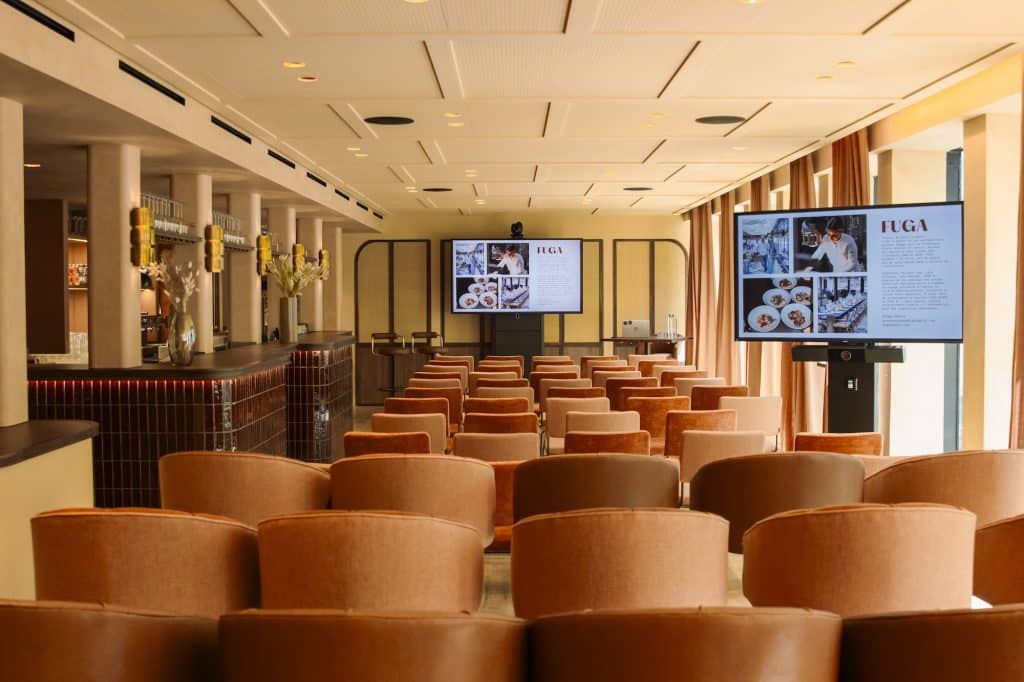
“We wanted to create a soft and enveloping ambiance, so we chose lots of natural wood and fabrics, plus a color palette dominated by powdery pink and deep brown,” Alice adds. “At the same time, the FUGA W has to function as a professional events space, so we’ve also made sure that there’s appropriate lighting and soundproofing and kept interior super-flexible so it can be configured for a wide range of meetings and events.”
The Glion advantage
Alice readily acknowledges that the operational knowledge she acquired at Glion gives her a significant advantage when designing hospitality spaces for Studio Adjamée. She notes, “I tend to work on the operational aspects first and then bring the design element to it. I love talking with the chefs and the service staff, the housekeeping teams, and I feel at home in those spaces. I speak their language.”
With an impressive body of work already in their portfolio, Alice’s ambition for Studio Adjamée is simple: to become a reference for hospitality interior design and to build a loyal stable of customers who consistently come back for more.
“Once you’ve spent some time in hospitality you realize just how personal this business is. People put their heart and soul into opening their own restaurant or running a hotel. It’s very much their project, their dream, and I think our special ingredient is that we’re completely in tune with this – we don’t come in and start imposing our ideas and acting like divas; we are their trusted partner.
“I am a sensitive person. I love my fellow human beings, and I love it when people feel good. We all know that life can be intense and often difficult, and so why not make beautiful things and beautiful spaces, where people can come together and be happy? And it makes financial sense, too. If you have a hospitality business and you can deliver this happiness, and at the same time you’re making sure your staff feel valued and able to give their best, then the rewards will naturally follow.”
• To discover more about Studio Adjamée and its projects, visit the website
Photo credits
FUGA R photos by Claire Jaillard — https://www.clairejaillard.com/
Fuga W conference photo: Ksenia Marchand (@ksenia_marchand) — https://kseniamarchand.com/
Amanie photos, plus portraits of Alice and Talissa by Louise De Metz — www.louisedemetz.com
Get to know our Glion alumni
Our global alumni community now numbers over 18,000 individuals spread to every corner of the world. Visit our dedicated alumni pages to discover how this very special group of people ensure the Glion Spirit lasts forever.