
Like almost every industry, hospitality is being re-shaped by artificial intelligence (AI).
Even at the luxury end of the market, where the personal touch is more important than ever, AI is being adopted by hotel owners keen to take advantage of the productivity gains it can offer.
But as more and more hospitality companies deploy the technology, what kind of effects will it have on those working in the industry – as well as the all-important guests? And how should a hospitality school such as Glion prepare its students for what’s to come?
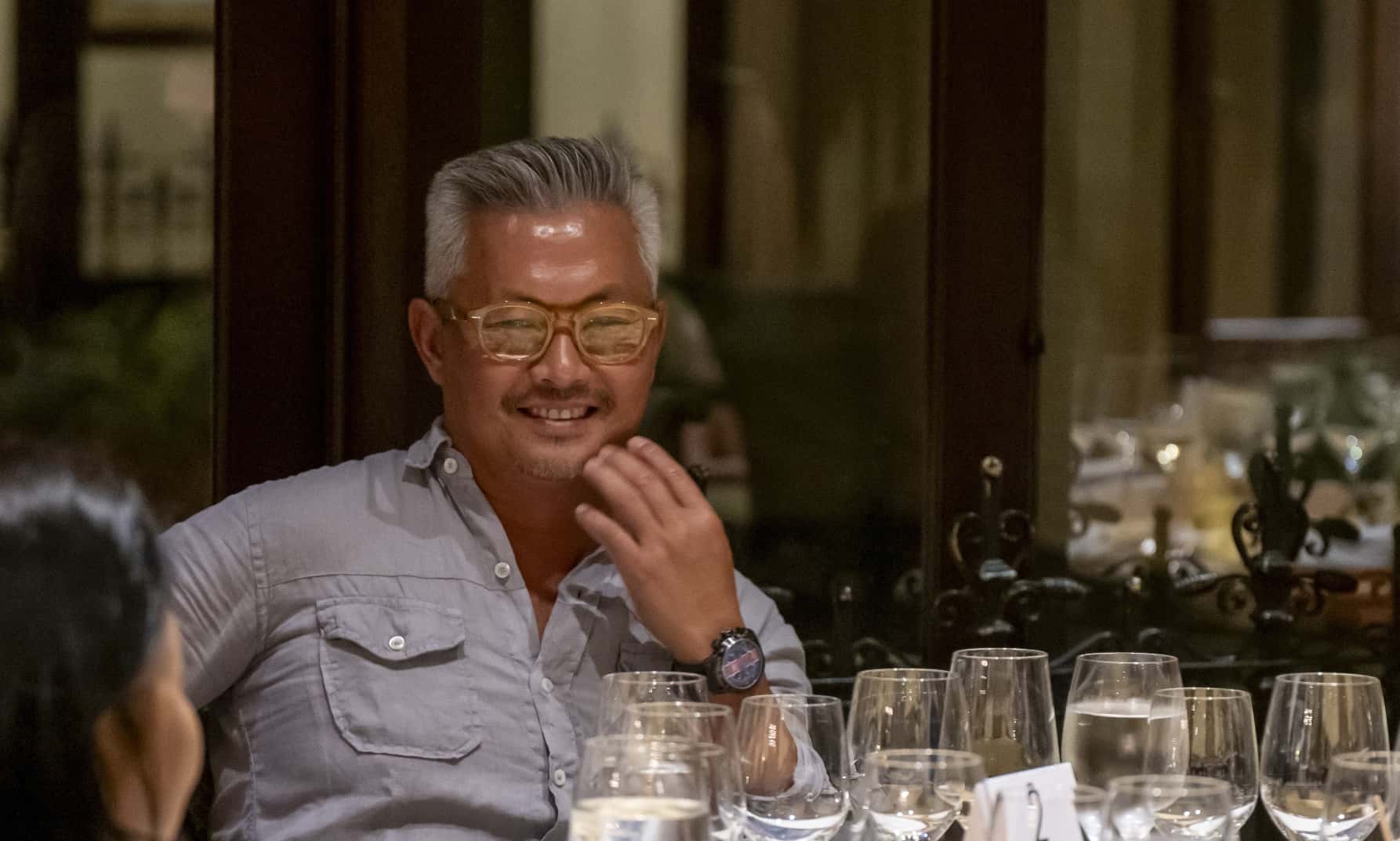
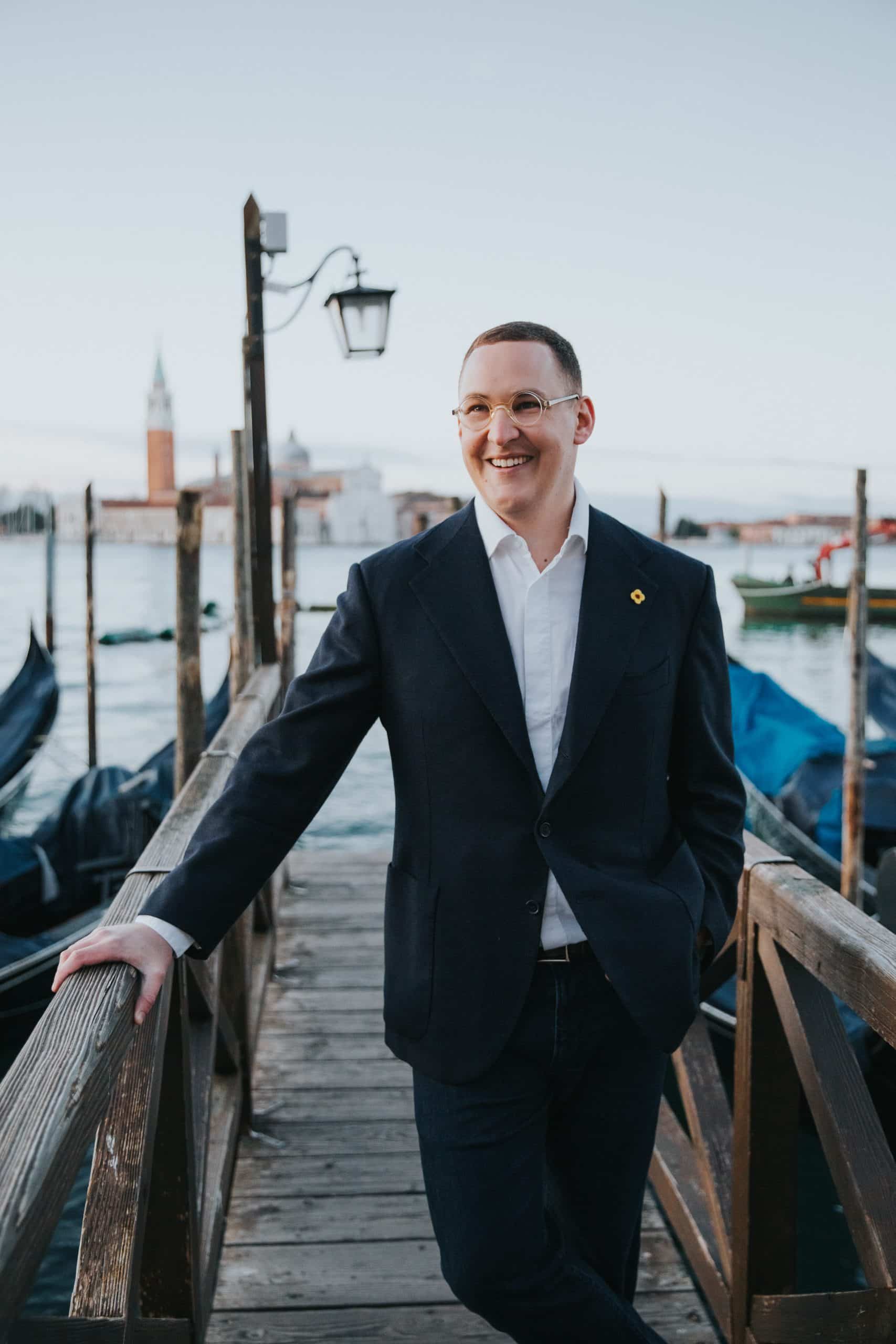
Those were just some of the questions covered in a recent session organized by Glion’s Hospitality and Luxury Insight Council (HLIC), at which alumnus Grisha Davidoff – while not considering himself an AI expert – shared how he has become a practical user of AI across his business ventures. The Insider caught up with Grisha afterwards to learn more about what he uses the technology for, why it helps and how to get the best out of it.
Personal perspective
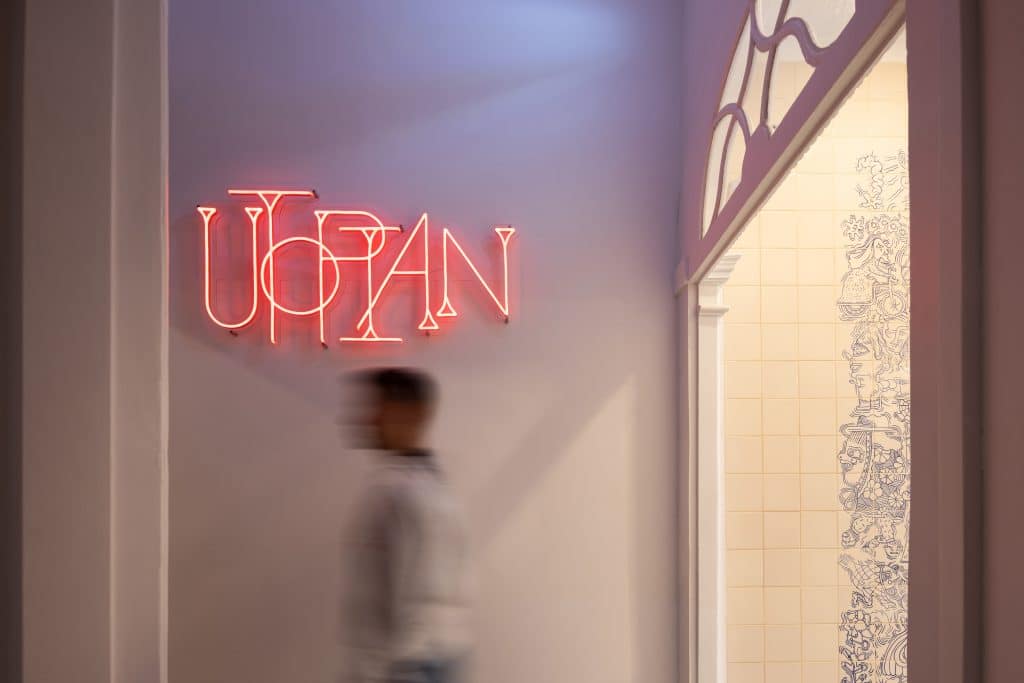
“I’ve been using AI to help with a range of things in my hotel venture Utopian,” he says. “It operates through a hybrid model that combines elements of short-term rentals and boutique hospitality. We offer high-end rooms and amenities comparable to those found in luxury hotels, while operating under a limited-service concept without traditional F&B, reception or permanent on-site staff. However, our team remains available to guests at any time via WhatsApp and we are currently integrating AI solutions to further support and improve guest communication.
“The other thing it’s been helpful for is simplifying concepts for my team – I often tell my people to seek answers from AI before they ask me something because it helps contextualize things and frequently anticipates what my answers would be anyway.”
Grisha has also used the technology for analytics at Utopian as well as in a hotel group in northern Portugal that he is currently helping restructure in an advisory capacity.
“AI has been great for analysis,” he adds. “For instance, I put my P&L statement on the LLM and ask it to find trends in the data. I've created some frankly amazing tools in Excel with Claude too, custom made revenue management software that gives me a breakdown of my business for which I would otherwise have had to invest significant amount of money to commission from somebody else.
“The metrics I get from these AI tools enable me to take much better data-based decisions.”
How to keep it relevant
That’s not all. Grisha is harnessing the power of AI to develop training materials and other HR-related tools to help with his restructuring project.
“I’ve been able to carry out a lot of the work for the hotel group in northern Portugal supported by AI,” he says. “For example, we developed detailed job descriptions for the entire organization and were able to look at those documents through the eyes of a lawyer or a labor union member to anticipate reaction to the wording. That’s one of the things I think AI is great at. It enables you to write better and faster and find potential weaknesses in whatever you're preparing.”
Another application Grisha has been exploring through OpenAI’s ChatGPT is the use of custom GPTs with retrieval-augmented generation (RAG), which allows the AI to generate responses exclusively from a defined set of uploaded documents and data.
“I built one for my staff where they can ask questions and receive answers based solely on the documents and information I have uploaded,” he says. “It has become an extremely valuable training tool. In hospitality, there is an almost infinite number of scenarios that can arise and many newer employees may not immediately know how to respond to a situation. If management is not available to guide them directly, they can ask the RAG, which will provide an answer grounded in the job descriptions, operational procedures, terms of service and any other relevant documentation we have integrated into the GPT.”
An element of caution
Since we are still in the relatively early stages of this technology, the potential for even more automation that saves time and money seems incredible. However, Grisha sounds some words of warning.
“While AI can perform all sorts of tasks quickly and efficiently, what it doesn’t do is replace your own critical thinking,” he says. “It's not like AI does whatever you ask it and that’s that; you still need to check it. So there’s a lot of work up front with the prompting and afterwards with the assessment. What it does well is produce results faster and in a more productive way and improves your capacity as an experience hospitality professional to make decisions based on more quickly available data.”
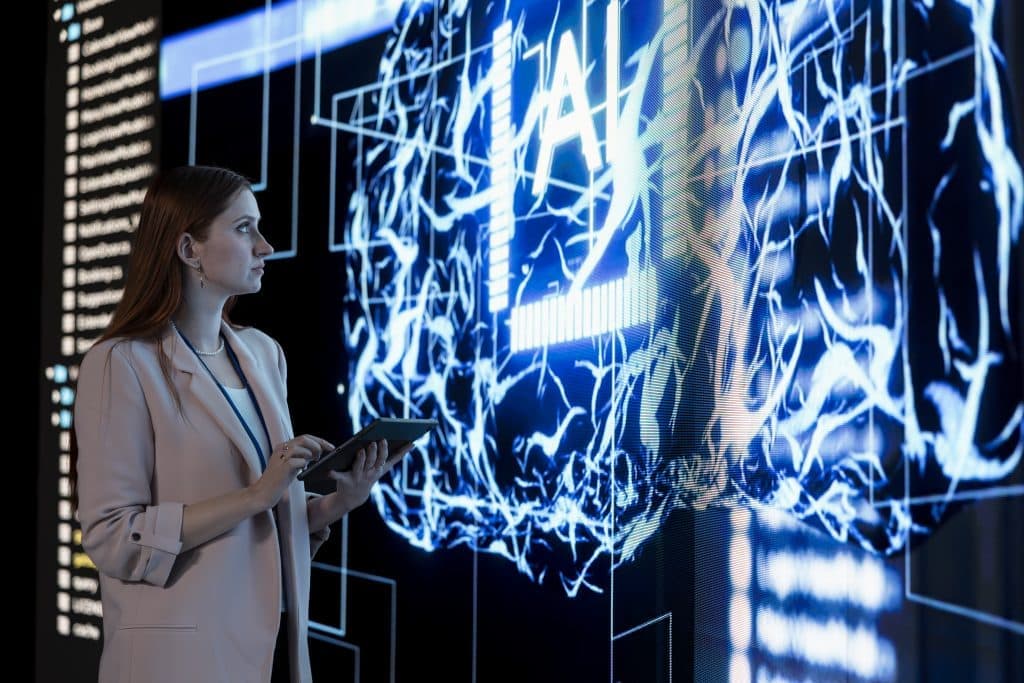
Then there is the question of what have been termed AI ‘hallucinations’, where the LLM gives responses to user prompts that sound convincing but are based on non-existent studies or made-up facts. Although Grisha acknowledges the problem, he believes it’s becoming less of an issue.
“I don't have the exact data, but research is showing with each new iteration of ChatGPT or Claude, the error percentage is decreasing exponentially,” he says. “And honestly, human error is a much bigger factor in organizations, particularly in hospitality where the largest problems more often than not stem from human interaction. Is AI perfect? No. But I think the error rate of humans is potentially higher than that of technology. The irony is only humans know if the end result is actually right or wrong.”
Adoption at scale
Despite concerns, it’s clear hospitality businesses – and their customers – are already using AI for a wide range of tasks, from planning holidays to generating marketing content.
“Right now, AI is being used for reservations and revenue management,” says Grisha. “I spoke at a conference in Sevilla last year where I heard around 30% of travelers use AI in some way in the decision-making process before making a booking. On the revenue management side, AI bots are being used to constantly monitor the dynamically changing prices of competitors so hotels can adapt accordingly. Not only that, OTAs such as Expedia and Booking.com rate hotels higher if their prices fluctuate, so having an algorithm that alters prices regularly helps keep your hotel in the spotlight.”
Grisha points out AI is also being used to optimize back-of-house processes such as purchasing by monitoring prices from different suppliers and carrying out other labor-intensive jobs such as creating internal documents and standard operating procedures.
“AI is also becoming much better at automating tasks, which means management and staff are freed up to improve the guest experience, deliver personalized services and spend time with guests,” he says. “I’m hopeful AI will fully deliver on the promise that it will remove a lot of the repetitive, low value creation stuff and ultimately liberate people to do the human interaction element.
“The purpose of hoteliers is to provide excellent guest experiences in line with their value offering, which naturally varies across segments from budget to luxury hospitality. Many operational and administrative tasks can increasingly be automated through AI.”
Success factors
So what kind of benefits can hospitality businesses expect to realize if they adopt AI? Despite being positive about what the technology can do, Grisha is less certain when it comes to the direct effects of using it.
“I think it is still too early to directly attribute financial benefits specifically or solely to AI,” he says. “But I'm definitely noticing massive changes in productivity, starting with myself. I'm not just talking about the amount of things that I can do, but also about the jump in quality of what I can do. I am a much better, more complete and faster professional than I would be without AI.”
He believes it will have a noticeable effect on hospitality businesses currently frustrated at using off-the-peg software or systems not designed specifically for the industry.
“Most software solutions are not developed by people with a deep understanding of the hospitality industry,” says Grisha. “Operators often understand service and day-to-day operations very well, but are not always financially literate. Investors and owners tend to be highly data-driven and financially focused, but do not always fully understand operations or the realities of guest service. Then you have engineers building software for the sector who understand technology but are unfamiliar with hospitality operations or the financial side of the business. That creates a significant disconnect.
“Thanks to AI, I'm able to create tools I need that are specific to hospitality. I may not know how to code, but as a Glion graduate and hospitality entrepreneur, I know what I need to improve the operations side of a hotel. Because Claude can code for me, that allows me to create custom-made tools that are much more relevant to my business.”
Future perfect?
In any industrial upheaval where tasks are automated or made completely redundant by technology, there are winners and losers. While Grisha shares some concerns about the long-term effects of AI use, he is certain the real danger lies in ignoring it.
“I think with any huge societal shift such as this, there will be a point where you'll have a segment of the population that will be left out and there will be fewer jobs,” he says. “On the other hand, it often means another sector or geographical area experiences a boom.
“From my perspective, I don’t operate in the luxury end of the market – which will always be in demand among the ultra-rich – so I am fearful many white collar jobs will disappear, meaning businesses like mine will suffer. But there are industries that don’t yet exist that will be created as a result of AI, so who knows what will happen?
“What I think we can say with a high degree of certainty is that AI is going to change the way we work, communicate and study. So we need to adapt to make sure we’re not left behind.”
• Click here for more AI and hospitality technology insights from Glion faculty Dr. Alessio Delpero
Photo credits
Main image: Yuichiro Chino/Getty
AI technician: Dragos Condrea/Getty
Join the leaders of hospitality
As our flagship graduate degree, the Master’s in Hospitality Business Leadership delivers the complete hospitality leadership toolbox, with study options in Switzerland and London.