Deciding what to pursue as a career can be a daunting exercise, especially when you’re still in high school or about to progress into further education. While some have already set their sights on certain careers, others are still wondering at the sheer number of possible paths to follow.
What few school-aged young people understand is that hospitality can offer incredible opportunities for those with the right mindset, characteristics and willingness to work hard. Alongside this, the industry is so multi-faceted it offers even the most undecided job-seekers the chance of finding their ideal line of work.
So what kind of opportunities does it offer and what personal considerations when choosing a career should young people weigh up? We spoke to three hospitality leaders to find out more about their career paths, which attributes you need to succeed and what they wish they had known about the industry when they were 18 years old.
Personal considerations when choosing a career
Among the first questions you need to ask when choosing a career are:
- What are your goals?
- What do you value most?
- What is right for you personally?
“People should be thinking about what kind of personality they have and what kind of satisfaction they're looking for from their job,” says Jacquie Lutz, Head of Career and Alumni Services & Industry Relations at Glion. “And you have to look beyond the surface by talking to people who are in the industry you are considering.”
For Paul Hutton, Asia Pacific Area Vice President and Head of Australasia at Hilton, there are other personal considerations to weigh up before deciding on a career path.
If you’re considering hospitality, you need curiosity, creativity and a sense of adventure,” he says. “And you need to genuinely enjoy looking after people. Ask yourself whether making a difference to someone’s day gives you satisfaction. That’s what makes this industry so rewarding: you have the opportunity to make a positive impact on people’s lives every day.”

For those considering the world of hospitality, Group Vice President, People & Culture at Mandarin Oriental Hotel Group Koray Gençkul has some more specific advice about personal considerations.
“Being super flexible is important in hospitality because all schedules are driven by the needs and desires of customers and the business,” he says. “If you want the predictable and regular hours of something like banking, this is possibly not the right industry for you. I also think being open and seeing the world as your oyster is key: this is an industry that requires you to relocate often, so readiness to do that will make a big difference.”
How can I choose a career if I don't know what I want?
Some career paths are straightforward and you need a professional qualification to enter them, such as becoming a doctor or lawyer. These professions require an early decision about which direction you want to go in. But if you are not sure about what you want to do, there are still plenty of options.
“In some careers, such as engineering, you need specialist qualifications from the outset,” says Paul. “But careers don’t always follow a straight line and there’s real value in building a broad range of skills and experience. We’re moving into an era where generalists are coming back into their own; people who can adapt and contribute across different areas of the business. That versatility is being recognised and valued again. If you’re not yet sure what you want to do, that’s not a disadvantage. Be willing to work hard, keep learning and stay open to opportunities; you don’t need to have your whole career mapped out from day one.”
While not born out of uncertainty, Koray's hospitality career didn’t start out in the traditional way.
“I studied education sciences as well as hotel management, then I did several years learning and development,” he says. “I was only later I started work in learning and development in a hospitality company before moving my way up to the global remit I now have.
“But the beauty of hospitality is that you can have an engineering degree and you can be a successful hotelier or you can have an economics degree and still do well in the industry.”
The great news for today’s young people – particularly those who do not yet know what they want to do – is that there is much more opportunity for career switching than there used to be.
“It’s no longer how it was in the past when you chose a career and you stayed there for life,” says Jacquie Lutz. “Now, if you don't like what you're doing, you can change direction. There are skills you learn in one profession that will be transferable to others, so while it’s important to consider your career path carefully, you can always switch to something else if you decide the industry you’ve chosen is not for you.”
For those still exploring their options, studying hospitality can offer a way to discover where their interests and strengths lie. Programs such as Glion's Bachelor of Science in International Hospitality Business combine business education with practical industry experience, allowing students to explore different career paths before deciding where to specialize.
Why hospitality specifically?
Each of these leaders chose hospitality as the industry in which they wanted to pursue their careers, though not all started out in the sector. So why is hospitality such an attractive industry for both new starters and career switchers?
“There are immense opportunities in the travel and tourism industry,” says Koray. “The sheer magnitude of it is impressive and it’s one of the biggest employing industries in the world.”
Koray’s view is backed up by the figures. According to the World Travel & Tourism Council (WTCC) 2025 Global Trends Report, travel and tourism supported 366 million jobs worldwide – some 10.9% of total global employment – in 2025 and that figure is expected to grow by nearly 90 million over the next decade to 2026. But that only tells part of the story. What many don’t understand is the sheer variety of disciplines you can specialize in when you work in hospitality.
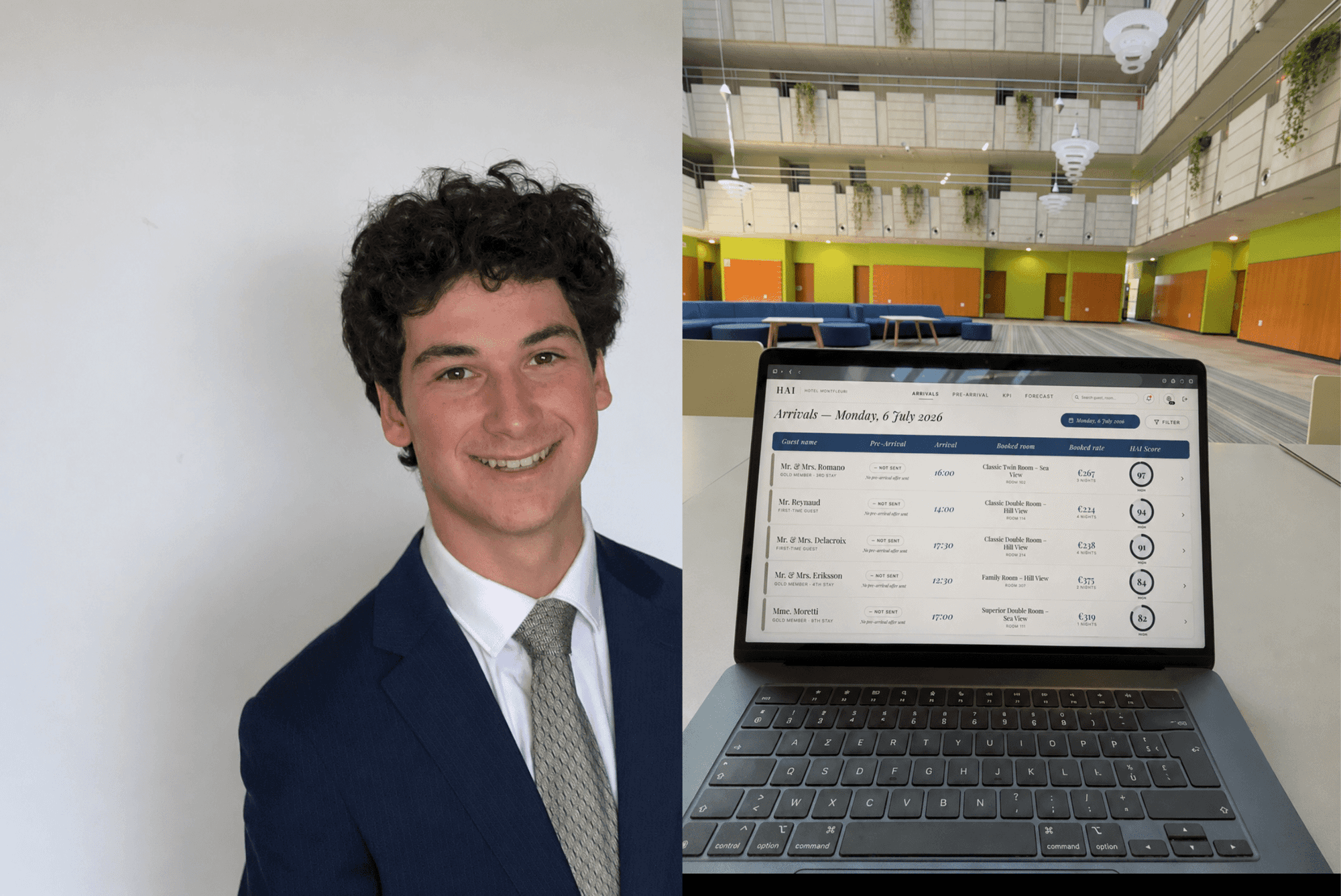
“If you speak to those who don’t work in the industry, many think working in a hotel, for example, involves being a waiter, reception work and general management,” he says. “But because hospitality is designed to service all aspects of life around the clock, an average hotel will include around 100 different positions several categories, from strategic revenue management and technical services to wellbeing, culinary and rooms.”

The variety is not limited to job roles either, according to Paul.
“One of the things I enjoy most about hospitality is that no two days are the same,” he says. “That’s as true for me today as it was when I started. Then there’s the opportunity to progress quickly. We have team members in their mid-20’s running million-dollar businesses. There aren’t many industries where you can take on that level of responsibility so early in your career.”
Jacquie agrees, having seen many students who have graduated from Glion progress rapidly to senior roles.
“Glion graduates usually only have a couple of internships’ worth of work experience, but they often start at assistant manager level, which is pretty impressive,” she says. “And within six months, they’re managing a team, are in charge of a department or have moved into head office. I've never seen an industry where you grow so quickly.”
This highlights the value of combining academic study with practical industry experience, giving students opportunities to develop professional skills and build confidence before entering the workplace.
Another appealing aspect of the industry is the fact many of the roles are not replaceable by technology.
“We crave human interaction and we want to be around people,” says Jacquie. “And that’s what hospitality is built on. When you see AI taking over all sorts of different roles and making some redundant, it’s reassuring to know there will always be jobs for people in this industry. No machine can do the job of the housekeeper who makes sure the rooms are looking great or the receptionist who welcomes guests at 1:00 in the morning when their flight has been delayed.”
What’s more, the aptitudes you need to succeed in the industry not only make it appealing for those looking to change careers, they are also highly valued in many other sectors.
“Hospitality really does value transferable skills that you may have learned elsewhere, such as business or communication skills,” says Jacquie. “We've seen students come into our master's program, for example, who are corporate executives or even headmasters who have gone on to excel precisely because they have brought with them skills that are sought after in the industry and are directly applicable.”
It’s a two-way process as well. Those who have worked in hospitality tend to have developed transferable skills that enable them to use the industry as a launchpad into other careers.
“Because of the variety a career in hospitality can offer, the possibilities are endless,” says Koray. “As well as traditional hospitality roles, our hotel group employs research analysts, marketing professionals, revenue analysts – even AI implementation officers. Working in hospitality allows you to focus on what you are good at and what you enjoy most. And that means you will develop skills that can open doors to many other sectors too.”
What advice would they give their 18-year-old selves?
All three leaders are advocates for hospitality and have shared their insights into why it’s a great choice for job-seekers. But is there anything they wish they had known about the sector before they embarked on a career in it? And what advice would they give to themselves at the age of 18 if they could?
For Koray, understanding and seizing opportunities when they arise are paramount. “I was not fully aware of the full potential of this industry before I started,” he says. “I thought it would be more limited. But what’s important is to keep grabbing the opportunities and having the courage to try out new things.”

Paul echoes that sentiment, particularly when it comes to willingness to take a leap into the unknown.
It’s not just about being prepared to travel,” he says. “It’s about being open to something different, a new destination, a different role or a challenge you haven’t faced before. Sometimes the opportunities that stretch you most are the ones you learn the most from. A more challenging destination can mean learning quickly and taking on responsibility earlier than you expected. My advice would be not to rule something out simply because it’s unfamiliar. You don’t need to have all the answers to give it a go.”
Preconceived ideas of what the industry can offer are widespread among the students Jacquie encounters at Glion.
“They are often unaware of what hospitality really covers,” she says. “Even those who want to come to a hospitality school think they're just going to run hotels, but there's so much more to it than that. In hospitality, you can have a career in finance, marketing, business development and luxury. It’s so much more varied than people imagine.”
Koray believes that variety gives entrants to the industry the opportunity to find their calling. “Hospitality gives you the chance to find yourself a bit and understand where your strengths lie and what you enjoy. But it’s important to work in an organization that supports you on your journey too. My son has just completed an internship in a hotel. He’s studying media and communication, but he’s had such a positive experience where he feels valued and able to contribute that he’s now considering a hospitality career.”
While the variety offers opportunities, for Paul, it’s important to not be impatient or chase promotions for the sake of it.
“My advice would be to have a little patience and don’t judge every opportunity by the job title or salary,” he says. “Lateral moves can be incredible for your career, particularly when they give you experience in a different part of the business. Take time to understand how things work rather than focusing only on the next step up. That breadth of experience gives you more options and helps you adapt when circumstances change, especially when the industry goes through a downturn.
“You should also balance ambition with evidence of your ability. It’s good to want to progress, but you need to show you can deliver in your current role and put what you’ve learned into practice. Building that track record helps demonstrate you’re ready for greater responsibility.”
Employability is something Jacquie believes is under-appreciated by the students she meets. “What you learn and the soft skills you develop when you study hospitality will stand you in good stead for any other career barring those where you need professional qualifications. And those skills help you in your professional and personal life. For example, we don't run classes in how to communicate nicely or in emotional intelligence at Glion – these things develop naturally in the hospitality environment. It's a genuinely fulfilling field that offers great potential for a future career.”
Photo credits
Main image: Teera Konakan/Getty
Hotel revenue management: Krisanapong Detraphiphat/Getty
Discover where a career in hospitality could take you
Glion’s Bachelor of Science in International Hospitality Business combines business education, international internships and the opportunity to specialize, helping you explore your strengths and prepare for a career in this diverse industry.