In hotels, restaurants and indeed all customer-facing businesses, the quality of guest experience is very often what separates the winners from the losers.
Guest experience is the overall impression and satisfaction you receive as a guest, whether you’re staying at a hotel, shopping at a high-end boutique, attending a sporting event, or dining at a restaurant. This experience significantly influences whether you will become a loyal patron or choose to take your business elsewhere in the future.
In a worst-case scenario you may even be moved to leave a bad review of your experience on a public platform.
In fact, the importance of guest experience extends to industries outside of the traditional hospitality business and experience economy– some of which might surprise you.
One example is banking. Wealthy clients of private banks and investment firms demand an exceptional level of service, which is why many such businesses come to hospitality schools to recruit individuals they know will possess the knowledge and skills to deliver it.

In a hotel, the guest experience is a combined effort by every part of the operation. It encompasses things like the quality and cleanliness of the rooms, the front desk and concierge service, the room service (if required), plus what’s on offer in the bars and restaurants. Everything must be perfect in order to deliver a 5* guest experience.
Within a retail environment, the guest experience is influenced by elements such as the store fixtures and fittings, but revolves mostly around the staff. A warm greeting, an approach that is caring but not overbearing, avoiding hard sell, and perhaps the offer of a complimentary cup of coffee or a glass of Champagne in more high end establishments. It all adds up to a true luxury experience.

In our teaching, we emphasize that delivering a great guest experience in the hospitality business includes factors such as:
Embedding a “service culture”
Exceptional service doesn’t just come naturally, it must be embedded within an organization and then nurtured through training, mystery guests and other quality improvement mechanisms.
Fostering authenticity
Human beings are perceptive and most of us can spot inauthenticity when we see it. So the role of a leader in hospitality is to ensure that the service guests receive is genuine, heartfelt and personalized.
Encouraging the appliance of science
Newer fields such as ‘Neuromarketing’ and ‘Behavioral Economics’ are bringing a more analytical approach to the relationship between consumers and brands. The modern hospitality leader should have an appreciation of how these can be applied to his or her service teams.
Here are two genuine reviews taken from the online hotel review site TripAdvisor:
“I hardly EVER give a review but this I could not give credit, where credit is due!!! When I say hands down the BEST service EVER!!! I mean that!!! The staff was amazing… professional, helpful, courteous, and the list goes on!!!”
“WORST HOTEL I’VE EVER STAYED AT… STEER CLEAR! No matter how enticing the price might seem. Bottom line up front: the customer service and guest relations are absolutely awful. They made what could be minor issues absolutely detrimental to our stay.”
We won’t name names, but both hotels are located in the same popular tourism destination. If you were planning on visiting that destination and browsing TripAdvisor for pointers, which hotel would you choose?
Your answer is why guest experience is so important in hospitality.
Before the stay:
1) Pre-arrival contact – ensuring all channels of customer contact are answered punctually and consistently
2) Great website functionality – making online bookings frictionless and pleasant, whether on desktop or mobile
3) A personalized online experience – adding personal touches even before the guest checks in
4) Help your guests plan their trip – be proactive and share insider tips; email them local guides, blogs with hidden gems, or other sightseeing options.
During the stay:
5) Surprise and delight your guests – this doesn’t have to involve grand gestures; small gestures can mean the world to a guest having a lovely guest experience.
6) Focus on customer service and team training – continually train your staff and have management on the premises to step in when something goes wrong.
7) Reward repeat guests – offer discount charges/rates for guests you book with you multiple times; or include additional benefits such as flowers or a bottle of wine in their room.
After the stay:
8) Collect reviews and be responsive to feedback – the best way to improve a guest’s experience is by knowing what to improve on. View critical feedback as an opportunity to do better.
9) Send a ‘thank-you’ email – after a hotel stay, guests appreciate a note saying that you enjoyed having them as a guest and that you look forward to seeing them again in the future.
Forbes Travel Guide is the only independent, rigorous global rating system for luxury hotels, restaurants and spas. As such, it is the gold standard in determining which hotels offer the best guest experience.
For 2022, the Guide nominated 323 Five Star hotels across the world, with London enjoying the most representatives (21) of any destination.
How are these ratings determined? The Guide sends out anonymous professional inspectors to evaluate properties based on up to 900 objective standards, with an emphasis on exceptional service.
To view the complete list of Forbes Five Star hotels, click here.

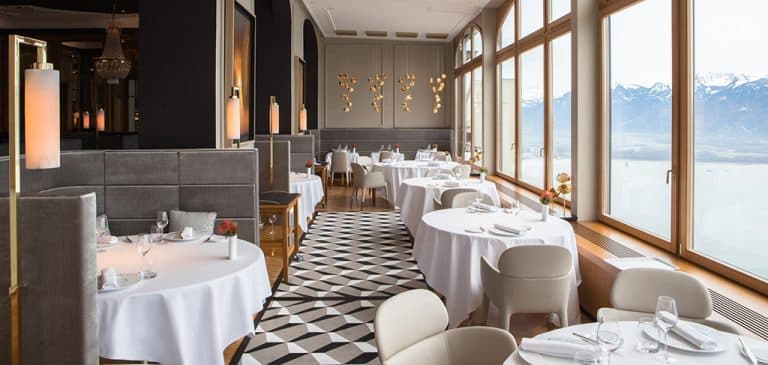
Like a hotel, a restaurant will stand or fall on the experience it provides. Of course, the quality of the food on offer is a major part of that experience; but don’t overlook the importance of having a friendly and knowledgeable service staff.
Your waiters need to understand the menu so they can answer questions, suggest ideal food and wine pairings (for those restaurants without their own sommelier), explain how dishes are cooked and give accurate advice on ingredients – something that’s especially important when it comes to guest’s allergies.
You must also encourage total honesty and transparency at all times. Is the kitchen under pressure? Make sure the guests know there may be a delay in getting their food, with an accurate estimate of the time they may have to wait. Is someone ordering a dish that takes a while to prepare? Let them know, and if the wait is too long for them suggest something equally delicious which can be more rapidly prepared.
You can additionally deploy technology to enhance the guest experience. Nowadays, there are applications that allow for accurate bill splitting among groups, which saves staff time and avoids ill feeling among those who’ve consumed less. Many restaurants collect data on regular guests. This can help you to personalize their service when they visit – perhaps with a complimentary cocktail which you know is their favorite.
These little things add up to repeat business – the lifeblood of any restaurant, but especially those located in neighborhoods away from major city thoroughfares, where walk-up trade is harder to come by.

It’s not so much that these expressions mean different things; more a case that one – customer service – is part of the wider whole that is the other: guest experience.
Guest experience, or customer experience as it’s more generally known, defines how the customer feels about the sum of their interactions with a particular brand across every touchpoint.
So it covers elements such as marketing materials and website, the sales experience, the quality of the product or service itself, and the customer service they receive post-purchase.
As mentioned, customer service is one element of the overall experience. It’s a significant one, though. According to the Customer Experience Trends Report by Zendesk:
The message is clear: deliver superb customer service and you’ll be well on your way towards optimizing your overall guest experience.

As we’ve already discussed, delivering world-class guest experience is a team effort that involves every touch point for a guest before, during and after their stay.
Guest experience jobs are thus equally varied. The front desk manager and his/her team are an obvious example; but the marketing team’s social media manager and website user experience (UX) expert also contribute hugely to a great guest experience, even though they may never have any face-to-face customer contact.
You’ll find a similar story outside the hotel business. The customer is king, and the quality of their experience counts whether you are managing events, or operating a casino, theme park, cruise line, consultancy, shopping mall, wealth management service, or similarly customer-focused business. That’s why many organizations employ dedicated guest experience managers.
Guest experience managers oversee the guest experience at their business, working with the different departments which deliver it. They will frequently be involved with managing front-line staff; plus they look at developing training programs and creating processes to improve service quality.
Guest experience managers may also be tasked with collecting feedback from guests about their experience, then using it to guide decisions on how to best serve customers in the future.
According to the careers portal CLIMB.com, specific responsibilities for guest experience managers typically include:
The careers portal CLIMB.com lists soft skills as being a critical factor in a guest experience manager role. These include communication, problem-solving, teamwork, and customer service.
It adds:
“To become an experience manager, you need to have a strong understanding of customer service, marketing, and business strategy. You should also be able to think creatively about how to improve the customer experience.”
As always when it comes to salaries, the sheer number of variables (location, type of organization, candidate experience, etc.) make it impossible to state hard numbers which can apply on a global basis.
With the help of CLIMB.com we can give some figures for the United States, to act as an example. There, a median annual salary of just under $50,000 a year could be expected, with the top 10% of annual salaries reaching up to $86,500.

You may also see the term ‘guest experience specialist’ when searching this field. It’s often just another way of describing someone who is responsible for the overall guest/customer experience. As with a guest experience manager, you will use a combination of research, feedback and data to improve the overall experience your business offers.
Some businesses will ascribe the title ‘guest experience specialist’ to a more frontline, day-to-day customer service role, which reports to a guest experience manager. As always, such details and hierarchies are revealed in the job description, careful reading of which will give you what you need to know before applying.
Yes you can! The various components to delivering a memorable guest experience are all covered at undergraduate level by a typical hospitality degree.
Choose a hospitality school that incorporates one or more professional internships into its Bachelor program and you will not just have the opportunity to learn the theory of great service; you’ll also get to practice it yourself in a real-world setting!
At Master’s level, look for a program with a more focused curriculum built around the principles of service excellence, including cutting edge processes and best practices.
To give you the best possible return on your investment, your Master’s should cover both hard skills, such as modeling and analytics, as well as soft skills such as talent management and the behavioral aspects of customer engagement.
We have undergraduate and graduate programs that get to the heart of world-class guest experience, including our highly popular Master’s in Luxury Management and Guest Experience.