There really is nothing quite like the thrill of gunning a Porsche 911 on a section of quiet, open road. The flat-six engine note – behind you, of course – is instantly recognizable; and even in a normally aspirated model the mid-range surge of power feels like a turbo boost. But more on the legendary 911 Turbo later.
This feature is all about the history of Porsche: the innovation, the engineering, the successes on and off the racetrack. And, like our previous article on Cartier, we’re telling it through 10 landmark creations that define the company’s evolution throughout the past eight decades.
This 10 car selection – all approved and endorsed by the Porsche Museum in Stuttgart – represents pure automotive alchemy. Happy driving!
1. Porsche 356 ‘Number 1’ Roadster from 1948
The ‘father’ of Dr. Ing. h.c. F. Porsche Aktiengesellschaft – to give the company its proper name – is Ferdinand Porsche, a German automotive engineer born in 1875 who designed the Volkswagen Beetle as well as the world’s first petrol-electric ‘hybrid’ vehicle in his earlier life.
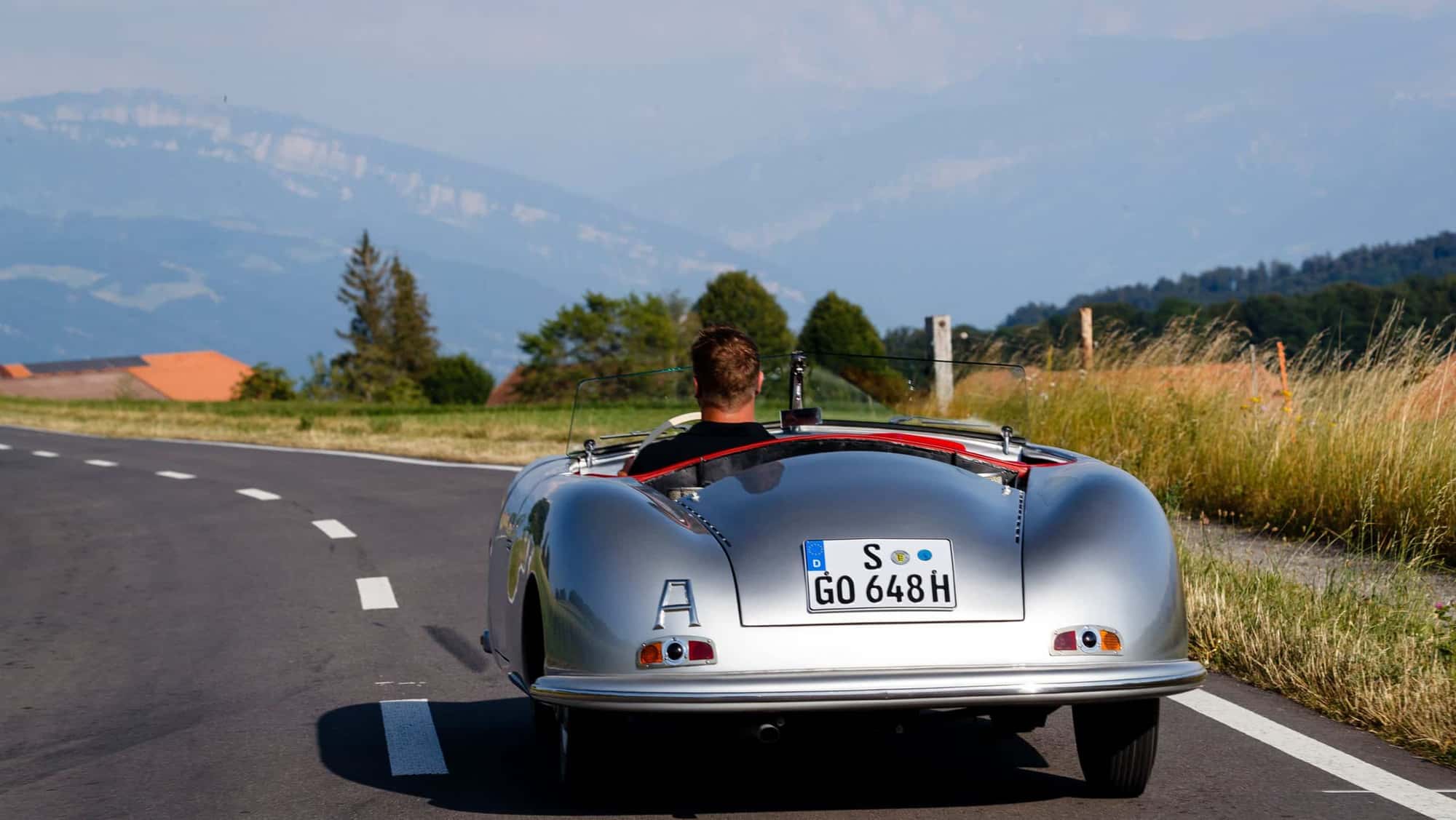
It was Ferdinand’s son, Ferry, who was responsible for the first Porsche car ever built – the 356 of 1948. The Porsche company had moved to the Austrian town of Gmünd towards the end of World War II, and so this prototype car was built there, with an aluminum body hammered over a lattice tube frame. The axles, steering, wheels and brakes all originated from the VW Beetle, as did the 1.1-litre engine, which produced a modest 35hp. That, however, was sufficient to offer the driver some agreeable zip, since the car weighed an incredibly light 585 kilos.
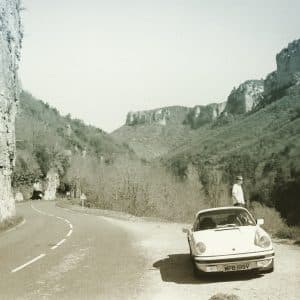
As a proudly Swiss school, we are pleased to note that this first customer Porsche was sold to Switzerland, the Zurich-based architect Peter Kaiser paying CHF 7,500 for the privilege of ownership. Since acquired by Porsche and restored to its original condition, our photo shows the 356 ‘Number 1’ on a road trip through Switzerland in 2018, to mark its 70th Anniversary.

2. The 550 Spyder of 1953 – the origin of Porsche’s racing pedigree
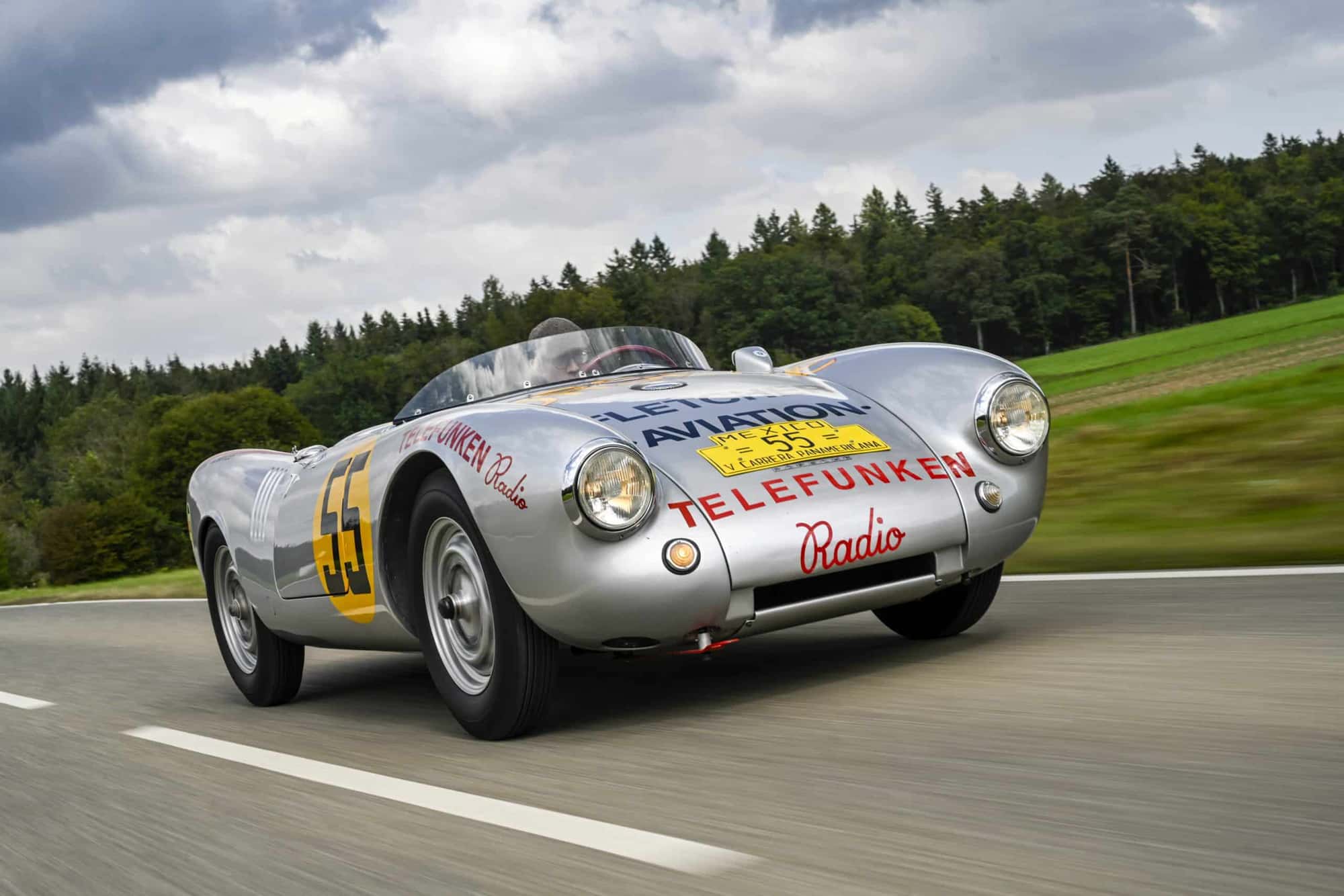
In 1953, Porsche launched its first car specifically for motor racing: the 550 Spyder. In the three years of production that followed, just 90 were made. But its success on track – including a class win at Le Mans – not to mention celebrity owners such as Yves Saint Laurent and James Dean (more on him in a moment) have fully earned its place in our storied selection.
The car’s most striking feature is its height, or lack of it! Standing at just 980mm, the car was optimized for racing – in fact, the German pilot Hans Herrmann was able to drive it under closed railway crossing gates during the 1954 Mille Miglia.
Herrmann was also behind the wheel of our pictured model when it won its class at the legendary Carrera Panamericana, a border-to-border rally through Mexico that is widely regarded as the most dangerous motor racing event ever staged.
All that said, the car’s fame – or should that be notoriety – was sealed when the Hollywood actor James Dean was killed in a head-on collision as he was driving his 550 Spyder – nicknamed “Little Bastard” – to take part in a race at California’s Salinas Speedway.

3. First generation 911 from 1963 – the birth of a legend

Your author, in another life…
I
I used to describe my Porsche 911 (a 1980-built SC dressed up like a later model Carrera in case you were wondering) as an “event car”, in that every occasion I sat behind the wheel felt like a special event.
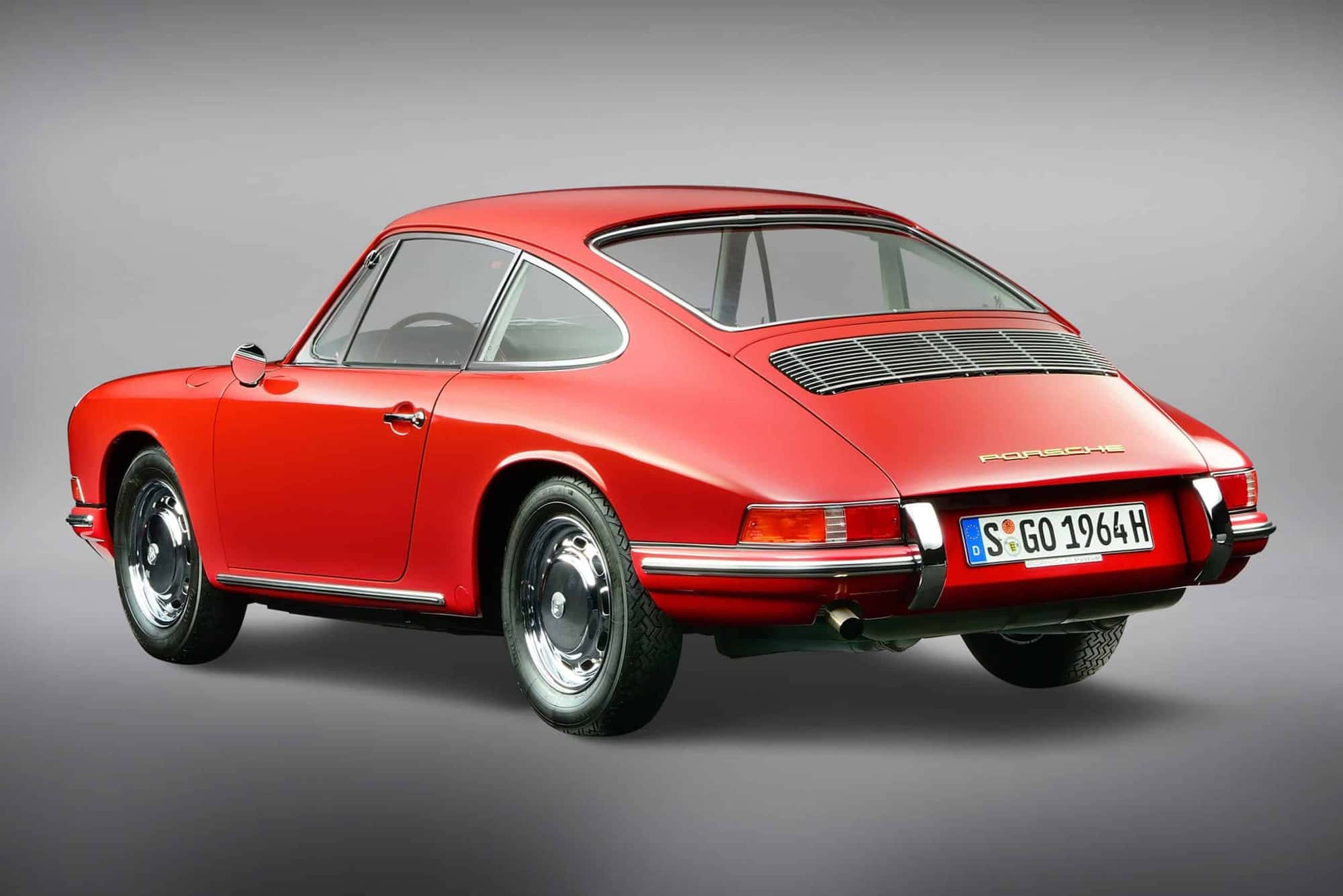
The shape and specification of my car – and all those which have followed since – can be traced directly back to the model 901 which Porsche first presented to the public in the fall of 1963. Within just a few weeks, the coupé had to be renamed as a result of a trademark dispute. From then on, it was known as the 911, and a legend was born.
Our featured car is ‘Number 57’, one of the earliest produced and painstakingly restored by Porsche after being unearthed as a ‘barn find’ in a completely dilapidated state a few years back.
Despite its poor condition on discovery, the car contained a number of details that delighted Kuno Werner, Head of Museum Workshop at the Porsche Museum, who noted, “Many of the features only included in the very first models have been preserved in the car.”
One such example is the leather sleeve around the gear shift lever, which was only installed in this form during the ‘901 era’.
More than 60 years later, the 911 is still going very strongly indeed, with the latest generation 911 Carrera GTS being the first road-legal 911 model to feature a lightweight, performance-focused hybrid powertrain, giving acceleration from 0 to 100 km/h in just 3.0 seconds and onwards to a top track speed of 312 km/h. That’s a big advance on the more leisurely 210 km/h top speed of our original model, but there’s no mistaking the family lineage.
4. The Porsche 917 K – first victory at Le Mans in 1970
Porsche has flirted with Formula One over the years, and is currently active in Formula E, but the marque’s bread and butter is sports car racing. And if your interest lies in this brand of motorsport, there’s one place above all you must prove your mettle: Le Mans.
By the end of the 1960s, Porsche had already secured class wins at the French 24-hour classic, but never the overall. So the company changed tack and developed a car that could contend for the top prize: the 917.
An extraordinary, totally uncompromising race car (find an image of the ultra-lightweight bare alloy chassis which sits underneath the bodywork – there’s almost nothing there), the 917 first contended for victory at La Sarthe in 1969, leading the race before a late retirement.
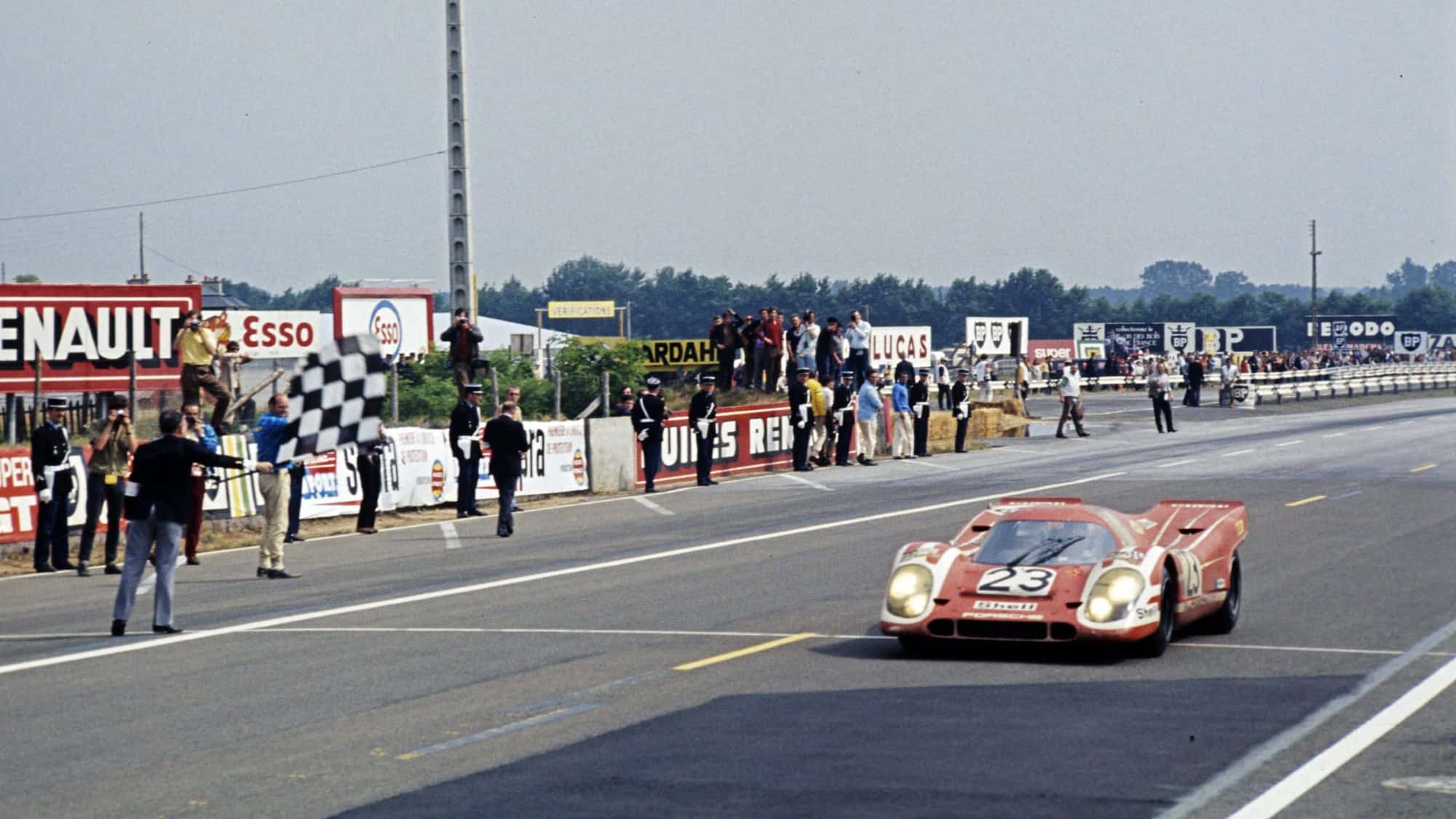
A year later, the marque swept the podium, with the winning 917 K (for Kurz = ‘short’ in German) driven by Hans Herrmann and Richard Attwood crossing the line first having completed exactly 4,607.811 kilometers, or 343 laps, of the famous circuit.
That victory opened the floodgates, and since then Porsche has become the most successful manufacturer entrant in the 100+ year history of the great race, with 19 wins to date.
In total, the 917 won 15 World Sports Car Championship races across the world, including back-to-back victories at the 24 Hours of Le Mans and the 24 Hours of Daytona. It remains one of the most iconic racing silhouettes ever to take to the track.

5. The first 911 Turbo from 1975
It was 50 years ago this year that a new word entered the lexicon of every petrolhead: ‘Turbo’.
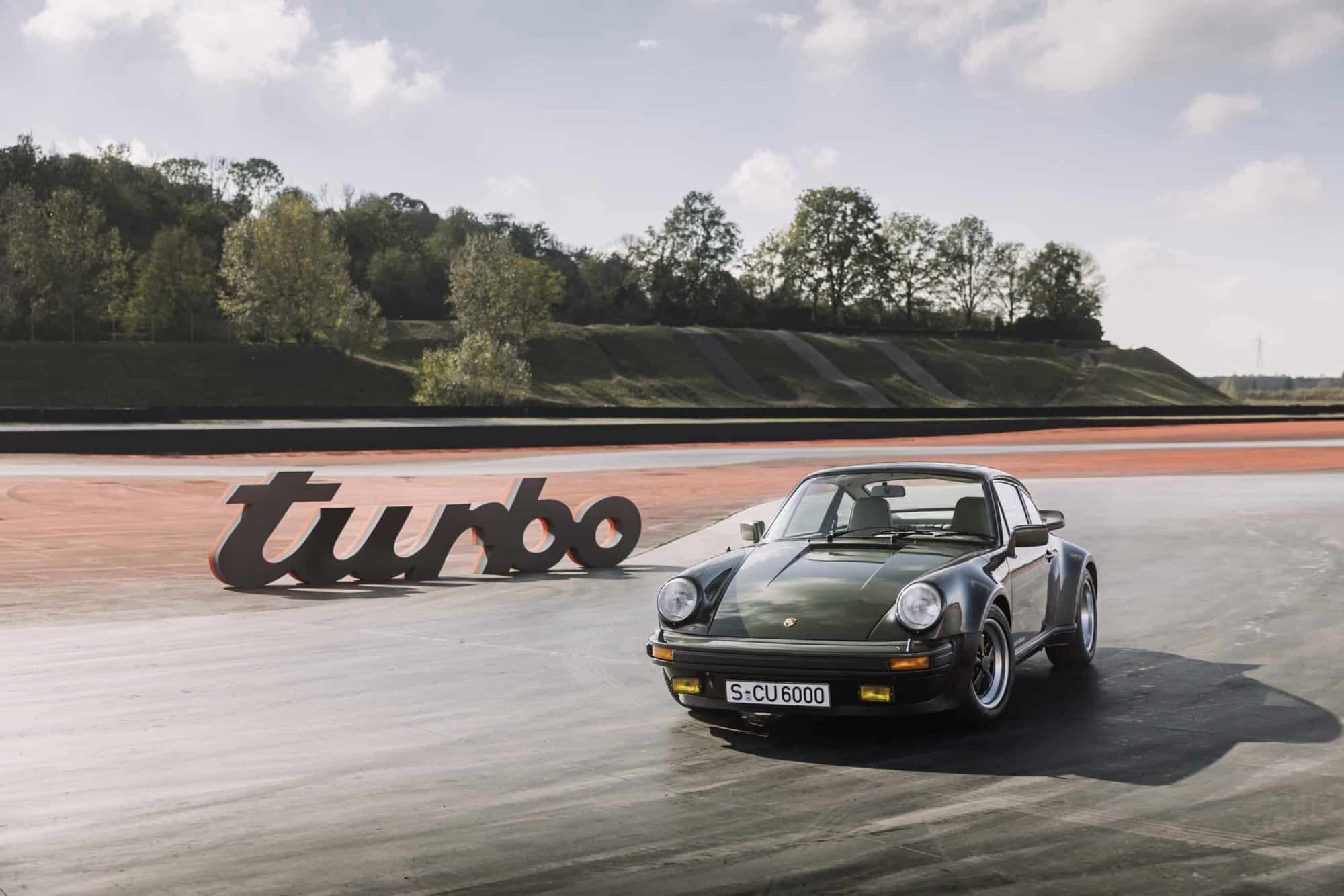
Even if – like me – you don’t understand how a turbocharger works, you instinctively know that when allied to a performance car engine it’s good news. And for that you can thank the Porsche 911 Turbo, seen for the first time in prototype form at the Frankfurt International Motor Show in September 1973, and which went on sale officially in 1975.
Porsche originally planned the 911 Turbo as a prestigious limited-run series, but the sales figures exceeded all expectations. In the first three years, Porsche produced 2,850 units of the 911 Turbo 3.0 – the model which was known internally as the 930 and which was the first of its kind with a boost pressure-controlled turbocharger.
Of course, adding significant extra power to a rear-engined sports car – power that arrived in a mind-bending surge whenever the turbo kicked in – meant the early 911 Turbos were not for the faint-hearted. Maybe that risk of running out of talent added to the luster? Certainly, years of engineering development made the later models better behaved, though still thrilling to drive.
Half a century after its launch, the Turbo remains the 911 range-topper, with today’s 911 Turbo S capable of reaching a 330 km/h top speed and with a 0-100 km/h time of just 2.7 seconds. Fast enough for you?

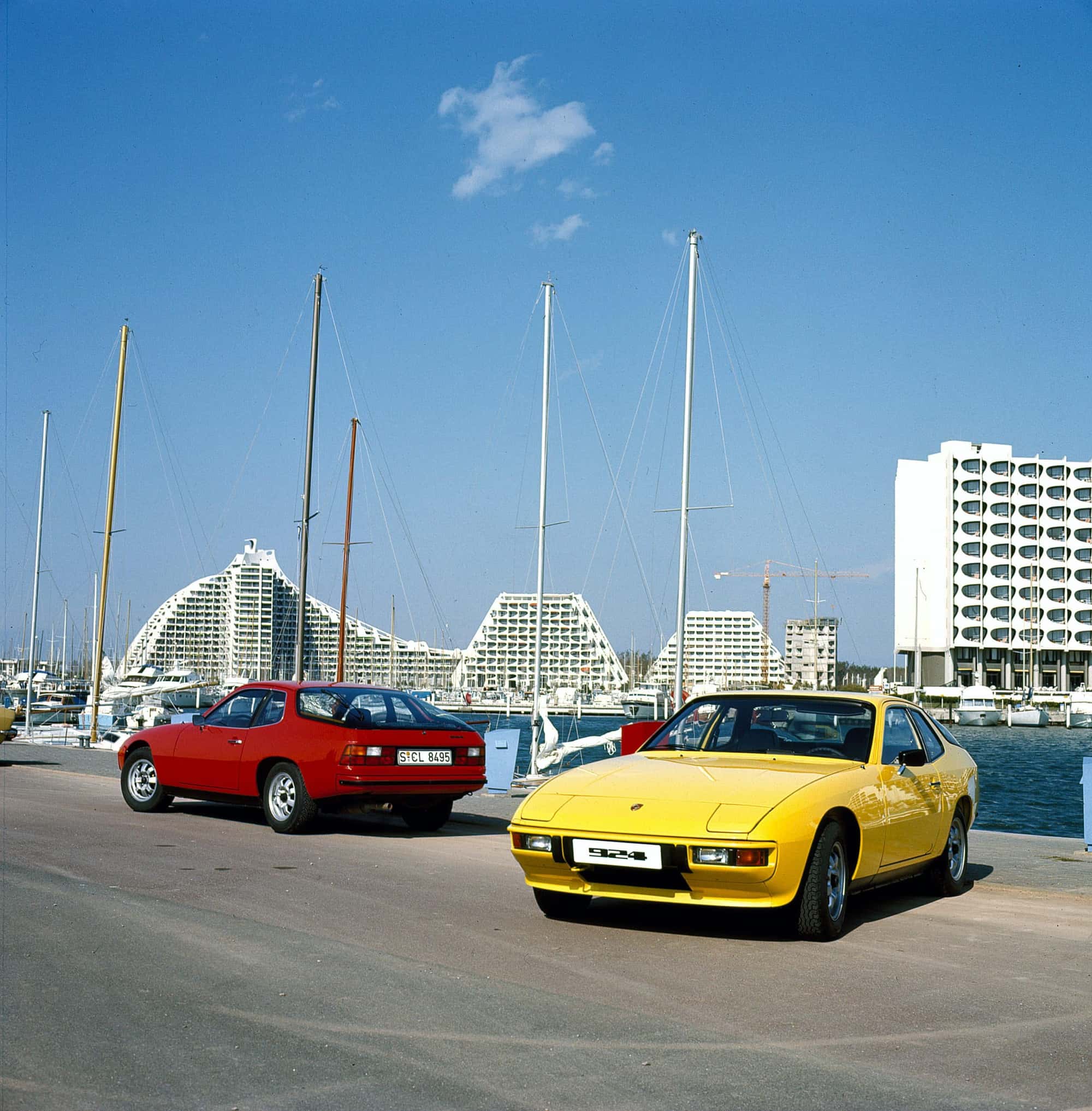
6. The 924: Porsche’s first front-engined car
As Porsche says, “The 924 was a sports car without precedent. Engine in the front, transmission at the rear, and all manner of space in between.”
The car was initially a project of sister company Volkswagen, but was shelved at a late stage due to the Oil Crisis of the early 1970s. Porsche picked up the plans and brought the car onto the market as the 924 in early 1976.
Intended as the entry-level model in the range, the Porsche 924 was the work of a young Dutch designer called Harm Lagaaij, who went on to pen the 968 and the 928 GTS, as well as overseeing the design of the Porsche 993, the last air-cooled 911. He remembers, “Drafting the 924 was a purely intuitive process. And of course its design was something of a surprise, because Porsche hadn’t made anything like it before.”
Although it received some initial criticism for its performance numbers, the 924 was a sales success, becoming one of Porsche’s best-selling models. The need for speed was satisfied with the launch of the 924 Turbo in 1978, which was praised by motoring journalists for its supercar-like performance and impeccable handling.
Perhaps the ultimate 924 is the 924 Carrera GT, a ‘homologation special’ which entered production in 1980 boasting a 210hp output with a top speed of 240 km/h. Those homologation vehicles allowed Porsche to create the 924 Carrera GTR racer, which competed in both sports car and rallying events.

7. The 959: the ultimate pin-up Porsche
Speak to any motorsport enthusiast of a certain vintage (your correspondent included) and you’ll only have to mention one thing to prompt an hour of fond reminiscence and lyrical waxing: Group B.
For the uninitiated, Group B was a set of motorsport regulations issued by the Fédération Internationale de l’Automobile (FIA) in 1982. Doesn’t sound that thrilling, but what these regulations spawned was a collection of race and rally cars that are unmatched in history for being the purest, fastest, most powerful, and most exciting of all (not to mention probably the most dangerous, hence the eventual demise of the formula).
With its impeccable motorsport pedigree, Porsche wasn’t going to miss out on the Group B gold rush. Its answer was the 959, known in prototype form as the “Grüppe B” in reference to the regulations that had birthed it.
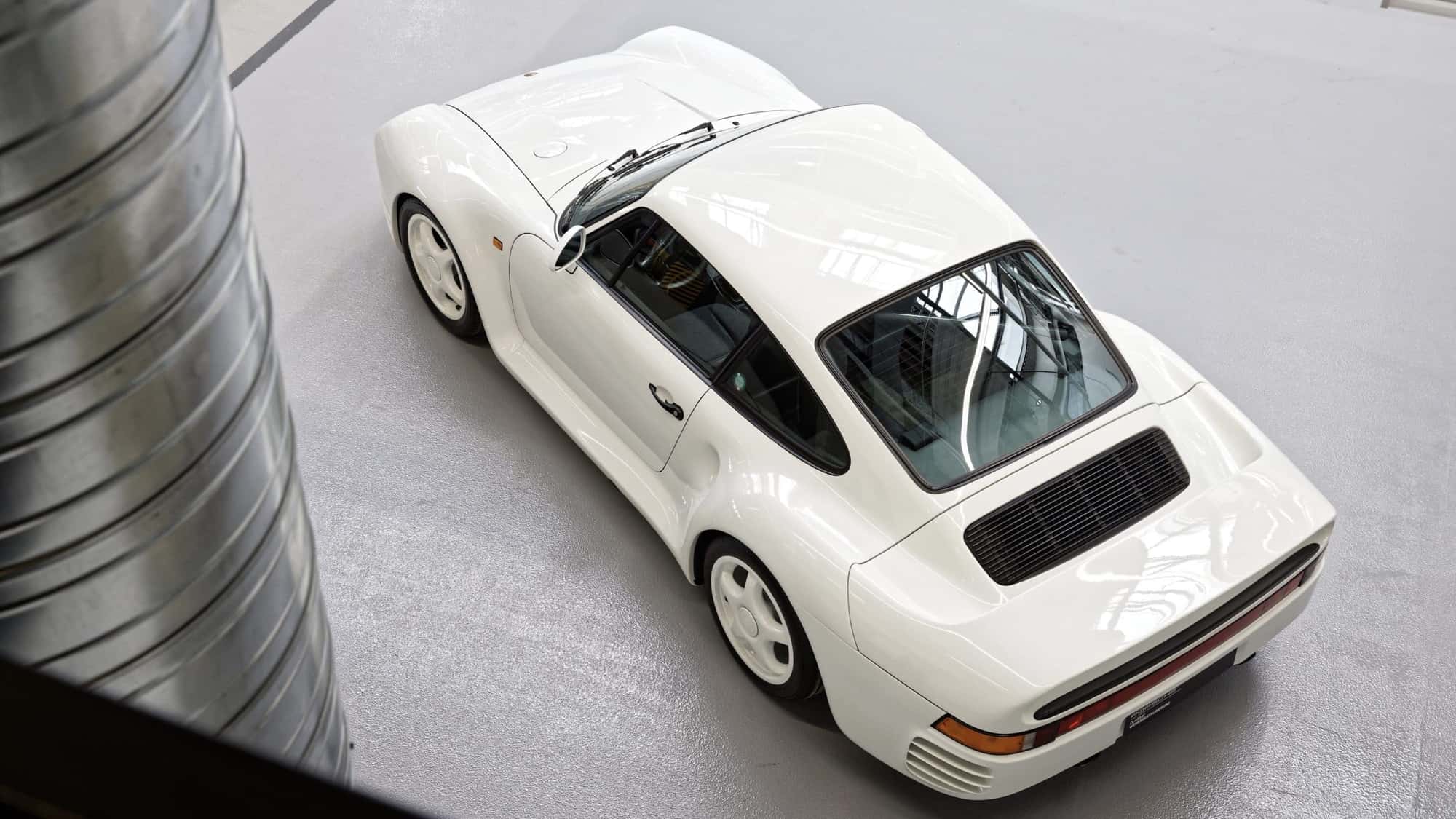
The racing version competed successfully at the Paris-Daker Rally, winning outright in 1986, but it was the production model, of which just 292 examples were made, that became a staple of many a youngster’s bedroom wall in the 1980s.
With a 2.8-litre twin turbo engine derived from the serial Le Mans winning 956, the car also featured innovations such as electronically controlled all-wheel drive combined with ABS, four pre-selectable shock absorber programs and a speed-dependent self-levelling function. Despite a hefty price tag of 420,000 Deutschmarks, the 959 quickly sold out its entire production run.
Today, any 959 that comes up for sale will set you back very serious money if you want to join the owner’s circle. Ex-Formula One driver Nick Heidfeld is lucky enough to own one of the even rarer 959 S models (pictured), of which only 29 were built.
He says of the car, “I’ve had the privilege of driving many high-performance cars, but driving this high-tech legend is something special for me. I was a teenage car fan in the late 1980s, and to me this Porsche was always extraordinary.”

8. The Boxster: the car that saved Porsche?
By the beginning of the 1990s, Porsche found itself at an economic crossroads. The company was losing money, with sales slumping amid a dire need for a fresh approach.
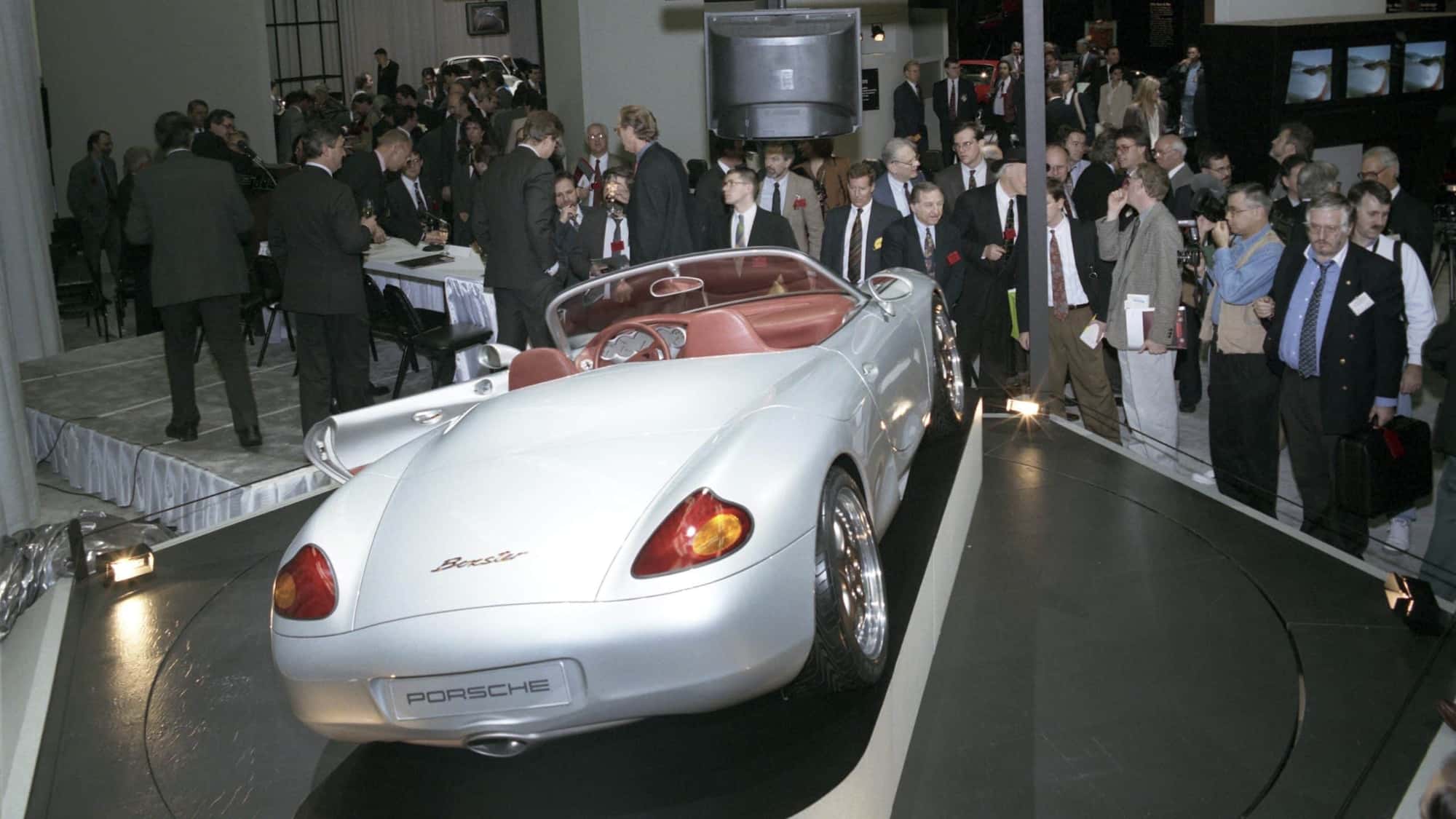
Not for the first time, the company’s engineers came to the rescue, with the creation of a small, mid-engined roadster, which it called the Boxster. The name is an amalgam of the Boxer engine type with a nod to the Porsche Speedster of old. The concept car (pictured) wowed visitors to the Detroit Auto Show, where it was first exhibited in January 1993.
Within three years, the Boxster was ready for production; and this was the trigger for an upswing in the company’s fortunes. In 1996, Porsche sold around 32,000 vehicles – half of them bearing the Boxster badge. The company’s finances finally returned to the black, preserving its future, and we can surely thank the unusually named roadster for that.
In late 2005, the Boxster was joined by a sister coupé, the Cayman, and the two models have been through numerous generational changes since. In 2021, Porsche celebrated the Boxster’s Silver Anniversary by releasing the Porsche Boxster 25 Years, offering more power and performance, plus a special paint finish and interior trim. Just 1,250 were built.

9. Cayenne: Porsche’s first SUV
Nowadays, with models like the Lamborghini Urus and Aston Martin DBX707, nobody raises an eyebrow when a sports car manufacturer launches a sports utility vehicle (SUV).
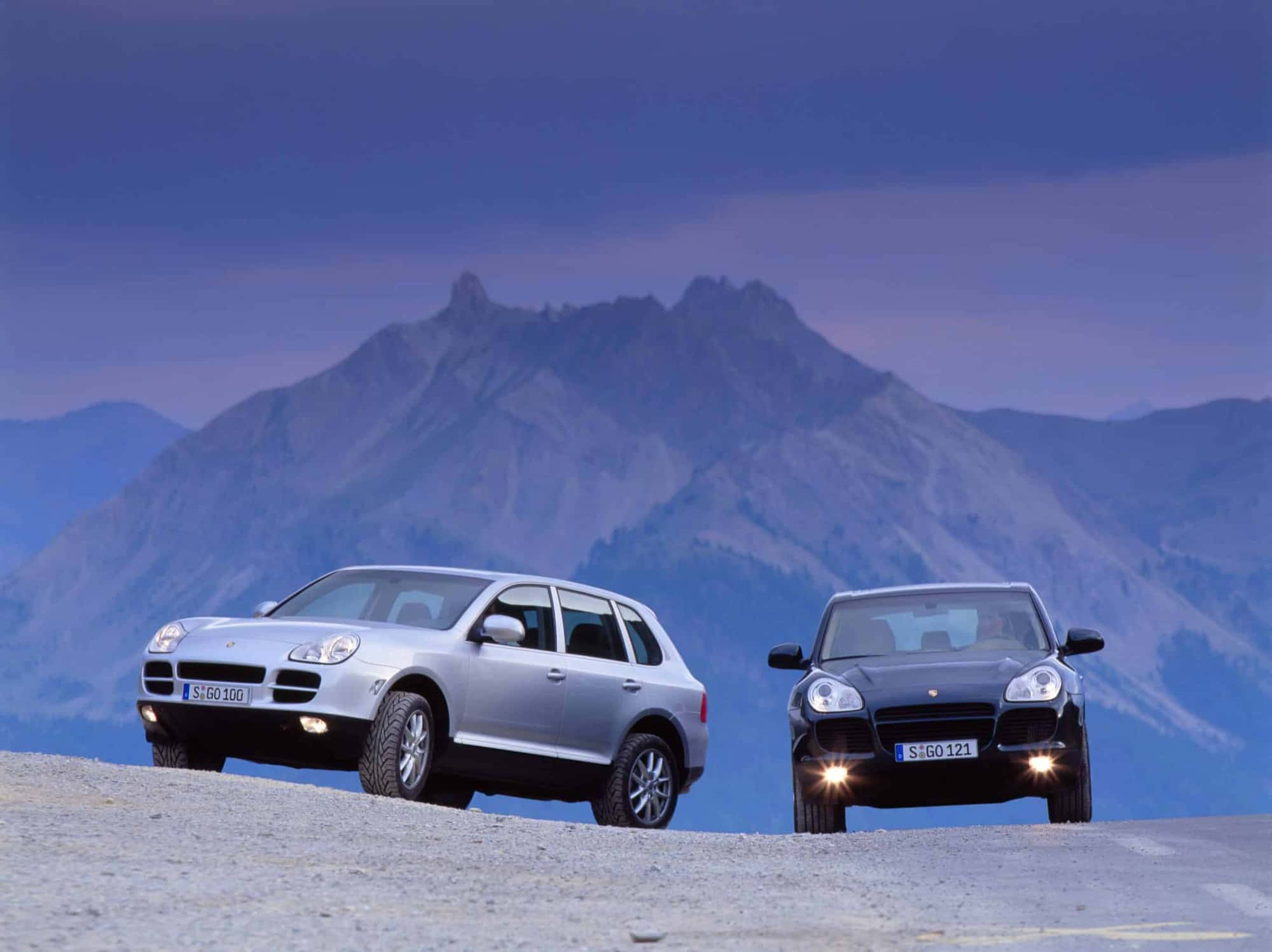
It was a different story back in 2002, when the Cayenne broke new ground in a number of different ways. The automotive purists were up in arms. How could a sports car maker demean itself by going off-road?!
The reason, as ever, was economics. While the Boxster had dug the company out of a financial hole, it still needed a ‘volume’ model to deliver the profits that would pay for the more exotic road-going creations (as well as the racing programs).
Step forward the Cayenne, the brainchild of then-CEO Wendelin Wiedeking. Although it shared a platform with the VW Touareg, the Cayenne was still pure Porsche, featuring innovations such as the ‘Porsche Active Suspension Management’, which is now a staple within every Porsche model.
And it was an immediate success, with annual sales figures around 10,000 higher than the target the company had set. In total, the eight year run of the first-generation Cayenne produced sales of more than 275,000 units. During that time, the naturally aspirated V8 of the launch model was joined by a more powerful GTS version, a turbodiesel V6 and the range-topping Turbo and Turbo S.
SUVs remain the backbone of the Porsche range, with the Cayenne the top selling model and now accompanied in the showrooms by the smaller Macan.

10. Taycan – Porsche goes electric!
The most celebrated Porsches are iconoclastic creations, but the company itself has maintained its success by being conscious of the winds of change.
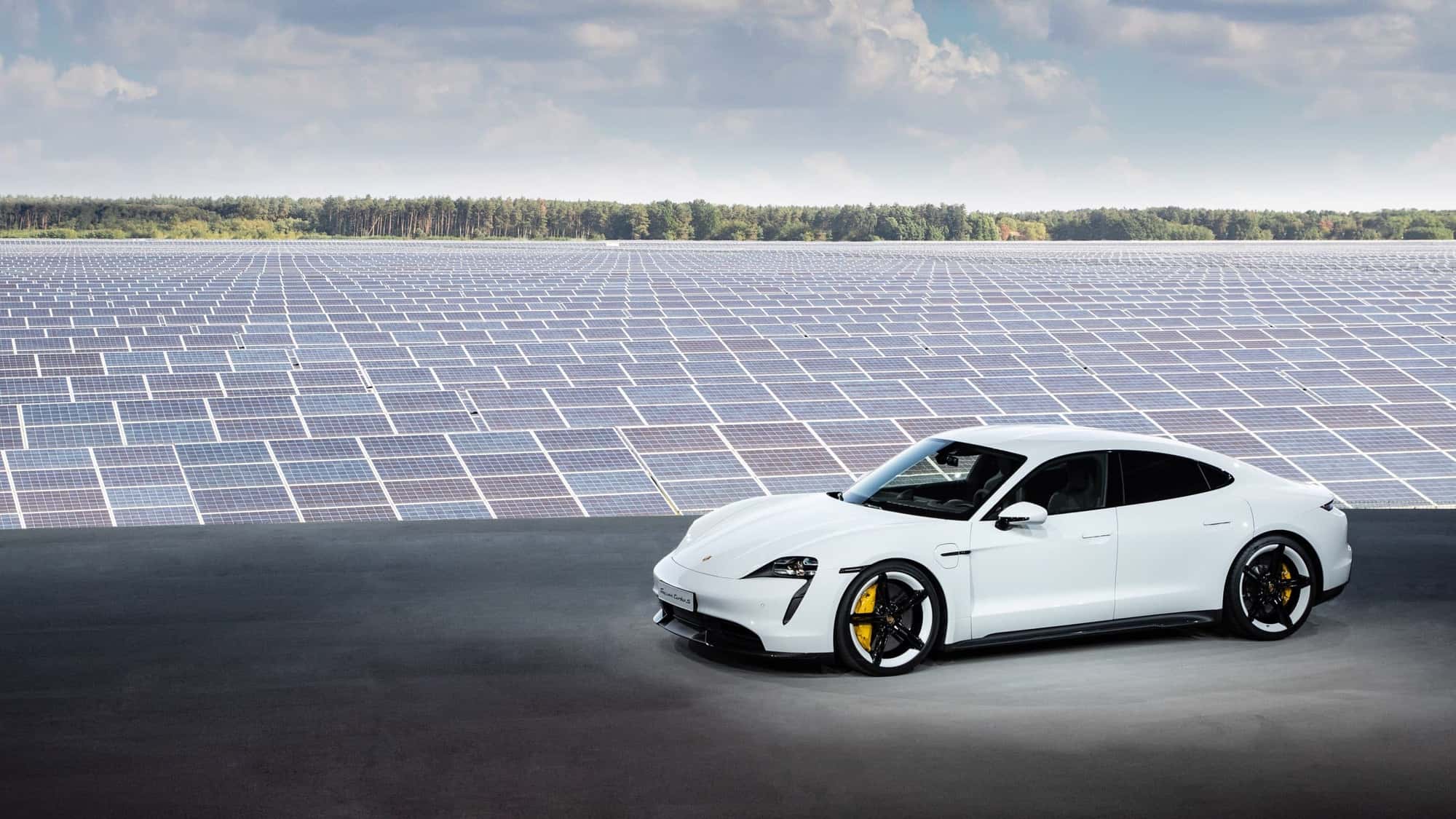
In 2019, Porsche responded to the EV (electric vehicle) trend by launching the Taycan, its first fully electric sports car.
“The Taycan links our heritage to the future. It carries forward the success story of our brand – a brand that has fascinated and thrilled people the world over for more than 70 years,” said Oliver Blume, Chairman of the Executive Board of Porsche AG, as he opened the car’s world premiere in Berlin, adding, “This day marks the start of a new era.”
New eras aside, for Porsche the Taycan is not quite the beginning of the electric car story. All the way back in 1898, Ferdinand Porsche designed the Egger-Lohner C.2 Phaeton, which was powered by an octagonal electric motor. Two years later he had developed the electric wheel hub motor, installing the then revolutionary technology in the Lohner-Porsche Electromobile, which was presented at the Expo in Paris. The car boasted a top speed of 37 km/h – a far cry from the modern Taycan’s electrically-assisted 230 km/h!
Today, the Taycan is firmly established within the Porsche family – although traditionalist petrolheads will be cheered by the fact that it is still outsold more than two-to-one by the 911, based on 2024 full-year sales figures.
Through all these cars, and others, Porsche has cemented its place as the world’s most valuable luxury and premium brand according to Brand Finance – a position it has held for each of the past eight years.
The company is a great industrial success story and an international flag-bearer for ‘Brand Germany’. But for those who see the motor car through more romantic, more inspirational eyes, it is primarily a name that stirs the blood like few others.
Driven by Dreams indeed.
- The Insider would like to express our sincere and grateful thanks to Amina Iamalieva and all at the Porsche Museum for their support in putting this article together.
To discover more about the past, present and future of Porsche, visit the company’s online newsroom
Dive into the world of Luxury
Our Master’s in Luxury Management and Guest Experience will position you perfectly for a career in luxury.